
Description
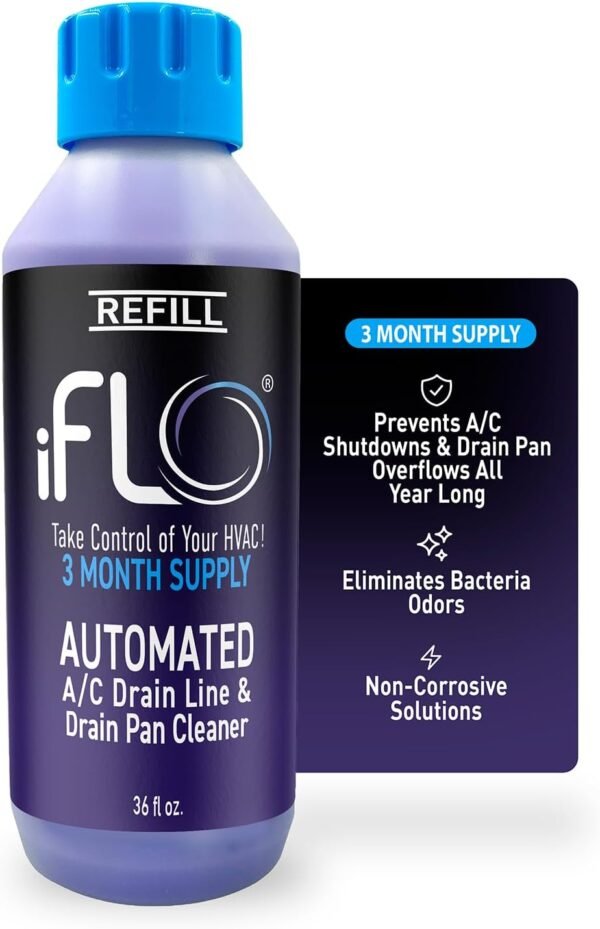
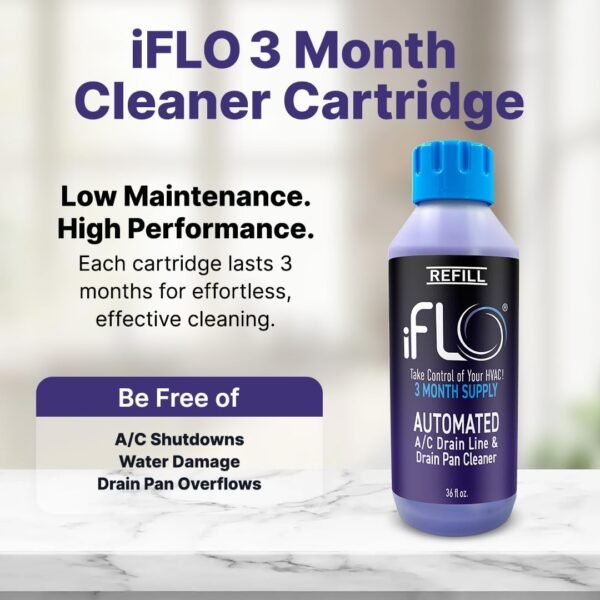
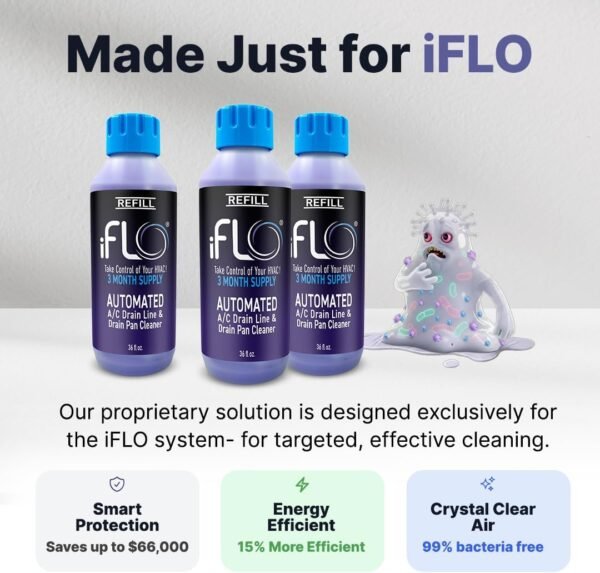
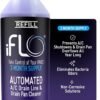
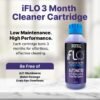
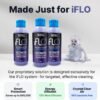
The iFLO cartridge is a 36 fluid ounce bottle of air conditioning drain line cleaner, and it is not a product you can use on its own. The listing states directly that it is the only compatible solution for the iFLO dispenser, which means the cartridge is a refill for a device sold separately. Anyone buying this expecting a bottle they can pour down a sink has bought the wrong thing, and the category it sits in makes that mistake easy.
What an air conditioning drain line is, and why it clogs
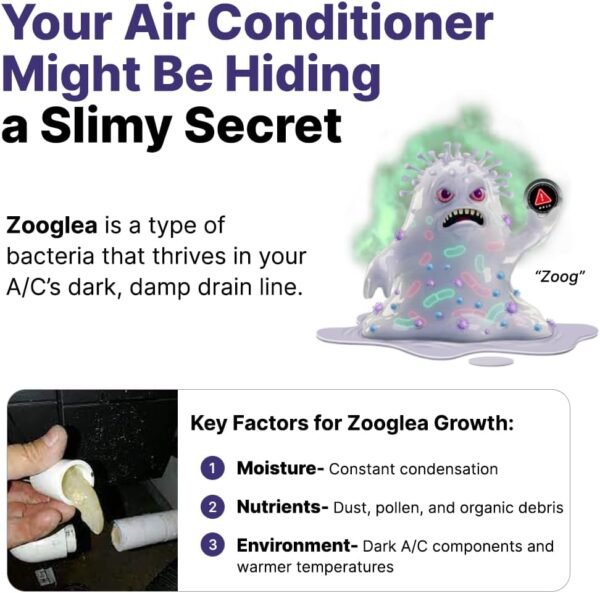
A central air conditioning system removes moisture from the air as it cools it, and that condensate collects in a drain pan and runs away through a small pipe. The pipe is narrow, permanently damp and warm, which makes it a good home for the slimy biological growth the trade calls zooglea. When it blocks, the pan overflows. That water goes into a ceiling, a closet floor or whatever sits below the air handler, and many systems have a float switch that shuts the unit down to prevent exactly that, which is why a clogged drain line often presents as an air conditioner that has simply stopped working.
The household this fits is one with central air conditioning, an accessible drain line, and a preference for preventive maintenance over an emergency call. It fits particularly well in humid regions where condensate runs constantly for months. It is irrelevant to a home with window units or no central system, and it does nothing at all for a kitchen or bathroom drain.
The dispenser requirement, and the schedule contradiction
The iFLO system is a metering device that sits on the drain line and releases a measured amount of solution on a schedule, controlled through an app that reports when dispensing is done, schedules the next dose, and can order a refill when the cartridge runs low. That is the product this cartridge feeds. The cartridge has no pump, no timer and no way to dose itself, so the dispenser is a prerequisite rather than an accessory.
The listing then contradicts itself on how long a cartridge lasts. The product title calls it a three month cartridge. The description states that the 36 ounce bottle is designed to last three to six months depending on location and regional weather patterns. Both statements are on the same page. The reasonable reading is that three months is the conservative figure for a humid climate where the system runs hard, but the listing never says so, and this review will not present either number as the answer. If you are planning a refill schedule or a subscription, work from what the app reports rather than from the title.
What bio enzymatic surfactant does and does not tell you
The solution is described as a bio enzymatic surfactant cleaning solution created and proven to break down dirt, debris and zooglea build up. Not one component is named. There is no enzyme, no surfactant, no bacterial strain, no concentration and no pH anywhere on the page, and the word proven appears with no test, no method and no result attached to it. That is iFLO’s claim about its own product. What the phrase does usefully signal is the chemical family: this is a biological and detergent approach rather than a caustic or acid one, which is appropriate for a plastic drain line that would not survive a household drain opener.
Where it can go, and where it must not
The intended location is the condensate drain line and drain pan of an air conditioning system, dosed through the iFLO device. Air handlers, drain pans and condensate lines are typically PVC and plastic, and a product formulated for that environment is a deliberately gentler chemistry than anything sold for a kitchen sink.
The reverse substitution is the one to avoid. Do not put a household drain opener into an air conditioning condensate line. Caustic and acidic openers are formulated for cast iron and for heavy blockages of hair and grease, they generate heat, and they can damage the pan, the line and the equipment they run through. Equally, do not expect this cartridge to clear a sink, a shower or a toilet, because it is neither formulated nor concentrated for that job. The two products share a category on this site and share almost nothing else.
Handling it safely
Because the dispenser controls the dose, the user’s contact with the chemical is limited to loading and replacing a cartridge. Do that with the system off, wear gloves, avoid contact with skin and eyes, and wash your hands afterward. Air handlers frequently live in attics, crawl spaces and closets, so ventilation and safe footing deserve as much attention as the chemistry does.
The listing publishes no dwell time, no dose volume per cycle and no safety information at all, so the printed cartridge label is the only source for any of it. Store spare cartridges upright and closed, at room temperature, out of reach of children and pets, and away from other cleaning chemicals. Never decant the solution into another container, and never top up a cartridge with anything else, since the dispenser meters a known product and mixing defeats that.
One general rule applies here as everywhere else in this catalog: do not combine cleaning products. Adding a bleach based product to a condensate line that has been treated, or pouring a drain opener in after this solution, risks a reaction in a confined pipe you cannot see into. If a line is genuinely blocked rather than slow, the correct response is mechanical clearing or a service call, not escalating chemistry.
Running cost, and what else to consider
The cost structure of this product is unusual because the cartridge is only part of it. You are buying into a system: the dispenser first, then a recurring refill that the app can reorder automatically. That is convenient and it is also a subscription, so the number that matters is cost per season rather than cost per bottle, and the three to six month range on this page makes that calculation approximate. Set against it, the comparison is not another bottle but the cost of a service call and any water damage a blocked line causes, which is where preventive dosing earns its keep.
If your problem is a household drain rather than an air conditioning line, the right products are entirely different. Our reviews of the Drano Max gel clog remover and the Thrift drain opener cover the caustic route, which is effective and corrosive and demands eye protection, ventilation and care, while the Unloshe drain foam cleaner takes a foaming approach. The drain openers category covers the household products in full.
For biological maintenance rather than clog removal, an enzyme based product works on the same principle as this cartridge and is dosed by hand. Our write up of the JustScience probiotic septic treatment covers that approach for a septic system, with more in the septic treatments category.
Who should buy it, who should not
Buy it if you already own the iFLO dispenser and want it kept supplied. Skip it if you do not own the dispenser, because the cartridge alone does nothing, and skip it entirely if you were shopping for a drain opener for a sink or a tub. The listing is upfront that the solution is proprietary to one device, and that single fact matters more here than any performance claim on the page.