



Description
What a Procell box actually is
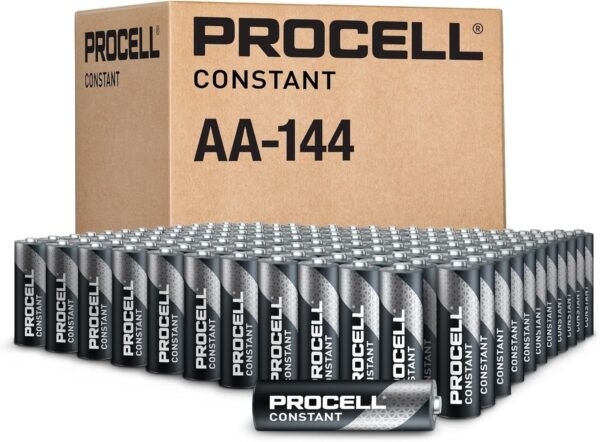
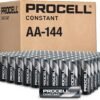
This is a bulk box of 144 Duracell Procell Constant AA alkaline cells, model number 5016035, listed since September 2013. The cells measure 0.55 by 0.55 by 1.99 inches and weigh 0.847 ounces each, which is standard AA. The listing carries 893 ratings at 4.5 stars and places the pack 14,159th in Health and Household and 51st among AA batteries. It also carries a National Stock Number, 6135-00-985-7845, which is a government and military supply catalog identifier and tells you where this format is normally bought.
Procell is Duracell’s professional line. The cells are the same size and voltage as a retail alkaline battery, and the difference is in the distribution and the specification: they arrive in a plain bulk carton rather than blister cards, they are sold by the hundred, and the line is split by drain profile rather than by consumer branding. That makes them cheaper per cell and slightly awkward to store, since there is no packaging holding them apart.
The household that benefits is one with a lot of battery powered equipment: smoke alarms, wall clocks, remotes, thermostats, wireless door sensors, a home studio, a classroom, a church, a small office. For a home with three remotes, 144 cells is a decade of stock.
Low drain or moderate drain, because the listing says both
Procell splits its alkaline range by how quickly a device pulls current. This matters, because a battery optimized for a slow steady draw behaves differently from one built to deliver short heavy bursts.
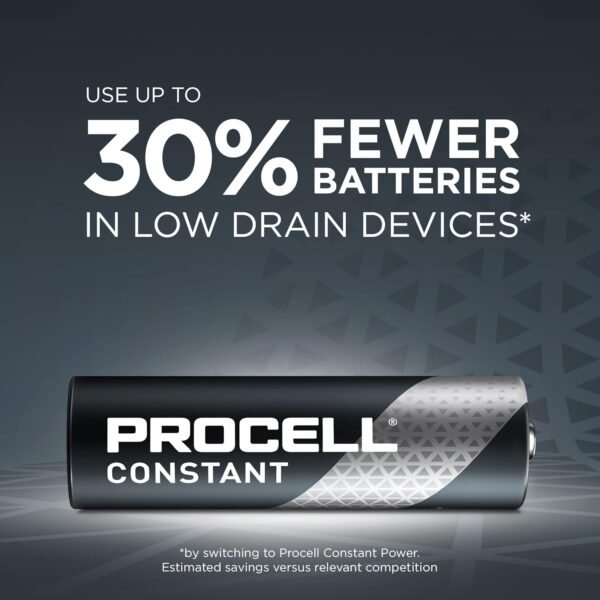
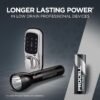
The listing cannot decide which this is. The product title describes it as a bulk value pack for consistent moderate drain professional devices. The first feature bullet says the cells are formulated for low drain devices, and then lists alarm panels, motion sensors, smoke detectors, remote controls, blood monitors, glucometers and flush valves. Low drain and moderate drain are not the same category, and the two statements sit two lines apart.
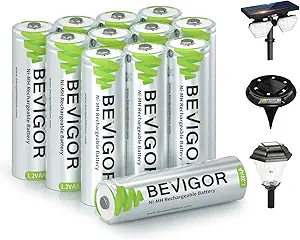
The device list is the more useful guide, and it points clearly at the low and steady end: sensors, alarms, clocks and meters that sip current for years. If your application is a camera flash, a high powered flashlight or a motorized toy, that is a high drain job and a different product line, or a rechargeable, is the better fit. The Bevigor rechargeable AA cells are the sensible answer for anything that gets heavy repeated use.
The claims that carry a comparator
Two claims here are stated properly. Longer lasting power is measured against prior Procell alkaline AA cells, and the superior cell design claim carries the same comparison. Naming the thing you are better than is more than most listings manage. The ten year storage claim and the operating range of minus 4 to 129.2 degrees Fahrenheit are specific figures, and the reference to ANSI and IEC battery requirements points at published standards rather than an in house grade.
No capacity figure in milliamp hours appears anywhere, which is the number that would let a buyer compare these against another brand. The description field is empty. One specification field reads “Batteries: 144 AA batteries required”, on a product that is 144 AA batteries.
Storage, leakage and the failure that ruins equipment
The single most useful thing to know about alkaline cells is how they fail. An alkaline battery left in a device after it is exhausted will eventually leak potassium hydroxide, a caustic paste that corrodes contacts and can destroy the device it is sitting in. It is the most common way a working remote, a clock or an emergency flashlight is lost.
The habits that prevent it are simple. Remove batteries from anything that will not be used for months. Replace all the cells in a device at once rather than swapping one, and never mix old cells with new, or different brands, or different chemistries, in the same device. Check seasonal and rarely used equipment once a year.
If a cell has leaked, do not touch the residue with bare hands. Wear gloves and eye protection, remove the battery, and clean the contacts carefully before putting new cells in. Do not attempt to recharge alkaline cells. Do not heat, pierce or incinerate them, and do not carry loose cells in a bag with keys or coins where the terminals can bridge.
Bulk boxes need a little thought on storage for exactly that reason: 144 loose cells rolling around a drawer is a lot of exposed terminals. Keep them in the carton, in a cool dry place, and keep the box out of reach of children, since a AA cell is a choking hazard for a small child even though it does not carry the burn risk that a swallowed coin cell does. The coin formats such as the LiCB CR2025 are the ones that need locking away.
Smoke alarms, disposal and cost
The listing names smoke detectors among the target devices, which deserves a note. Many alarms specify a battery type in the manual, and sealed ten year alarms are designed never to have their battery changed at all. Follow the alarm manufacturer’s instruction rather than the battery’s, and test the alarm after every change.
On disposal, rules vary by state. Alkaline cells are accepted in household trash in much of the United States, and some states, California among them, classify them as hazardous waste and require recycling. Check your local rule rather than assuming, and take spent cells to a collection point where one exists.
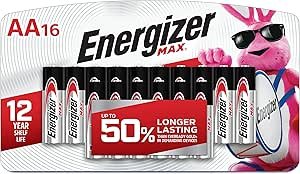
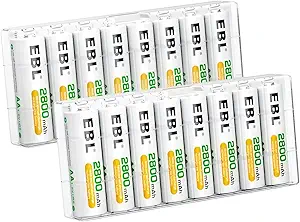
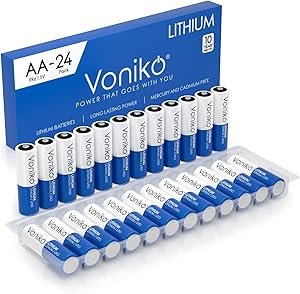
The cost case for a bulk box is straightforward: buying 144 cells at once is far cheaper per cell than blister packs, and the ten year stated shelf life means stock does not go to waste if it is stored properly. Against that, you are committing to one size and one drain profile. If your household needs a mix, the retail packs let you spread the spend, and options such as the Energizer AA cells, the Voniko AA cells or the EBL AA cells cover smaller quantities. Browse the size under AA batteries or the broader range under household batteries.
Who should buy it and who should not
Buy it if you maintain a building, a classroom, a venue or a home with a lot of sensors, alarms and remotes, and you want a known professional grade cell at bulk pricing with a long shelf life. The specification here is more transparent than most battery listings and the device list is honest about what the cells are for.
Do not buy it for high drain equipment, where an alkaline cell of this type is the wrong tool and a rechargeable is cheaper over time. Do not buy 144 cells for a household that uses a dozen a year, since even a ten year shelf life will not outlast that. And do not expect a capacity figure from this listing, because it does not publish one.