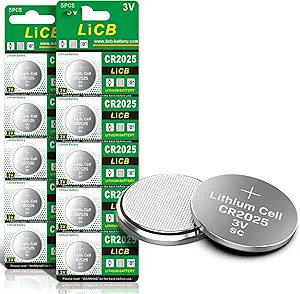


Description
What this pack is and what it fits
LiCB sells CR2025 lithium coin cells in a ten pack, ASIN B071CTWW5Z, first listed in April 2017. The listing gives the cell dimensions as 0.79 by 0.79 by 0.1 inches, which is the standard CR2025 format of 20 millimeters across and 2.5 millimeters thick, and the pack weight as 0.882 ounces. It carries 31,636 ratings at 4.6 stars and sits 7,809th in Health and Household and 29th among 3V batteries.
A CR2025 is a lithium manganese dioxide primary cell delivering a nominal 3 volts. It is the flat cell that lives in car key fobs, garage remotes, bathroom scales, kitchen thermometers, calculators, computer motherboards and a great many small toys. The number is the size: 20 millimeters wide, 2.5 millimeters thick. Its close relative the CR2032 is the same diameter and 3.2 millimeters thick, and that difference is why the two are not freely interchangeable. A CR2032 forced into a CR2025 holder can bend the contact or refuse to seat. A CR2025 in a CR2032 holder may make intermittent contact and will hold less charge because it is a smaller cell. Match the number printed on the old battery.
The safety issue that outweighs everything else on this listing
Coin cells are the most dangerous item in an ordinary household drawer, and this listing does not mention it once.
A swallowed button battery lodged in a child’s throat can cause severe internal burns in a very short time, because current passing through moist tissue generates a caustic reaction at the battery surface. This is a recognized emergency. Keep loose cells, spare packs and used cells completely out of reach of children, treat a used battery as dangerous rather than dead, and if a swallowing is suspected, seek emergency medical care immediately rather than waiting for symptoms.
Since 2022, United States law has required child resistant packaging and specific warning labels on button and coin cell batteries and on many of the devices that use them. This listing says only that the cells arrive in a blister pack. It does not state whether that packaging meets a child resistant standard, and it carries no warning text of any kind. That is a gap worth naming on a product with more than thirty thousand ratings.
The other handling rules
Never attempt to recharge a CR2025. It is a primary cell and charging it can cause it to vent, leak or rupture. Do not carry loose cells in a pocket or a bag with coins, keys or other batteries, because a coin cell shorted across its two faces heats up quickly. Do not mix an old cell with a new one in a two cell device. Do not heat, pierce or incinerate them. Store the blister pack in a cool dry place, and do not store it in a drawer with metal objects.
What LiCB claims, and how those claims hold up
The listing states that the cells hold a full 3 volt charge, have a three year shelf life, are zero mercury, are CE and RoHS certified, and are made from grade A cells under strict quality control. It also states that they are designed not to leak in a device during use and for up to three years after being left in one, and that LiCB has specialized in batteries since 2006.
Take those as the manufacturer’s statements. Two of them do not sit well together. The shelf life is given as three years and the warranty is given as eighteen months, which is half the claimed life. CE and RoHS are compliance marks about hazardous substances and market access rather than performance ratings, and grade A is a seller’s term with no external definition. No capacity in milliamp hours appears anywhere on the listing, which is the one number that would let a buyer compare these against another brand’s CR2025. The description field is empty.
One equivalence claim is loose. The listing lists BR2025 alongside LM2025, 5003LC, DL2025 and KT-CR2025 as equivalent models. DL2025 and KT-CR2025 are simply other manufacturers’ part numbers for the same CR chemistry. BR2025 is not: the BR series uses a carbon monofluoride lithium chemistry with a different discharge curve and a wider temperature range, and it is specified where a device needs stable output over a long period or in extreme temperatures. Substituting a CR cell where a BR is called for can shorten service life. If a device manual specifies BR, buy BR.
One more data oddity: the specification block lists “10 Lithium Metal batteries required (included)” on a product that is itself batteries.
Disposal, and where this sits in a cleaning catalog
Lithium coin cells should not go in household trash in many jurisdictions, and they should never go in a curbside recycling bin, where a shorted cell is a fire risk in a collection truck. Tape over both faces of a used cell with clear tape to prevent short circuits and take them to a battery collection point. Retailers and municipal household hazardous waste sites commonly accept them.
It is also fair to say that a coin cell multipack is an outlier on a site that mostly covers cleaning, laundry and pest control. It sits here because a household buys batteries alongside everything else, not because it belongs to the same aisle. The other cells on the site are grouped under 3V batteries and coin and button cell.
Cost, alternatives and who should buy
The cost structure of a coin cell multipack is simple: buying ten at once is far cheaper per cell than buying a single blister at a checkout counter, and the only thing you risk is that unused cells age on the shelf. A three year stated shelf life makes a ten pack reasonable for a household that has more than one device using the size. For a household with exactly one key fob, a ten pack is nine spare batteries slowly self discharging in a drawer.
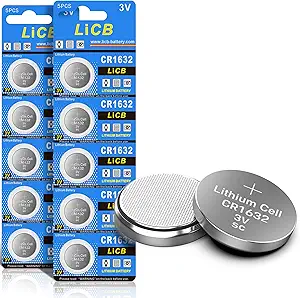
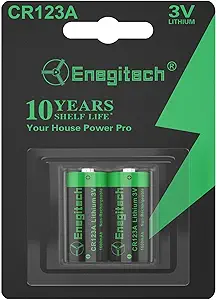
Nearby sizes are worth checking before ordering, because the wrong number is the most common mistake. The LiCB CR1632 and the Panasonic CR2016 are different diameters and thicknesses, and the EEMB CR1616 is smaller again. For a device that needs a higher capacity 3 volt cell rather than a coin format, the Enegitech CR123A is a different form factor entirely.
Buy this if you have several devices on CR2025 and want a stocked drawer at a low cost per cell, and you have a safe place to keep them. Do not buy it if children have access to your storage and you cannot lock it, do not buy it if your device manual calls for a BR2025, and do not buy it expecting a published capacity figure, because this listing does not give one.