Description
One wipe sold for two regulated jobs
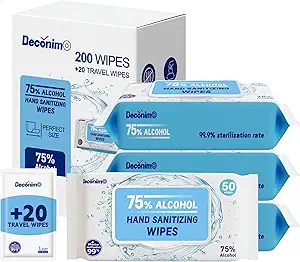
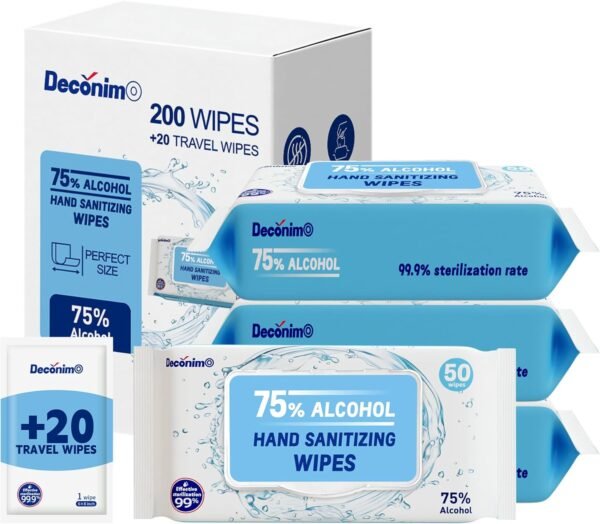
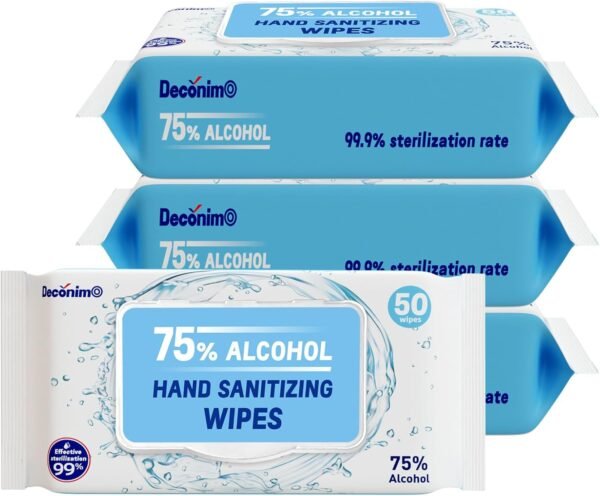
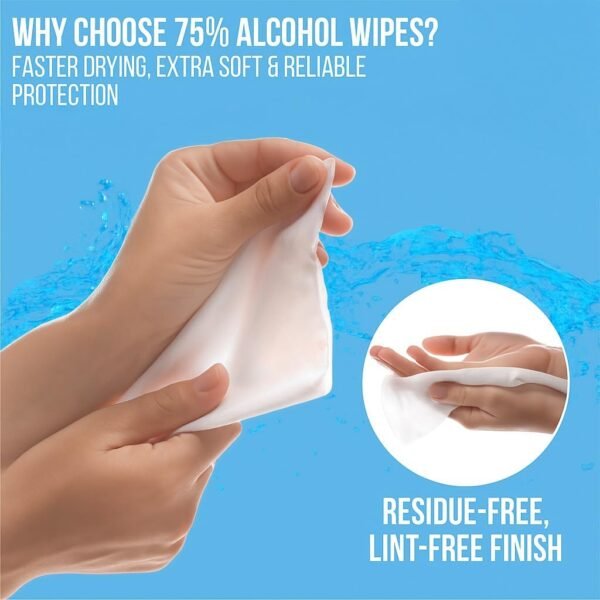
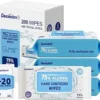
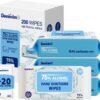
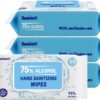
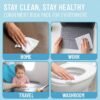
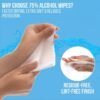
DECONIMO sells this as 220 alcohol wipes in total: four resealable packs of 50, plus 20 single travel packets, each wipe measuring 6 by 8 inches. The composition is stated plainly and unusually precisely for this catalog: 75 percent ethyl alcohol and 25 percent pure water.
The listing then does something that needs unpacking. It offers the same wipe as a hand sanitizer and as a surface disinfectant, and it makes a kill claim for both. In the United States those are two different regulated product classes overseen by two different agencies. A hand sanitizer is an over the counter drug under the Food and Drug Administration, and its label carries a Drug Facts panel with active ingredient, purpose, uses, warnings and directions. A surface disinfectant is a registered pesticide under the Environmental Protection Agency, and its label carries a registration number and a stated contact time. This listing shows neither. No Drug Facts information, no EPA registration number, no named pathogen and no dwell time appears anywhere on the page.
How to read the kill claim
The third bullet states that the wipes kill 99.9 percent of bacteria and viruses, and the fourth describes clinical strength sanitation for hands and high touch surfaces, naming healthcare professionals and caregivers. Those are the manufacturer’s claims and are reported here as claims. We do not test anything, we make no disinfection claim and we make no health claim about this or any product.
What alcohol at 75 percent does and does not reach
Ethyl alcohol in the 60 to 80 percent range is a well established antiseptic, and water in the mixture matters: alcohol needs water present to denature proteins effectively, which is why pure alcohol is a poorer disinfectant than a 70 to 75 percent solution. That much supports the formulation.
What alcohol does not do well is worth knowing. It is significantly less effective against non enveloped viruses such as norovirus and against bacterial spores such as those of Clostridioides difficile. Public health guidance for hands is also consistent on one point the listing does not mention: when hands are visibly soiled or greasy, soap and running water is the recommended approach and an alcohol product is not a substitute. Alcohol also evaporates quickly, and any surface claim depends on the surface staying wet for the period a label specifies, which is precisely the number this listing does not give.
One further note on the composition. A stated 75 percent ethyl alcohol and 25 percent water leaves nothing else in the formula, no denaturant and no emollient. Alcohol based hand products sold in the United States are normally denatured to deter ingestion, so either the composition statement is incomplete or the formulation differs from the norm. Read the printed pack, and keep the product away from children for that reason as much as any other.
Flammability, and where these should never go
A 75 percent alcohol wipe is a flammable article, and this is the safety point the listing skips entirely while actively marketing the product for the car.
Keep alcohol wipes and their packs away from open flame, gas hobs, candles, barbecues, cigarettes, heaters and anything that sparks. Do not use one on a surface near a pilot light. Let hands dry fully before going near a flame, since the vapor comes off for a few seconds after wiping. Do not store a pack on a dashboard or in a glovebox through a hot summer, where the pack can swell and the alcohol evaporates through the seal, leaving you with dry cloths and a strong smell in the car. Never dispose of used wipes in a container with anything hot.
Keep them out of reach of children, including the travel packets, which are exactly the size that ends up loose in a bag. Alcohol ingestion by a small child is a genuine hazard and the small format makes it easier to get hold of.
Surfaces, skin and what alcohol damages
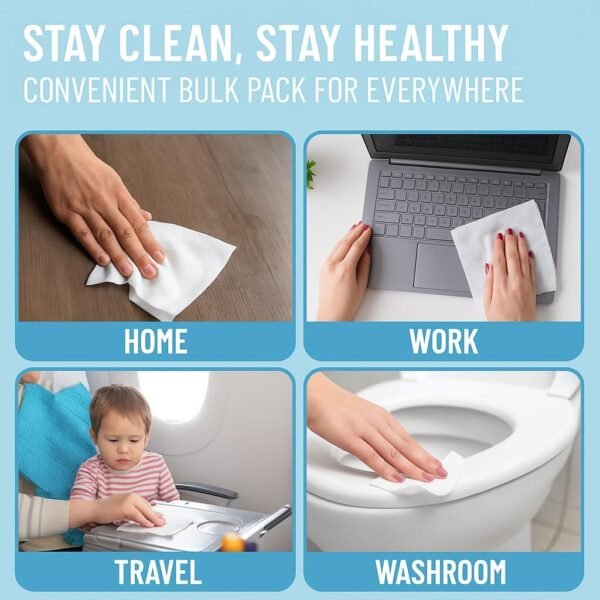
The listing offers the wipes for hands, phones, desks, handles and kitchen surfaces. Alcohol is a good choice on hard, non porous, chemically tolerant surfaces such as stainless steel, glass and sealed laminate.
It is a poor choice on several materials the listing does not exclude. Repeated alcohol contact crazes acrylic and polycarbonate, dulls some painted and lacquered finishes, dries and cracks leather and vinyl, and can degrade the oleophobic and anti reflective coatings on device screens over time; check your device maker’s guidance before making an alcohol wipe your routine screen cleaner, and use a purpose made product such as the Weiman electronic screen wipes where that matters. On skin, frequent alcohol use is drying, and with no emollient stated in the composition that effect will be more pronounced than with a gel sanitizer.
Do not flush them. Nonwoven wipes do not break up in drains and are a leading cause of household blockages. And never combine a used alcohol wipe with another cleaner on the same surface, particularly a bleach product, since combining household chemicals is a bad habit and alcohol plus hypochlorite is a combination with no upside.
Cost, and the honest comparison
Two hundred and twenty wipes is a bulk purchase and cost per wipe is low, which is the format’s argument. The mixed format is genuinely useful: the resealable 50 count packs work at a desk or in a kitchen, and the 20 single packets are the ones that go in a bag or a pocket without drying out, which is where a resealable pack always fails eventually.
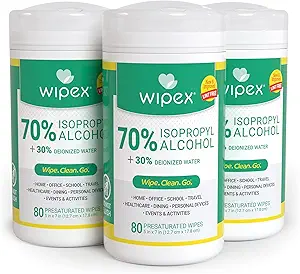
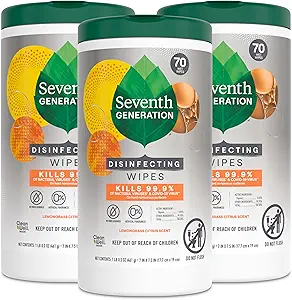
Against that, soap and water costs nothing and is the recommended option for hands wherever a sink is available, which makes wipes a travel and away from home product rather than a home one. For surfaces where a registered disinfection claim with a printed contact time matters, a product such as CaviWipes or Seventh Generation disinfecting wipes is the correct category, and for a documented isopropyl alcohol wipe the Wipex isopropyl alcohol wipes state what they contain. Comparable hand products sit under personal cleansing wipes, such as the Cleanze hand sanitizing wipes, and the surface products are in disinfectant wipes.
Record problems worth flagging. The first bullet is a run of five separate features crammed into one line with no separators, so it reads as a single sentence. The listing claims a 99.9 percent kill for both skin and surfaces without a registration number, a Drug Facts panel, a named organism or a contact time. It describes the product as safe, effective and trusted with nothing behind those words. And the composition of 75 percent alcohol and 25 percent water accounts for the entire formula with no denaturant named. The pack weighs 3.5 pounds and the item currently ranks 42nd in the retailer’s household disinfectant wipes chart.
Who should buy these
Buy them if you want a large supply of alcohol wipes for hands and hard surfaces away from a sink, and the mix of resealable packs and travel packets suits how you move around. Do not rely on them as a registered disinfectant, since no registration number or contact time is published, do not use them where soap and water is available for visibly soiled hands, and treat them as the flammable article they are.