

Description
Start with the category, because it is wrong
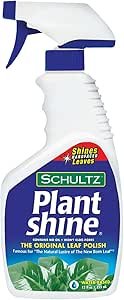
This product sits in the Metal Polishes category on Sanue, and it is not a metal polish. The manufacturer name on the listing is Knox Fertilizer Company, the product name is Schultz Liquid Plant Shine, and the job it is sold for is putting a gloss on the leaves of houseplants. Nothing in the listing mentions metal, tarnish, oxidation, chrome, brass, silver or stainless steel. Anyone arriving here from a metal polish search is in the wrong place, and we would rather say so at the top than let a shopper find out after ordering.
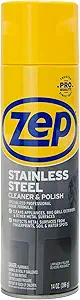
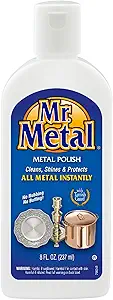
We are flagging the placement rather than quietly correcting it, because the same mismatch may exist elsewhere in an imported catalog and it is more useful to a reader to see it named. If you came looking for a genuine metal treatment, the Mr Metal 707284 polish and the Zep ZUSSTL14 stainless steel cleaner are in the right category for that job, and the broader metal polishes category lists the rest.
What a leaf shine does, and what the listing tells us about this one
A leaf shine is a thin film applied to the upper surface of a foliage plant leaf. The film fills the microscopic texture of the leaf so light reflects evenly instead of scattering, which reads to the eye as gloss. Some formulations are wax based, some are oil based, some are silicone based, and some are little more than a surfactant and water. They are cosmetic products for plants displayed indoors, used most often on rubber plants, monstera, philodendron, ficus and other broad glossy leaved species.
The formulation section of this listing is empty
Knox publishes no ingredient list, no active component, no concentration and no carrier for this product. The specification block returned no entries at all. The four feature bullets contain package dimensions of 2.13 by 8.25 by 4 inches, a package weight of 0.75 pounds, a country of origin of the United States, and a model number. Those bullets describe a box. They say nothing about what is in the bottle.
That matters more than it would on a cosmetic for a hard surface, because leaf shines interact with a living organism. A leaf breathes through stomata on its surface, and a film heavy enough to gloss a leaf is a film that sits over those pores. Whether a given formulation is thin enough or porous enough to be harmless is a question only the ingredient list and the manufacturer’s own directions can answer. This listing supplies neither, so the printed label on the bottle is the only source. Read it before spraying anything on a plant you care about, and treat the absence of an ingredient list as a reason for caution rather than reassurance.
Surfaces, plants and what to keep it away from
The listing does not name a single plant species, does not distinguish foliage plants from flowering plants, and does not say whether the product is suitable for anything edible. That last omission is the important one. Herbs on a kitchen windowsill, chili plants, citrus and salad crops are all houseplants that people also eat from, and a product with no published ingredients and no food safety statement should not be assumed safe on any of them. If the label does not explicitly clear a plant you will eat, do not use it there.
Beyond the plant itself, the practical surface question is overspray. A gloss film that lands on a windowsill, a wooden shelf, a painted wall or a floor will leave a residue, and because the chemistry is undisclosed there is no way to know whether it lifts with water, with detergent or with solvent. Apply over a sink or outdoors, mask what is behind the plant, and have a general cleaner on hand. A gentle surface wipe such as the Weiman 93PK4CS electronic wipe is the sort of low residue product that copes with light film on delicate finishes, though on anything porous the fix is to prevent the overspray in the first place. Never apply a leaf shine to a matte leaf, a fuzzy leaf such as African violet, or a succulent with a natural powdery bloom, because the coating flattens the surface texture those plants are grown for.
Application, ventilation and storage
The listing publishes no directions, no application distance, no coverage figure and no reapplication interval, so everything below is general handling rather than manufacturer instruction. Work in a ventilated room or outdoors. Any atomized liquid becomes an inhalable aerosol, and with an undisclosed formulation there is no basis for judging how much of it you want in your lungs. Keep it off skin and out of eyes, wash your hands afterward, and keep the bottle away from children and pets, which is standard practice for any garden chemical whose contents are not stated.
Do not mix it with anything. That rule applies to every product on this site, and it applies here with the extra force that comes from not knowing the chemistry. Do not add it to a fertilizer solution, a pesticide spray or a leaf wash. Store it upright, capped, out of direct sunlight and away from heat. The container holds 12 fluid ounces according to the listing title, which is a large volume for a cosmetic applied to a handful of leaves, so realistically the bottle will sit in a cupboard for a long time between uses.
Cost structure and what else to consider
A 12 ounce bottle used a few times a year on a small number of plants has a very low cost per use and a very long life, which also means the practical question is shelf stability rather than economy. With no published shelf life, no fill date coding and no ingredient list, there is no way to judge from the listing how long an opened bottle stays usable.
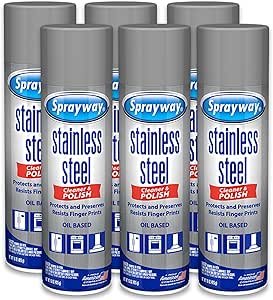
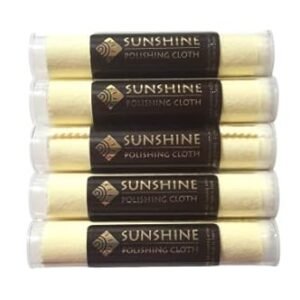
The alternative worth considering costs nothing: wiping foliage with a soft damp cloth removes the dust that dulls a leaf, which is the actual cause of the problem a leaf shine covers up. Dust removal improves light reaching the leaf. A gloss coating does not. If the goal is a plant that looks cared for rather than lacquered, the cloth wins. For hard surface shine around the home, where a coating genuinely belongs, products such as the Sprayway stainless steel cleaner and the Sunshine polishing cloth are designed for the job, and the all-purpose cleaners category covers the general surface work around a plant display.
Who this is for, and who should not buy it
Buy it only if you specifically want a leaf gloss for ornamental foliage plants, you are willing to rely entirely on the printed label because the listing publishes nothing, and none of the treated plants are edible. Do not buy it as a metal polish, a household cleaner or anything else in the category it currently sits in. Do not buy it for fuzzy leaved or succulent plants. And treat the model number with suspicion: the listing title gives SPF4400 while the feature bullet gives SPF44000, which are not the same part number, and there is nothing on the page that resolves which one you would actually receive.