
Description
The job, and the household this suits
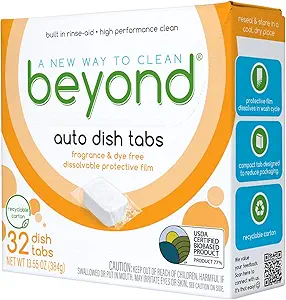
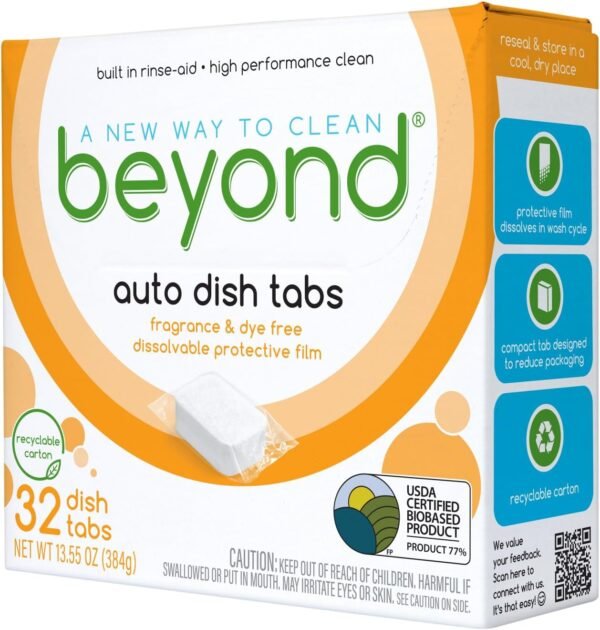
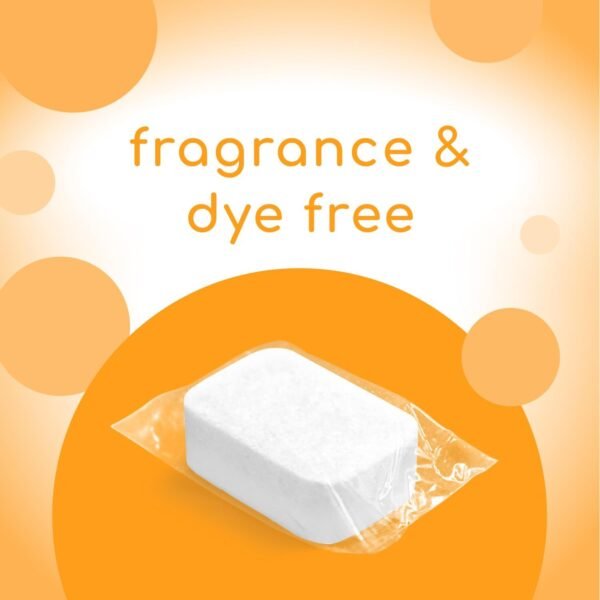
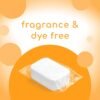
Beyond Auto Dishwasher Tablets are single dose tablets for an automatic dishwasher, sold in a box of 32 by CF Direct under model number 65-14090. One tablet goes into the dispenser or the silverware tray per cycle, and the film around it dissolves in the wash, so there is nothing to unwrap. The listing records the box as 5.75 by 5.5 by 1.87 inches and 13.4 ounces, and the record does not state whether that weight is the tablets alone or the packed box. If it is the tablets, each one is around 12 grams, which is at the light end for a dishwasher tablet, and worth knowing before comparing it against a heavier competitor.
The household this fits is one running a dishwasher a few times a week that wants a fragrance free and dye free tablet with a rinse aid already in it. Tablets suit people who do not want to measure powder or manage a separate rinse aid bottle. They suit heavy soil loads less well than a powder or a gel, because a tablet delivers one fixed dose whether the load is lightly rinsed glassware or a roasting pan. If your loads vary a lot, a dosed product such as the Cascade Complete gel lets you adjust.
What is in it, and how much of that is stated
CF Direct describes the tablets as concentrated mineral and plant based ingredients, states that they contain 75 percent USDA Certified Biobased Content, and lists what the formula is free from: dyes, fragrances and chlorine bleach. Those are the manufacturer’s own descriptions. The biobased figure is the most substantive of them because USDA Certified Biobased Content is a defined federal program that measures the proportion of a product derived from renewable biological material, verified by carbon isotope testing. It is a measurement of feedstock origin. It is not a measurement of cleaning performance, safety or environmental impact, and it should not be read as any of those things.
The free from list is more useful than the plant based label
Terms like plant based and gentle on the planet are marketing categories rather than defined chemical descriptions, and we repeat them here because the manufacturer uses them, not as our own assessment. What a buyer can actually work with is the negative list. No chlorine bleach is a concrete, checkable formulation statement, and it matters practically: chlorine bleach in a dishwasher tablet is what damages aluminum cookware and can dull some glazes over time. No dye and no fragrance is likewise concrete, and it is the reason to choose this over a scented tablet.
What is missing is the positive list. No enzyme is named, no builder, no bleaching system, no percentage of anything except the biobased figure. A dishwasher tablet that omits chlorine bleach normally relies on enzymes and an oxygen bleach for the same work, but this listing does not confirm that, so the printed carton is the only place to check. The listing also records no star rating: the Customer Reviews field on this product contains a sales rank string instead. The recorded ranks are 69th in Dishwasher Detergent and 18,685th across Health and Household.
Machines, water and load contents
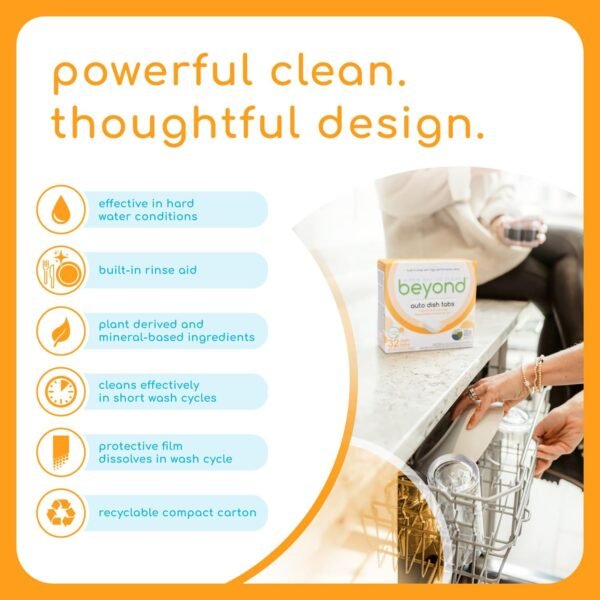
CF Direct states the tablets are effective in HE machines, on short cycles and in hard water conditions, and that they are septic safe. Short cycle performance is a genuine differentiator, because a tablet that has not fully dissolved by the end of a 30 minute cycle leaves residue on the load and undissolved fragments in the bottom of the machine. If your machine runs mostly short or eco cycles, that claim is the one to hold the product to.
The built in rinse aid claim needs a caveat rather than a contradiction. A rinse aid built into a tablet acts during that cycle only, and in genuinely hard water many machines still benefit from a separate rinse aid in the reservoir and from dishwasher salt where the machine has a softener. If glassware still shows spotting, adding a dedicated product such as the Truly Free dishwasher rinse aid is the next step rather than doubling the tablet.
On load contents, the standard exclusions apply and the listing does not repeat them. Keep hand wash only items, wooden utensils and boards, cast iron, carbon steel, bone or wood handled knives and anything with a glued joint out of the machine regardless of which tablet you use. Aluminum pans and hand painted or gilded china can be dulled by dishwasher detergents generally, and the absence of chlorine bleach here reduces but does not remove that risk. Test one item before committing a set.
Correct use, and the storage rule that matters most
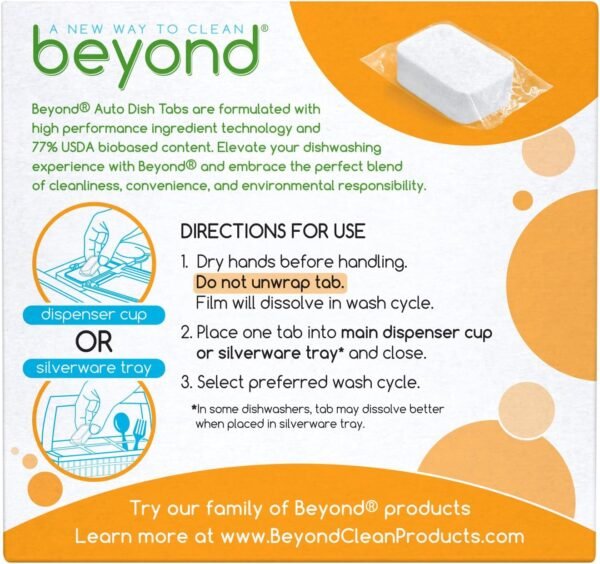
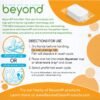
Use one tablet per cycle, placed in the dispenser or, if the machine has no closing dispenser, in the silverware tray. CF Direct notes that the film dissolves and the tablet does not need unwrapping. That leads directly to the most important handling instruction: do not handle the tablets with wet hands. The water soluble film starts dissolving on contact with moisture, which puts concentrated detergent directly onto skin.
Store the box closed, dry and out of reach of children. Dishwasher detergent tablets are alkaline concentrates in a small, colorful, sweet looking format, and swallowed or chewed tablets cause chemical burns to the mouth and throat. Keep them in a high cupboard rather than under the sink, and keep them in the original box rather than decanted into a jar where they lose their warning label. Never combine a tablet with another dishwasher product in the same cycle, never add bleach to a machine running a tablet, and do not open the machine mid cycle to add anything. Also do not leave a tablet sitting in a damp dispenser between washes, because a partly dissolved tablet will not dose correctly.
Running cost and the comparisons worth making
The cost structure of a tablet is one fixed dose per wash, which makes cost per cycle trivial to calculate and makes tablets easy to compare against each other. Where tablets lose to powder is flexibility: a powder lets you use less on a light load and more on a heavy one, and over a year that difference is real. Where tablets win is that nobody in the household has to judge a dose, and there is no spilled powder in the bottom of the machine.
Against other tablets and pods, the comparisons on this site include the Seventh Generation dishwasher detergent, which competes on similar formulation claims, and the Cascade Platinum, which competes on cleaning performance. Note also that no detergent fixes a dirty machine: if glasses come out cloudy regardless of tablet, run a machine cleaner such as the Rutledge Brands dishwasher cleaner before changing detergent again. The full dishwasher detergent category and the rinse aids category cover the rest of the system.
Who should buy it, and who should not
Buy it if you want a fragrance free, dye free, chlorine bleach free tablet, you value the USDA biobased certification, and your machine runs short cycles where a fast dissolving tablet matters. Skip it if you need a published ingredient list, if your loads are heavily soiled and you want to vary the dose, or if you need a strong rinse aid effect in very hard water without adding a separate product. And note that CF Direct itself warns that packaging changes from time to time, so the box that arrives may not match the images on the listing.