Description
The job, and why stone needs its own cleaner
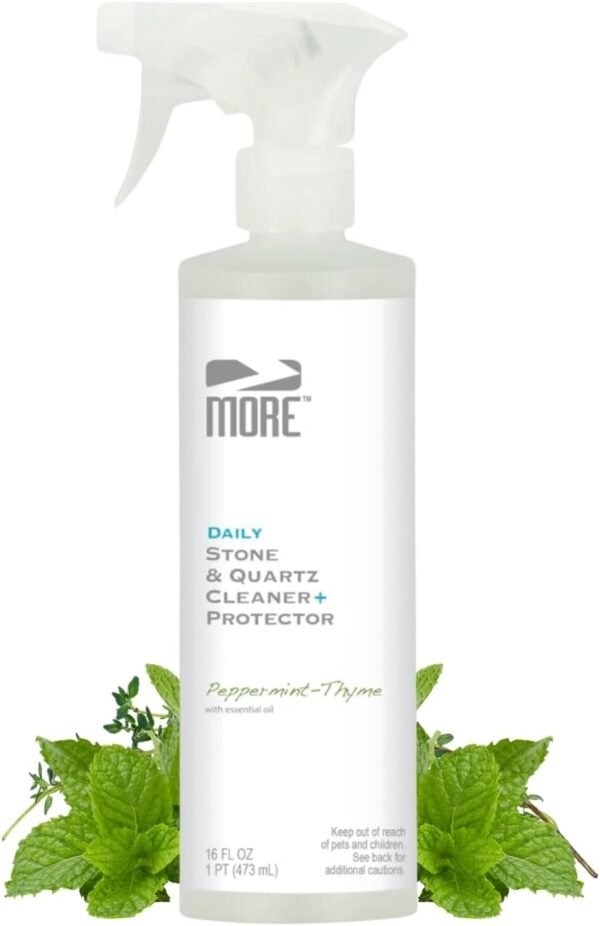
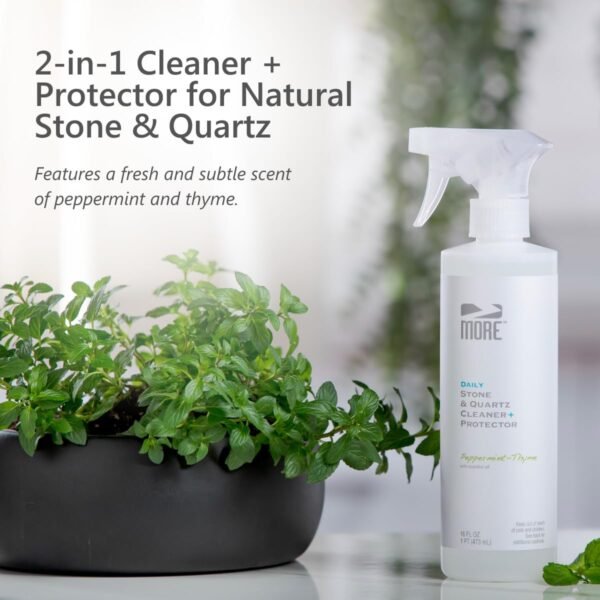
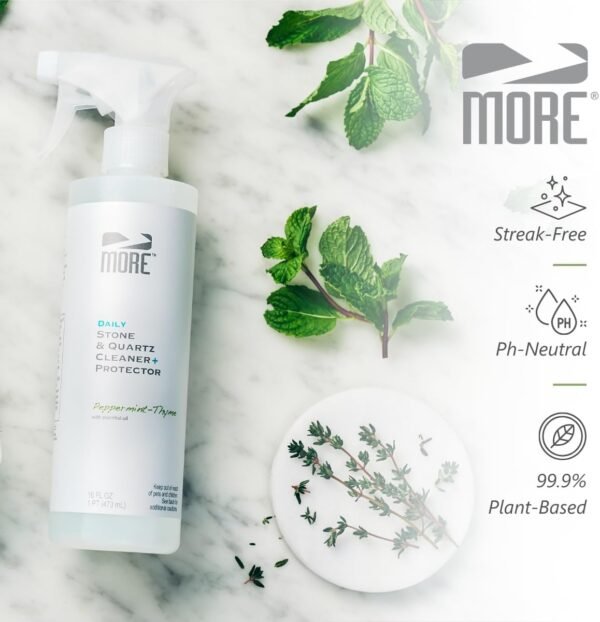
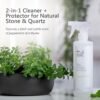
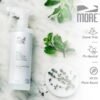
MORE Surface Care sells this as a two in one daily cleaner and protector formulated specifically for natural stone and quartz, supplied as a 16 ounce water based trigger spray scented with peppermint and thyme essential oils. It is filed here under all purpose cleaners, which understates what it is: this is a specialty product for a specific class of surface, not a general household spray.
Stone genuinely does need its own cleaner, and the reason is chemistry rather than marketing. Marble, limestone, travertine and onyx are calcite based, which means they react with acids. An acidic cleaner does not simply fail to clean them, it etches them, leaving dull patches in the polish that no further cleaning will remove because the surface itself has been eaten. Granite and quartz are more tolerant of acid but are vulnerable at the sealer and the resin binder instead. Either way, the general purpose sprays in most kitchens are the wrong tool, and a household with stone counters or stone floors has a real reason to keep a separate bottle. If your counters are laminate or solid surface, a general cleaner from the all-purpose cleaners category will do the same job for less.
The formulation, and the gap in the middle of it
MORE states that the formula is neutral pH and water based, that it gently dissolves dirt and grime, and that it reinforces stain protection with every cleaning. Neutral pH is the specification that matters most for this surface, and it is good that the company states it plainly rather than leaving a buyer to guess, which is what almost every other listing in this catalog does.
Four ingredients, none of them named
The company then says the product is made with four ingredients, including a blend of essential oils, and does not name any of them. That is an unusual shape for a claim: the number is offered as evidence of simplicity while the substance is withheld. A buyer with a fragrance sensitivity cannot check the essential oil blend, and a buyer trying to work out how a cleaner reinforces stain protection cannot see what is doing it. Read the printed label and, if the detail matters to you, ask the manufacturer for a full declaration before use.
MORE also states that the water based formula has less impact on indoor air quality, so it can be used on kitchen and bathroom countertops and floors. That is the manufacturer’s own statement about its product, not an independent assessment, and it is worth reading as a comparison against solvent based cleaners rather than as an absolute. The listing records the product as ranked 178th in All-Purpose Household Cleaners and 12,917th across Health and Household, first available in August 2015, model MSQ16. The Customer Reviews field on this record contains a sales rank string rather than a star rating, so there is no rating figure to quote.
The stones it covers, and what a protector does not do
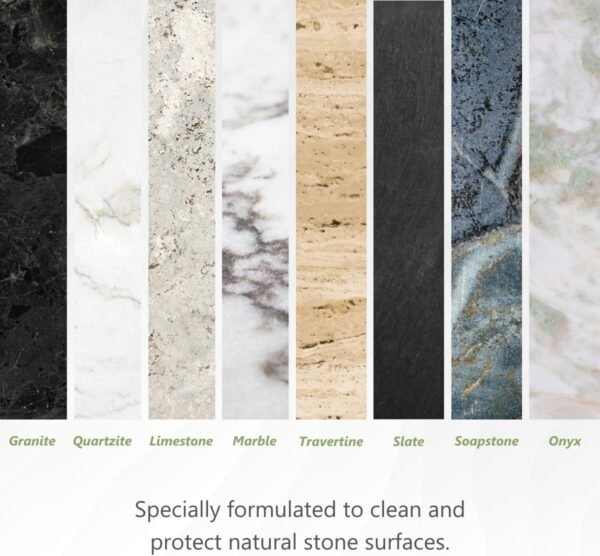
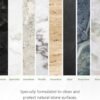
MORE names granite, marble, quartzite, limestone, travertine, onyx, slate, soapstone and other natural stone and quartz surfaces, and adds that the wider MORE range covers ceramic, porcelain and concrete. That list is unusually specific and it covers both the acid sensitive stones and the harder ones, which is consistent with a neutral pH product.
The important clarification is what the protector half of the claim means. Reinforcing stain protection with every cleaning is not the same as sealing stone. A penetrating sealer soaks into the pores of the stone and is applied periodically as a separate job, usually annually or less often depending on the stone and the traffic. A protective agent carried in a daily cleaner sits on top and is renewed each wipe. The two are complementary, not interchangeable, and a stone that has never been sealed will still absorb oil and wine regardless of how often it is cleaned with this. If your counter darkens where water sits and does not lighten again, that is a sealer job, not a cleaner job.
What to keep off stone generally is worth stating alongside this, because it is where most damage comes from: vinegar, lemon juice, bleach, ammonia, bathroom descalers, tub and tile sprays with an acid, and abrasive powders. Products like the Bar Keepers Friend powder cleanser are excellent on stainless and porcelain and are the wrong choice on a polished stone counter, whereas the same brand’s stone cleaner exists precisely because the general purpose version is not suitable there.
Using it, and storing it
The method MORE gives is short: spray the countertop or vanity and wipe away with a dry cloth or paper towel, for a streak free surface with no residue. Two additions make that work better in practice. Wipe spills as they happen rather than waiting for the weekly clean, because acid spills such as citrus, wine and tomato do their damage in the minutes they sit, not in the days afterward. And use a soft cloth rather than anything abrasive, since polished stone shows fine scratching under raking light long before it looks worn.
On a floor rather than a counter, spray in small sections and work with a flat mop so the liquid does not dry before it is wiped, and keep water away from the joints in a stone floor where the grout is unsealed.
Storage and safety are straightforward for a neutral, water based product, and simpler than for most items on this site. Keep it capped, upright and out of reach of children, keep it out of eyes, and do not decant it into an unlabeled bottle. The rule that always applies applies here too: never combine it with another cleaner. Adding a general purpose spray, a bleach product or a descaler to this one defeats the entire reason for buying a neutral stone cleaner and can produce a mixture that etches the surface you were protecting.
What it costs to run, and the alternatives
Sixteen ounces of ready to use spray is a small bottle, and daily counter cleaning goes through it faster than a weekly routine does. The cost structure is the usual one for ready to use liquids: you pay to ship water, and in exchange you never mix anything. For a specialty cleaner used on one counter run, that is a reasonable trade, and the volume is less painful than it would be on a whole floor. If you have large areas of stone flooring, look for a concentrate sold for the same surface rather than buying pint bottles repeatedly.
Worth comparing: the Stone Pro stone and glass scrub for the heavier cleaning this daily spray is not meant to do, and a soft cream cleanser such as the Campester soft cleanser for the non stone surfaces around the same kitchen. For the rest of the room, a general cleaner like the Mr Clean liquid cleaner covers what stone specific products should not be spent on, and the glass cleaners category handles splashbacks and windows, where a stone formula is not what you want.
Who should buy it
Buy it if you have natural stone or quartz counters, vanities or floors, you want a stated neutral pH rather than a guess, and you are content with a daily maintenance spray rather than a heavy duty cleaner. The named surface list and the pH statement put this listing ahead of most of its category on documentation. Skip it if your surfaces are laminate, solid surface or tile, where a cheaper general cleaner does the same work, if you need a full ingredient declaration, or if what you actually need is a penetrating sealer, which this product is not despite the protector in its name.