

Description
A very large bottle of a very familiar cleaner
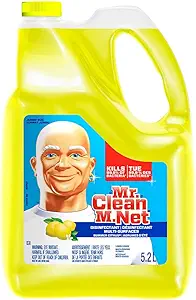
This is Mr. Clean Multi-Surfaces Liquid Cleaner in the Summer Citrus scent, a 176 fluid ounce bottle from Procter and Gamble, model 07597. That volume is the story. At eleven pints it is a bulk container rather than a shelf bottle, listed with a shipping weight of 12.32 pounds, and it is bought by households that clean hard floors and hard surfaces often enough that a standard bottle runs out too fast.
The product itself needs little introduction. Mr. Clean is a general purpose liquid cleaner used diluted in a bucket for floors and mixed in a spray bottle or applied on a cloth for other hard surfaces. It is not a disinfectant, it is not a degreaser sold for heavy industrial soil, and it is not a specialist floor finish. It is the cleaner people reach for when a hard surface is dirty and nothing more specific is called for, and there is nothing wrong with that being the job.
The household this suits has hard floors and buys cleaning products in bulk. If your floors are carpet and your cleaning is mostly kitchen counters, a 176 ounce bottle will still be under the sink in three years and a smaller container makes more sense.
The listing is almost entirely empty
This has to be said plainly, because it shapes everything else in this review. The description field on this listing reads, in full, “Mr. Clean Multi-Surfaces Summer Citrus Liquid Cleaner, 176 Fluid Ounce Bottle”. The single feature bullet reads the same sentence again. That is the entire content of the page apart from the specification block.
So there is no ingredient list, no surfactant named, no pH given, no fragrance disclosure and no safety information. There is also, and this matters more than any of it, no dilution guidance whatsoever. A general purpose liquid cleaner of this type is a concentrate that is meant to be diluted, and the ratio is what determines whether you get a clean floor or a sticky one. The bottle carries dosing instructions. The listing does not, and this review will not invent a ratio. Read the label before the first use and measure rather than pouring by eye, because using more than the stated dose is the single most common cause of a dull, tacky film on a floor.
A small error in the specification block
The manufacturer field reads Proctor and Gamble, which is a misspelling of Procter and Gamble. It is trivial in itself, but it is a useful signal about how much editorial attention this listing received, and it is consistent with the empty description. Amazon ranked the bottle five hundred and seventh in All-Purpose Household Cleaners when the data was captured.
Surfaces it suits and surfaces to keep it away from
General purpose liquid cleaners of this class are for sealed, hard, water tolerant surfaces: sealed tile, vinyl, linoleum, laminate, painted woodwork, plastic, and sealed countertops. Because the listing publishes no pH and no ingredients, treat compatibility as unproven and test any surface you care about in a hidden spot first.
Several surfaces need caution regardless of brand. Unsealed or waxed wood should not be washed with a general cleaner and water, because water raises the grain and a general cleaner can strip a wax finish. Natural stone, especially marble, limestone and travertine, has its own requirements and should be cleaned with a stone specific product. Unsealed grout absorbs whatever is applied to it. Aluminum, brass and other soft metals can discolor with alkaline cleaners. Electronics, screens and lens coatings should never be wiped with a household cleaner.
It is also not the right tool for two jobs it often gets used for. It will not clear a drain, which needs a product from the drain opener listings. And it will not disinfect. If you need a surface disinfected rather than cleaned, use a product with a registered label and a stated contact time, such as the Clorox disinfecting all purpose cleaner, and follow the wet contact time printed on it. Cleaning and disinfecting are separate operations and one does not substitute for the other.
Dilution, ventilation and the mixing rule
Follow the bottle for dilution. Mix in a clean bucket or a clean, clearly labeled spray bottle, and use a fresh mix rather than keeping diluted solution for weeks. Labeling matters more than people think: a diluted cleaner in an unmarked bottle is a genuine household hazard, particularly in a home with several concentrates in use.
Never combine this or any cleaner with another product. That means not adding chlorine bleach to a bucket of general cleaner, not mixing it with an ammonia based glass cleaner, and not using it on a surface immediately after an acidic descaler. Bleach with ammonia produces chloramine and bleach with acid produces chlorine gas, and a bathroom or a mop bucket is a poor place to discover either. Do not reuse a bottle that held a different cleaner without rinsing it thoroughly.
Ventilate while mopping, keep the container capped, upright and out of reach of children, and wash hands afterward. A wet floor is slippery, so keep people and pets off it until it dries, and pay particular attention at the top of stairs. Do not decant into a drink container, which is the way a lot of avoidable poisonings happen with bulk containers of this size.
What a bulk bottle actually saves
The cost argument for a large concentrate is real and it works on two levels. You pay less to ship water and packaging, and you replace a bottle far less often. A 176 ounce container diluted according to the label produces a very large number of buckets of working solution, which is why this size is bought by people who mop weekly rather than monthly.
The trade offs are handling and storage. Twelve pounds of liquid is awkward to pour accurately, and pouring straight from a bulk jug into a bucket is exactly how people overdose. Decant into a smaller labeled bottle for daily use. Storage space under a sink is the other constraint, and a bottle this size will not fit everywhere.
Against it, a concentrate sold in smaller volumes such as the Zep multi purpose cleaner concentrate or the Branch Basics concentrate covers the same ground with less handling, and the Mela Magic all purpose cleaner is another bulk concentrate to weigh against it. The full all purpose cleaner listings cover ready to use and concentrate formats together.
Who should buy this and who should not
Buy it if you mop hard floors regularly, you already know and like this cleaner, and you want to buy it in bulk to reduce packaging and trips. For that buyer the large bottle is straightforwardly the cheaper way to buy the same product.
Do not buy it if you need to know what is in a cleaner before you use it, because this listing tells you nothing. Do not buy it for unsealed wood, natural stone or waxed floors without checking the label. And do not buy a bulk container if you have nowhere secure to store twelve pounds of concentrate away from children.