
Description
A trap and a zapper in one housing
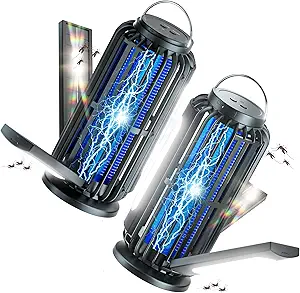
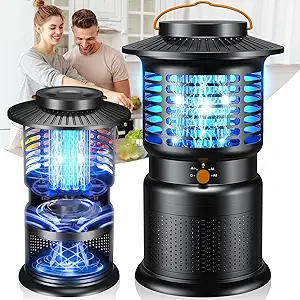
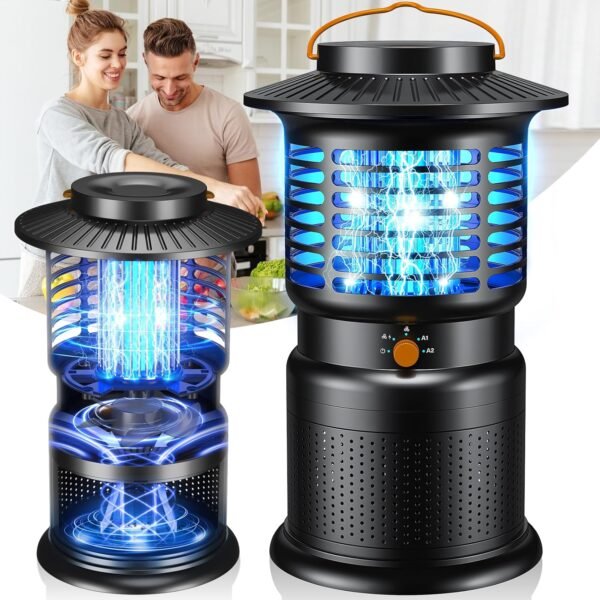
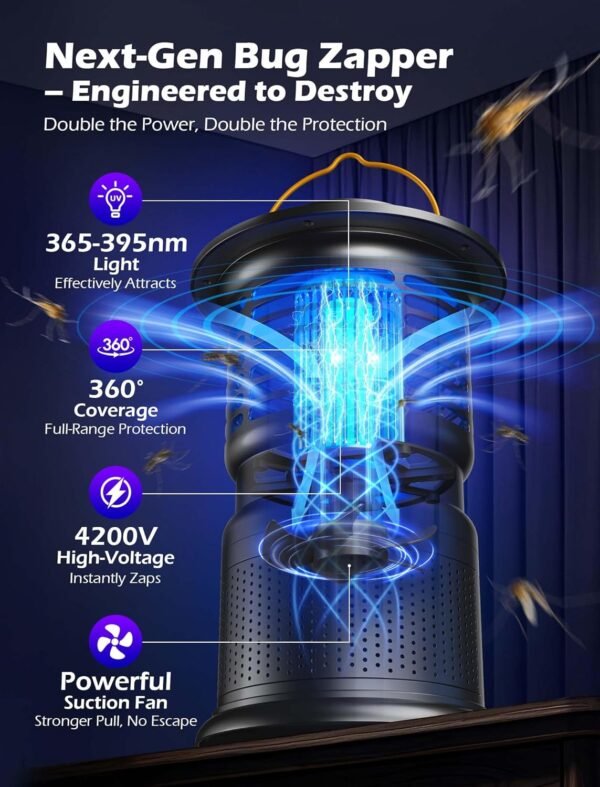
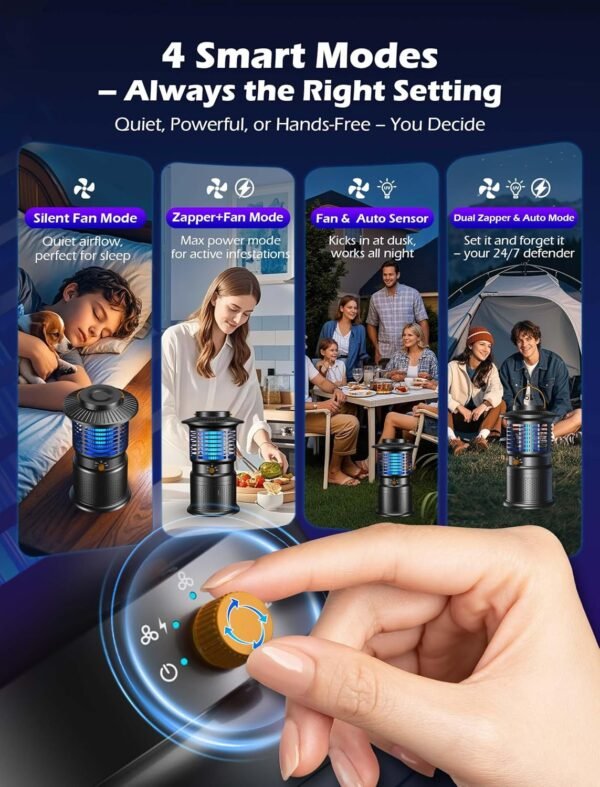
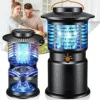
This unit combines two mechanisms that are usually sold separately. There is a high voltage grid, which kills insects on contact in the way an ordinary zapper does, and there is a suction fan, which draws insects into a chamber they cannot escape from. The listing markets it as a four in one device, though it never enumerates the four functions, so the count is a marketing figure rather than a specification.
The suction half is worth taking seriously. Fan based traps are the design that mosquito research generally treats as more promising than a bare electrified grid, because a mosquito drawn close to a light does not always fly into the wires, whereas a fan pulls it in regardless. That is a reason to prefer this configuration over a plain grid. It is not evidence about this particular unit, and the listing supplies none: there is no catch data, no coverage area, no independent testing and no reference to any study. Any expectation about how many mosquitoes this catches has to come from somewhere other than this page.
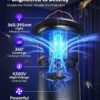
It is a battery powered, portable unit with a 10,000 milliamp hour lithium ion cell and USB-C charging, weighing 2.44 pounds and measuring 7 by 7 by 11 inches, and it can also be run plugged in. The record shows 124 ratings averaging 4.2 stars and a rank of 178th in Bug Zappers.
The specification, and the numbers that are missing
What is published is the battery, the dimensions, the weight and the charging method. What is not published is most of what determines whether a zapper works.
There is no grid voltage. There is no lamp wavelength, which for a light based trap is the single most relevant optical specification, since different insects respond to different parts of the ultraviolet and visible spectrum. There is no stated coverage area, so there is no way to judge whether one unit serves a patio or a corner of it. There is no runtime figure attached to the battery capacity, only a claim that it runs all night, and runtime depends entirely on whether the fan and the grid are both drawing at the same time. There is no model number on the record at all, and the brand attribution is inconsistent: the title carries no brand, the manufacturer field reads Shenzhen Wanzhong Import and Export, and the sixth bullet refers to a GTERT bug zapper.
Weatherproof, without a rating
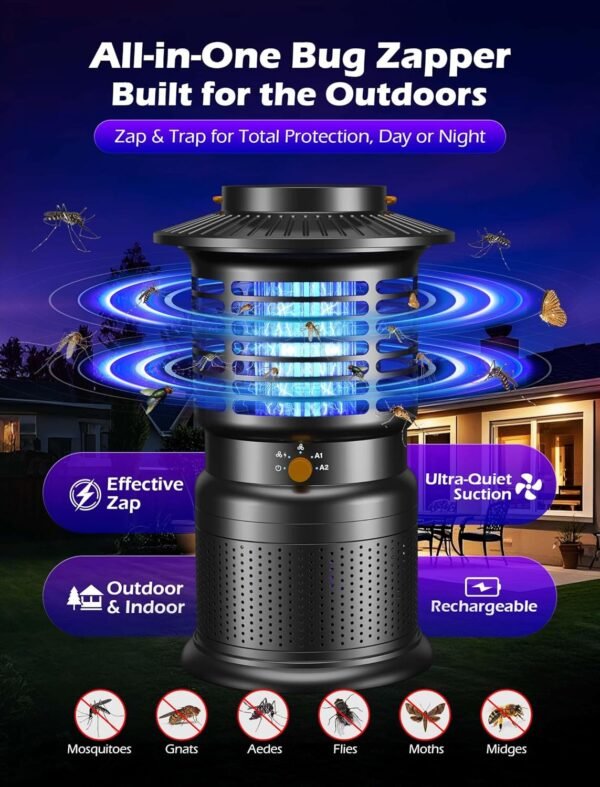
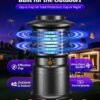
The listing describes the unit as weatherproof and says it features a water resistant design that works even in wet conditions. No ingress protection rating is given. That is the number that would make the claim meaningful: an IPx4 rating covers splashing, an IPx5 covers jets, and only higher ratings approach genuine rain exposure. Without one, treat the unit as suitable for a covered position rather than open weather, particularly since it carries a large lithium ion battery. If it is used outdoors and charged outdoors, use a ground fault protected outlet.
Placement, and one recommendation to think twice about
A trap works by attraction, which means where you put it decides whether it pulls insects away from you or toward you. Site it at the edge of the area you want to protect, away from where people sit and eat, and preferably between the seating and the direction insects arrive from. A trap in the middle of the patio table is drawing insects to the table.
The listing recommends the unit for bedrooms, nurseries and tents, and the nursery recommendation is the one to question. This is a mains or battery powered device with a high voltage grid, a fan, an ultraviolet light and a large lithium cell, and a nursery is a room containing a sleeping infant and, in due course, a mobile toddler. The manufacturer says a protective housing keeps children and pets safe, and cites no standard for that claim. Our view is simpler: if you use it in a room where a child sleeps, put it out of reach entirely, and consider whether a physical barrier such as a bed net solves the same problem with no electricity, no light and no battery in the room.
Do not place it where the collection chamber sits above food or a food preparation surface. Do not put it next to curtains, bedding or anything else flammable. And be aware that a light based trap catches many insects that are not mosquitoes, including moths and beetles that are harmless or beneficial.
Charging, cleaning and safe operation
A 10,000 milliamp hour lithium ion battery is a substantial cell, comparable to a large power bank, and it deserves the handling that implies. Charge it on a hard surface rather than on a bed or a sofa, use the supplied USB-C cable, and do not leave it charging unattended overnight. Stop using it if the housing swells, gets hot in normal use, or if the port or cable is damaged. Do not charge it in the rain, and do not store it fully discharged for months or in a hot car.
Before cleaning, switch the unit off and disconnect it from power, and give it a moment before opening anything. High voltage grids can retain a charge after the power is removed. Use the supplied cleaning brush rather than fingers, and never push anything metal into the housing.
Empty the collection chamber regularly rather than waiting for it to fill. Debris on a grid causes arcing, debris in a fan chamber restricts airflow, and either one reduces whatever effectiveness the unit has. Do not wash the unit, do not spray cleaner into it and do not rinse it: there is a battery and a grid inside, and the water resistance claim has no rating behind it. Do not use aerosol insecticide near a running zapper, since propellants are commonly flammable and a sparking grid is an ignition source.
Running cost and the alternatives
The cost structure is a purchase price, no consumables beyond eventual battery decline, and the electricity to recharge, which is negligible. Where a rechargeable unit differs from a mains one is lifespan: the battery is the part that ages, and it is not user replaceable in most designs of this type, so the working life of the whole device is bounded by it.
On this site, the mains powered Devogue DVG004 is the comparable fixed position unit, the PIC solar bug zapper removes both the cable and the charging routine, and the Raindot NLZQ1 and Huajiapeng XT-01 are further options in the same category. For an approach that does not involve killing anything or plugging anything in, the mosquito repellent ball sits in the repellents category. Browse the full bug zappers category to compare, and note how few units in it publish a coverage area or a wavelength.
Who should buy it, and who should not
Buy it if you want a portable trap you can move between a patio, a campsite and a shed, you like the combination of a fan and a grid rather than a grid alone, and you accept that no performance data is published. Skip it if you need a coverage figure or a weatherproofing rating before buying, if you were expecting documented mosquito effectiveness, or if the intended room is a nursery, where a high voltage device with a large lithium battery is not our recommendation regardless of the housing. And treat the four in one description as a marketing figure: the listing never says what the four functions are.