
Description
What the unit is and where it belongs
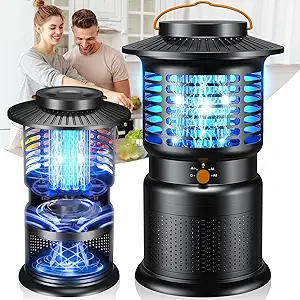
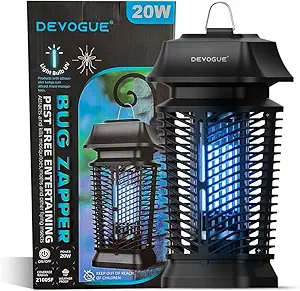
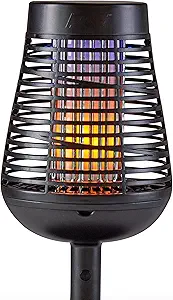
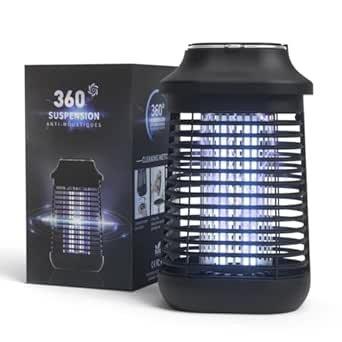
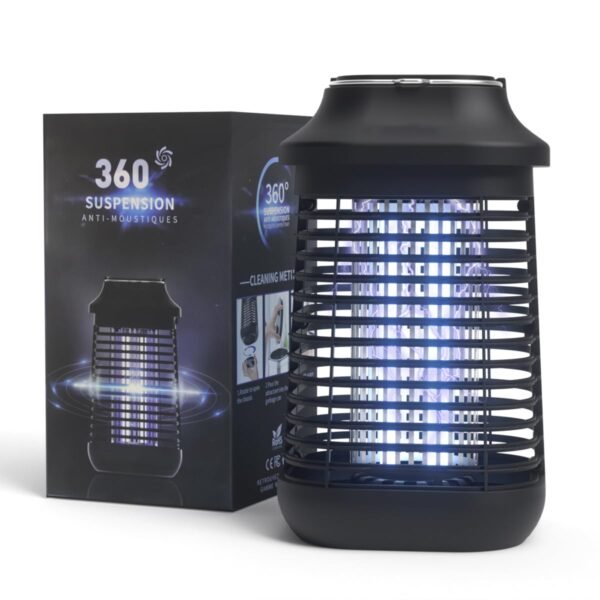
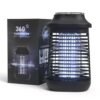
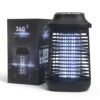
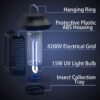
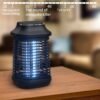
The Raindot NLZQ-1 is a mains powered ultraviolet insect zapper measuring 6.1 by 6.1 by 10.5 inches and weighing 2.01 pounds. Raindot is the manufacturer, the listing dates to September 2021, and it sits 2,748th in Patio, Lawn and Garden and 45th among bug zappers. The stated specification is a 15 watt ultraviolet A tube, a galvanized steel grid at 4200 volts, an IPX4 water rating, a removable collection tray, a cleaning brush, a hanging ring and a 3.6 foot power cord.
That cord length is the first practical fact. Forty three inches is short. Any outdoor placement will need an extension lead, and that lead has to be rated for outdoor use and ideally plugged into a ground fault circuit interrupter outlet. Indoors, it means the unit has to sit close to a socket, which restricts where it can go far more than the hanging ring suggests.
The household this suits has a porch, a patio, a garage or a utility area with a night flying insect problem and a socket nearby. A collection tray and a brush are sensible inclusions, because a zapper that is never cleaned stops working and starts smelling.
How it works, and what the listing cannot support
The mechanism is standard for the category. An ultraviolet tube draws flying insects toward the unit and a charged grid electrocutes whatever touches it. Raindot calls the grid non clogging and rates it at 4200 volts, and specifies galvanized steel, which is the usual material for outdoor grids because it resists corrosion.
The claim that needs qualifying is the mosquito one, which runs through the title and every bullet. Published research on light based zappers and mosquito control is mixed, and this listing offers no independent data of any kind: no trial, no catch counts, no comparison. Mosquitoes locate people mainly by exhaled carbon dioxide, body heat and skin odor rather than by ultraviolet light, which is why traps aimed specifically at them normally add a lure. What an ultraviolet grid reliably catches is moths, midges, beetles and other night flying insects, a good number of which are harmless or useful. If the goal is specifically to stop being bitten, a light trap is at best one part of an approach, and repellent products such as the mosquito repellent ball work on a completely different principle.
Placement, which decides whether it helps or hurts
A zapper attracts insects toward itself. Hanging one directly over the seating area means you have built a flight path across the people you were trying to protect. Place it fifteen to thirty feet away, at the edge of the area, and away from doors so it does not pull insects toward an entrance.
Raindot suggests hanging it near a grill, and that is the one placement to avoid. An electrocuting grid scatters fragments of the insects it kills, and a barbecue is an open food surface. The same reasoning applies to the kitchen use the listing recommends: keep it away from food preparation and eating areas.
The claims that do not hold together
Three things on this listing need naming rather than repeating.
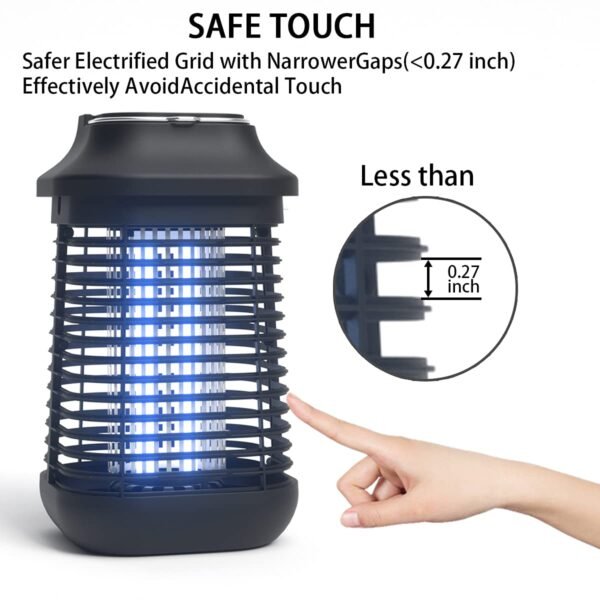
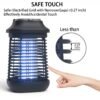
The first bullet says the unit is safe for children and pets. It is a 4200 volt grid. Whatever the enclosure spacing is, that is a broad safety assertion on a high voltage device, with no standard cited and no guard specification given, and it should not be relied on. Keep it out of reach of children and away from pets.
The IPX4 rating is described as meaning you can use it normally in the rain and that it is completely splash proof. IPX4 covers splashing water from any direction. It does not cover heavy rain, jets, or immersion, which are higher ratings. The same bullet also recommends the bathroom, which is a humid enclosed space with a mains device, and that combination deserves more caution than the listing gives it.
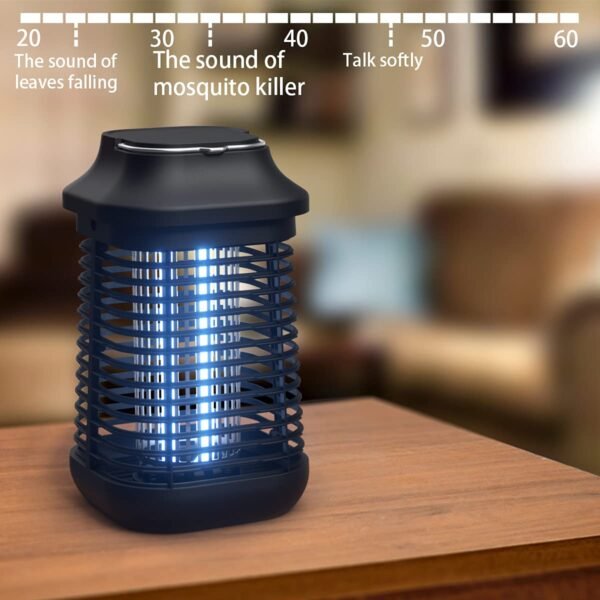
The listing also describes the unit as quiet. An electrocuting grid makes an audible snap each time it kills something. A zapper that is working is not silent, and a buyer choosing this for a bedroom on the strength of the word quiet may be disappointed.
Using it and cleaning it safely
Credit where it is due: this listing gives real safety instructions, which many in the category do not. Unplug the unit before cleaning. Do not touch the grid with wet hands or with anything that conducts electricity. Both are correct and both should be followed literally, including waiting a moment after unplugging before reaching inside.
Pull out the collection tray after heavy use and empty it, then brush the grid with the supplied tool while the unit is unplugged. Debris bridging the grid is what causes a zapper to arc continuously or to stop killing, so cleaning is maintenance rather than housekeeping.
Do not use it near flammable vapors, in a garage where fuel or solvents are stored, or under a fabric awning that could catch a spark. Do not run it from an indoor extension lead through a window. Raindot notes that the bulb can work loose in transit and may need reseating if it does not light, which is worth checking before assuming a fault. Ultraviolet tubes also lose output long before they stop lighting, so a unit that seems to catch less after a season or two probably needs a new tube rather than replacing.
Running cost and the alternatives
A 15 watt tube running through the night is a small but continuous electricity cost, which is the main running expense along with eventual tube replacement. There is no chemical consumable, which is the format’s advantage over anything spray based.
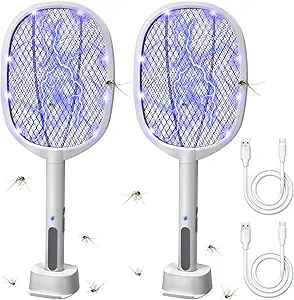
Compare it against the other approaches in the catalog. The cordless rechargeable zapper removes the cord problem entirely and can be hung anywhere. The PIC solar zapper removes the power question altogether at the cost of output. The Lulu Home zapper is a comparable mains unit. For control over what actually gets killed, a handheld like the Minimoon electric fly swatter is a different tool for a different problem. Browse the category under bug zappers and the chemical free alternatives under repellents.
Who should buy it and who should not
Buy it if you want a mains powered light trap with a removable tray and a brush for a porch, garage or utility space near an outlet, and your target is night flying insects generally. The cleaning design is sensible and the safety instructions on the page are better than most.
Do not buy it on the strength of the mosquito claims alone, since no data of any kind supports them here. Do not hang it near a grill or over a table, whatever the listing suggests. Do not treat the safe for children and pets line as an assurance on a 4200 volt device. And plan for an outdoor rated extension lead, because 43 inches of cord will not reach anywhere useful outside.