
Description
What this unit is and where it would go
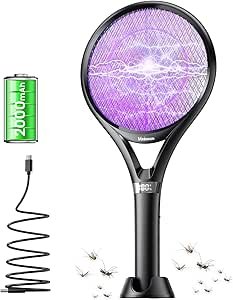
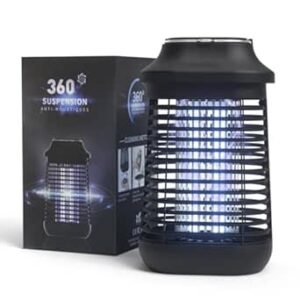
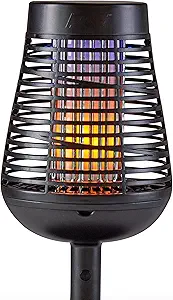
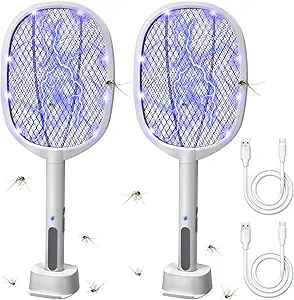
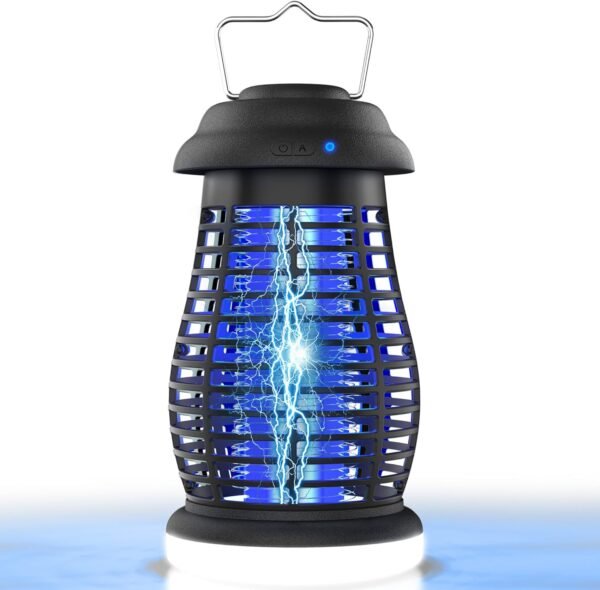
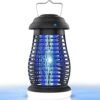
This is a cordless electric insect zapper from Shenzhen Soer Optoelectronic Technology, ASIN B0DW7L7399, weighing 1.48 pounds with a carton of 10.12 by 5.39 by 5.31 inches. It carries 648 ratings at 4.3 stars and sits 508th in Patio, Lawn and Garden and 12th among bug zappers.
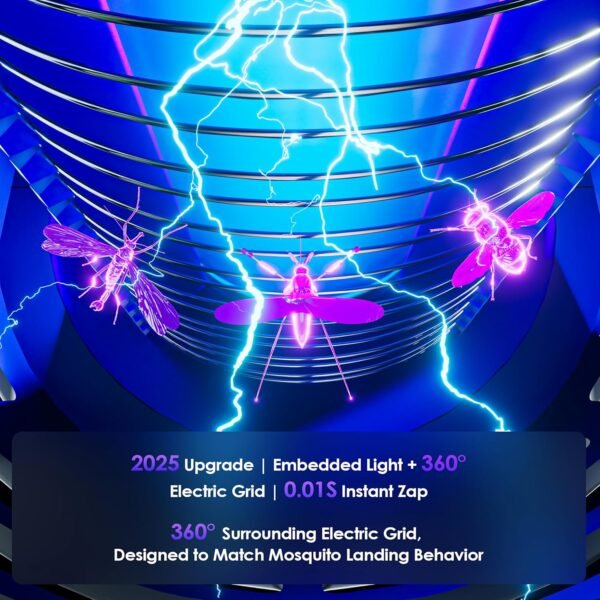
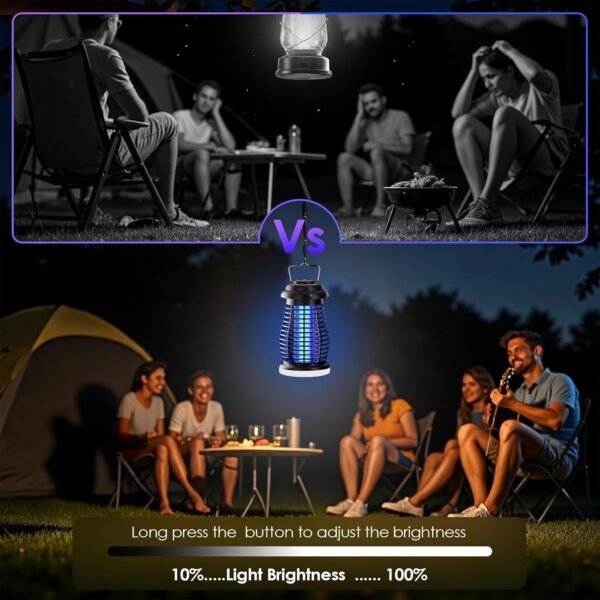
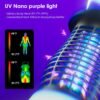
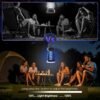
The specification the manufacturer leads with is a 4200 volt grid. It states a 4800 milliamp hour lithium polymer battery, USB-C charging in two to three hours, up to 30 hours of running time, an IP67 rating, a light sensing chip that switches the unit on at dusk and off at dawn, and a coverage claim of 2,100 square feet using a 365 to 395 nanometer ultraviolet LED. It doubles as a camping light.
The cordless part is the real differentiator. A mains powered zapper has to hang where there is an outlet, which is usually the wrong place. A battery unit can be hung at the far end of a yard, on a tent guy line, or over a compost area, which is where you actually want it.
How a light trap works, and what the evidence does not support
An ultraviolet light trap works by attracting flying insects to a light source and electrocuting them on a charged grid. The mechanism is real and it is efficient at what it does. The question is what it catches.
The listing claims 2,100 square feet of coverage and says the blue violet LED system increases insect attraction by 70 percent. No baseline is given for that 70 percent: increased compared with what light, measured how, over what period, against which species. A percentage without a comparator is not a figure a buyer can use.
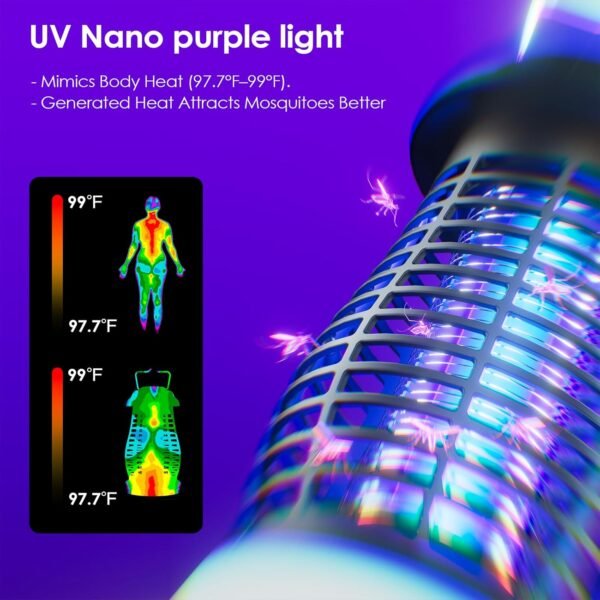
More importantly, published research on light based zappers and mosquitoes is mixed, and the honest position is that this listing provides no independent data of any kind. Mosquitoes orient largely on exhaled carbon dioxide, body heat and skin odor rather than on ultraviolet light, which is why traps designed specifically for them usually add a carbon dioxide or lure component. What an ultraviolet zapper reliably catches is moths, midges, beetles, lacewings and other night flying insects, many of which are harmless or beneficial. Anyone buying this specifically to stop being bitten should know that going in, and should treat it as one part of an approach rather than the answer. Repellent products such as the mosquito repellent ball work on a different principle, and the ultrasonic repellers category takes a third approach again, with its own evidence questions.
Placement is the part people get wrong
A zapper attracts insects toward itself. That is the whole mechanism, and it means the worst place to hang one is directly above the table where people are sitting, because you have just built a flight path across your guests. Hang it fifteen to thirty feet away from where people are, at the edge of the area you want protected, ideally upwind and away from doors. A unit near a patio door draws insects to the door.
Ratings, wording and the contradictions on the page
The listing calls the product a mosquito repellent in three separate bullets. It is not a repellent. A repellent keeps insects away from a person or an area, while a zapper draws them in and kills them. Those are opposite behaviors and the wording confuses the two throughout.
The IP67 claim is stated alongside rainproof, high temperature resistant and drop proof. IP67 is a specific rating covering dust ingress and temporary immersion in water. It says nothing about temperature tolerance and nothing about impact resistance, so two of those three claims are riding on a rating that does not cover them.
The copy itself is worth noting: bullets include phrases like crispy critter confetti and a comparison to a napping cat. That is unreviewed listing copy, and it sits oddly on a mains free high voltage device. Nowhere on the page is there a safety warning of any kind.
Using it safely, indoors and out
A 4200 volt grid is not a toy. Keep the unit out of reach of children and pets, never poke anything into the grid, and switch it off and let it discharge before cleaning. Clean it with the supplied brush when it is off and unplugged, not with a wet cloth. Do not use it near flammable vapors, near a barbecue, or in a garage where fuel is stored.
The listing recommends kitchens and bedrooms among the suitable locations, and that deserves a caution the seller does not give. An electrocuting grid disperses fragments of the insects it kills into the air around it. That is a reason not to hang one directly over a food preparation surface, a dining table or an open pan, whatever the listing suggests. Outdoors, or in a utility area, is a better fit for the technology.
On the battery: it is a lithium polymer pack. Charge it with a USB-C supply, do not leave it charging unattended for long periods, do not charge a wet unit, and do not store it fully discharged for months. If the housing is damaged or the pack swells, stop using it. Store it dry and out of direct sun over winter.
Running cost and the alternatives
The cost structure of a cordless zapper is favorable in one specific way: there is no consumable. No cartridge, no refill, no chemical. The recurring cost is the battery’s service life, and a lithium polymer pack in an outdoor device has a finite number of cycles. If the pack is not user replaceable, and this listing does not say whether it is, the battery life is the product life.
Alternatives in the catalog split by power source and format. The PIC solar bug zapper removes charging from the equation entirely. The Lulu Home zapper and the Raindot zapper are comparable units at different coverage claims. For targeted indoor use where a passive trap is unwanted, a handheld unit such as the Minimoon electric fly swatter puts you in control of what gets killed. Browse the full range under bug zappers.
Who should buy it and who should not
Buy it if you want a cordless, weather rated light trap you can hang anywhere in a yard or take camping, and your problem is night flying insects generally rather than mosquitoes specifically. The battery capacity and the dusk sensor are genuinely useful features for that use.
Do not buy it as a mosquito solution on the strength of this listing, which offers a coverage number and a percentage with no method behind either and no independent data. Do not hang it over a table or a food surface. And do not treat the IP67 rating as covering impact or heat, because it does not.