Description
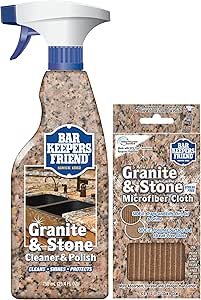
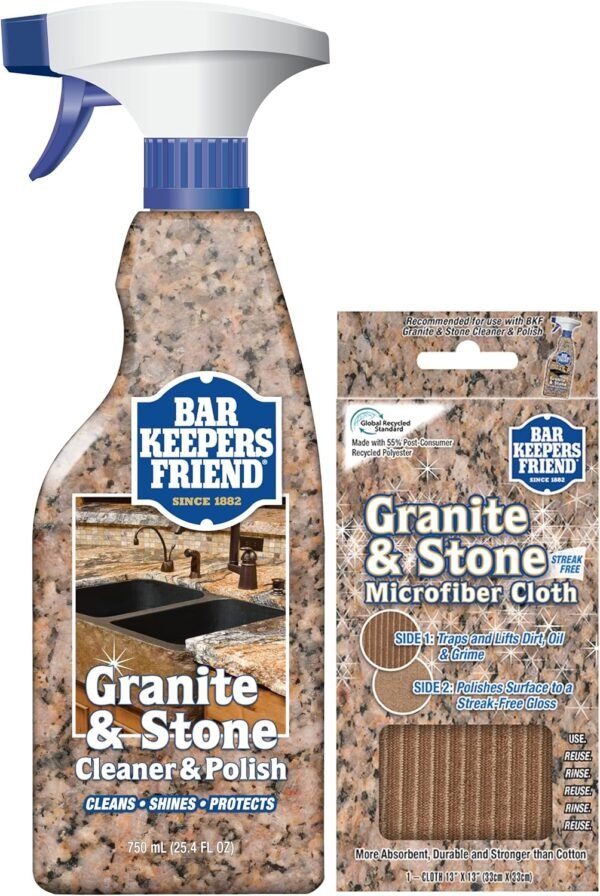
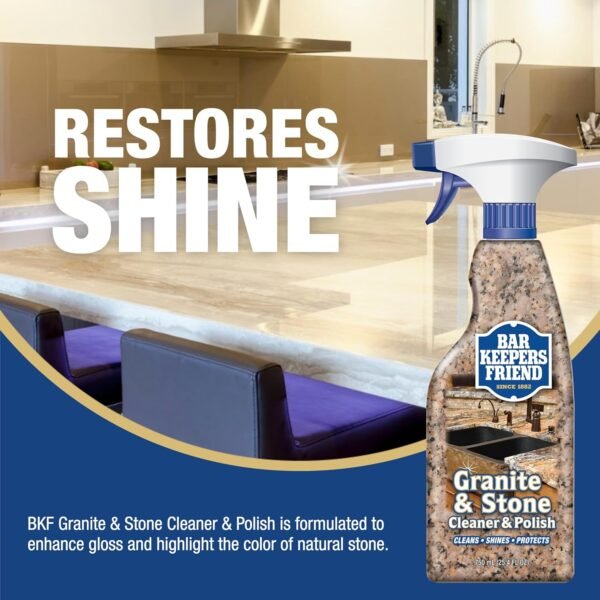
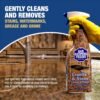
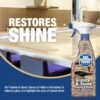
This is a two piece kit: a 25.4 ounce spray bottle of Bar Keepers Friend Stone and Granite Cleaner and Polish, plus one microfiber cloth. It is aimed at natural, manufactured and polished stone countertops, and the first thing to understand is that it has almost nothing in common with the scouring powder that made the brand’s name.
Why stone needs its own cleaner
Stone countertops fail in two different ways, and most damage comes from using the wrong product rather than from wear. Marble, travertine and limestone are calcium based, and any acid touching them causes etching, a dull mark in the polish that no amount of cleaning removes because the surface itself has been eaten. Granite is harder and more acid tolerant, but it is normally sealed, and strong or abrasive cleaners strip that sealer so the stone starts absorbing oil and wine instead of shedding it. Engineered quartz is a mineral and resin composite, and the resin is the vulnerable part.
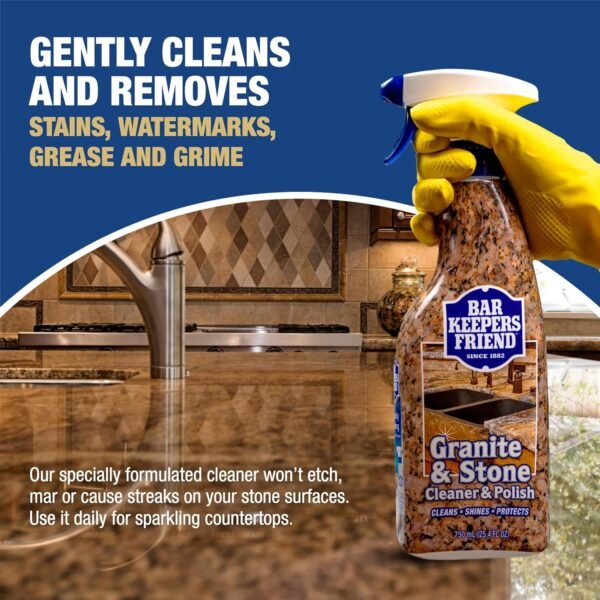
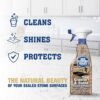
A stone specific cleaner exists to avoid all three problems at once. Bar Keepers Friend states that this formula is pH balanced and will not harm the structure of marble, quartz and granite surfaces, and it is sold as a daily cleaner and polish combined, meaning it lifts food residue and oils while restoring shine rather than dulling the finish. That is the correct positioning for the job, and it makes this a maintenance product rather than a restorer.
The brand confusion worth clearing up
Bar Keepers Friend is best known for a scouring powder, and that powder is exactly what should never touch polished stone: it is abrasive and acidic, which is precisely the combination that etches and dulls. This spray is a different product with a different formulation and a different purpose, and buying one when you meant the other is an expensive mistake on a countertop. Our review of the Bar Keepers Friend powder cleanser covers what that product is genuinely good at, which is stainless steel, porcelain and cookware.
Keep them physically apart under the sink if you own both. The two containers look related, they carry the same brand identity, and they belong on opposite ends of the compatibility scale. On a stone counter the powder is the one that does permanent damage, and the damage does not show until the light hits the surface at the wrong angle.
What pH balanced means, and what it does not
The manufacturer’s phrase pH balanced signals a formulation close to neutral, which is what stone needs, and it is the most useful technical statement on the page. It is not, however, a published number. No pH value appears anywhere on the listing, and neither does an ingredient list, a surfactant name or a concentration. The specification block carries only product dimensions, a shipping weight of 1.59 pounds, a first availability date of December 2019 and ranking data placing it 493rd among all purpose household cleaners. If the exact chemistry matters for a warranty on an engineered surface, read the bottle and check the countertop manufacturer’s approved cleaner list.
Surfaces, and the ones that are still out of scope
The manufacturer names natural, manufactured and polished stone countertops, in kitchens and bathrooms. In practice that covers granite, marble, quartz composite and similar surfaces, along with the stone splashbacks and vanity tops that go with them. The included microfiber cloth is described as being for polishing and protecting the surface, and a microfiber weave is the right tool: it lifts residue without the scratching risk of a scouring pad and leaves fewer streaks than a paper towel.
Some things remain outside the claim. There is no statement about unsealed or honed stone, which behaves differently from a polished surface, and none about slate, concrete or terrazzo. Nothing here is a sealer, so a counter that has lost its seal needs sealing rather than cleaning, and no daily spray substitutes for that. And nothing on the page suggests the product removes an existing etch mark, which it will not, because an etch is physical damage to the stone rather than a stain sitting on top of it.
Using it well and safely
The intended routine is spray and wipe with the microfiber cloth. The listing gives no dwell time and no rinse instruction, so read the bottle before assuming either is needed. For a polish, less product on the cloth and more attention to buffing usually gives a better finish than flooding the surface, and working in sections keeps the product from drying before it is wiped. Wash the microfiber cloth separately from other laundry and without fabric softener, since softener coats the fibers and destroys the property that makes microfiber useful.
Because no ingredient list is published, treat it as a household chemical rather than as something inherently mild. Keep it out of eyes, wash hands after use, ventilate the room if you are cleaning a large area, and store the bottle upright, closed and out of reach of children. On kitchen counters where food is prepared, wiping the surface with clean water after cleaning is a sensible habit whatever the product, and the page does not address food contact at all.
The mixing rule matters here as everywhere. Never use this alongside a bleach based cleaner, an acidic bathroom or descaling product, or ammonia on the same wet surface or the same cloth, and never combine two products in one container. Combining an unidentified cleaner with bleach or with an acid can produce toxic gas. Rinse and dry the counter before any second product goes near it, and use one product at a time.
Cost over time, and the alternatives
The cost structure is that of a ready to use spray with a reusable cloth included, so the first purchase buys a tool as well as a chemical and the repeat purchase is just the bottle. On a counter used daily, 25.4 ounces goes a reasonable distance because a polish is applied thinly. The larger economic point is preventive: the alternative to a compatible cleaner is refinishing or resealing a stone surface, and the difference between those costs is very large.
For comparison within the same job, our reviews of the MORE stone and quartz cleaner and the Stone Pro stone and glass scrub cover other stone specific products, including one aimed at floors rather than counters. The floor cleaners category is where stone flooring products sit, and the all purpose cleaners category covers general surface sprays.
For the cabinets below the counter, which are usually wood or a wood finish and need a different chemistry again, our write up of the Rejuvenate cabinet cleaner covers that surface.
Who should buy it, who should not
Buy it if you have stone or quartz counters, you want one bottle for daily cleaning and shine, and you value a cloth being included. Skip it if your problem is an etch mark or a lost sealer, since neither is a cleaning problem, and skip it if you need a published pH or ingredient list to satisfy a countertop warranty. Above all, do not substitute the brand’s scouring powder for this, because on polished stone that swap causes damage that cannot be cleaned away.