
Description
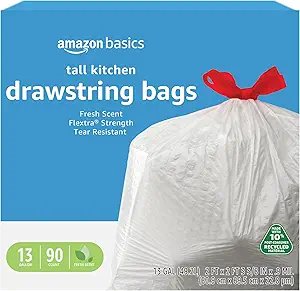
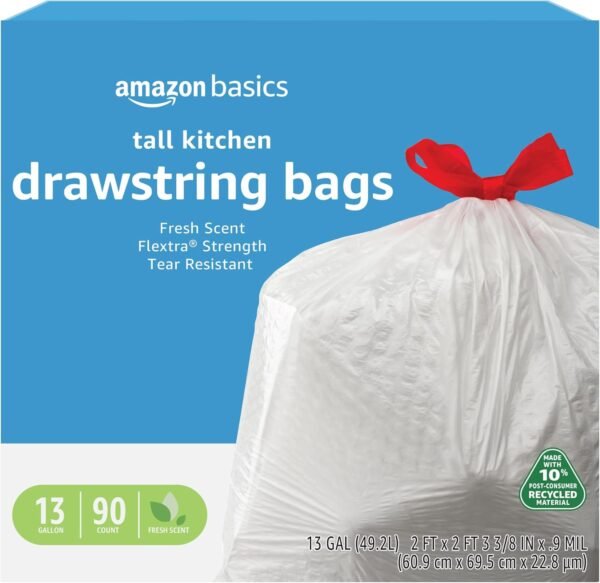
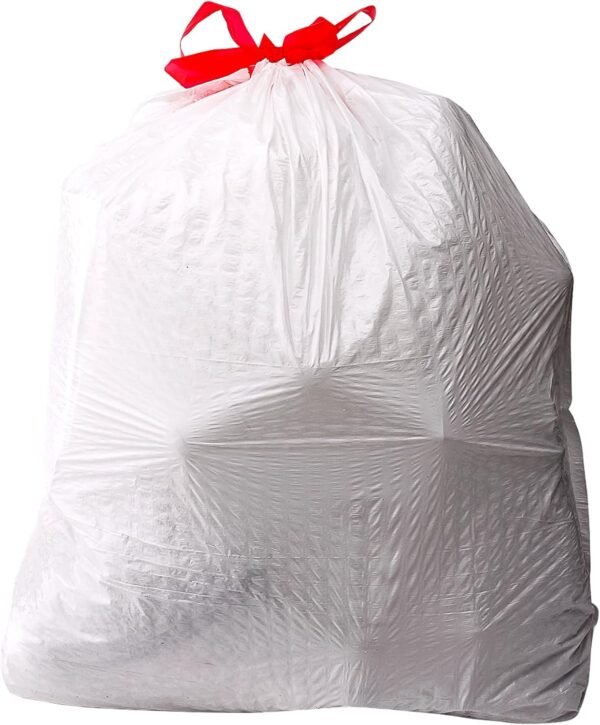
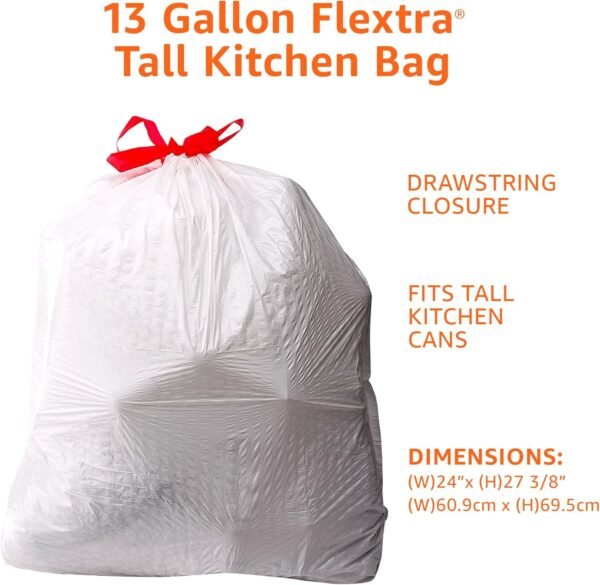
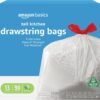
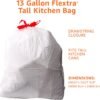
Amazon Basics 13 Gallon Flextra Strength Tall Kitchen Drawstring Trash Bags come ninety to a box, each bag measuring 24 inches wide by 27 and three eighths inches tall at 0.9 mil thickness, made with 10 percent post consumer recycled material. Trash bags are a category where the specification actually tells you what you need to know, and this listing publishes the numbers that matter.
The three numbers that decide whether a bag works
Capacity, dimensions and thickness are the whole story. Thirteen gallons is the standard tall kitchen size in the United States, which is what most under counter and freestanding kitchen cans are built around. The 24 by 27 and three eighths inch flat dimensions are what determine whether the bag actually reaches over the rim of your particular can, and they are worth checking against a bag you already use, because two bags of the same stated gallon rating can differ enough that one grips the rim and the other slides in.
Thickness is measured in mils, and 0.9 mil places this in the everyday kitchen range rather than the heavy duty one. That is a sensible specification for household waste: food packaging, paper, kitchen scraps and general refuse. It is not a specification for construction debris, broken glass, garden waste or anything with sharp corners, and expecting it to handle those is how a bag fails on a stair.
What Flextra means on this listing
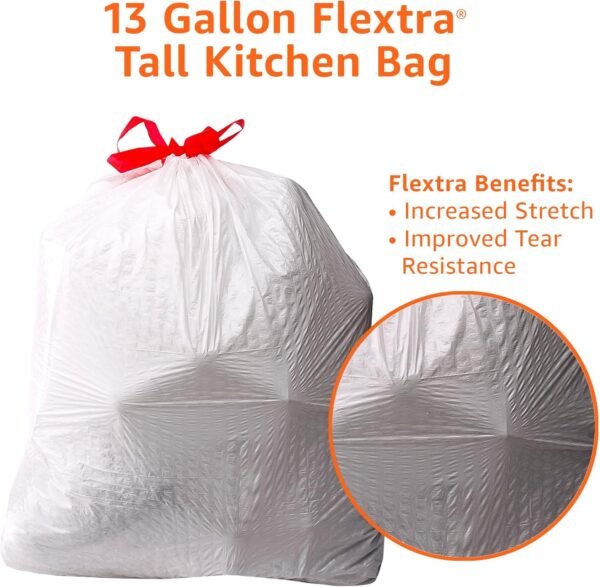
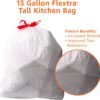
Amazon describes Flextra as an embossed flex pattern in the plastic that controls how the bag stretches, with the aim of minimizing tears and punctures. Embossing a film changes how force distributes through it, so a load pressing at one point stretches a wider area rather than concentrating on a single spot. That is the mechanism as the manufacturer describes it, and the tear resistant description is Amazon’s claim about its own product rather than a measured result on this page.
What the listing does not give is a strength rating in any comparable form, and no trash bag listing in this catalog does. Thickness in mils is therefore the closest thing to a comparable number, and it is the one to use when comparing brands. The specification block on this listing is entirely empty, so everything quoted here comes from the feature bullets.
The recycled content claim, in proportion
The bags are made with 10 percent post consumer recycled material, which Amazon defines on the page as material that a consumer used, disposed of, and that was diverted from landfill. That definition is more than most listings offer and the figure is stated plainly rather than implied. Ten percent is a modest proportion and this review presents it as exactly that: it is one tenth of the material, not a claim that the bag is recycled, biodegradable or compostable. None of those words appear on this listing and none should be inferred. A conventional polyethylene trash bag does not break down in a landfill, and if compostability is what you want, that is a different product with its own certification.
Where these bags belong, and where they do not
The natural home is a kitchen can with a drawstring rim. The drawstring closure is the practical feature people underrate: it gathers the top into a carrying handle, which stops the bag sagging into the can and makes it possible to lift a full bag without touching what is inside. That matters more in a kitchen than anywhere else in the house.
A 0.9 mil bag is the wrong choice for a garage, a workshop or a garden. Sharp edges puncture thin film, and a bag that splits between the door and the curb costs more to clean up than a heavier bag would have cost to buy. Wet, heavy waste is the other limit: liquid weight concentrates at the bottom of a bag and thin film stretches, so anything genuinely wet should be double bagged or drained first. Keep hot ashes, chemicals and anything smoldering out of a plastic bag entirely.
Using them well, and one safety point
Two habits get more out of any kitchen bag. First, do not overfill. The drawstring only works if there is enough film above the waste to gather, and the bag is strongest when the load sits low and wide rather than piled high. Second, let the bag sit into the can properly rather than stretching it taut over the rim, because film held under tension before it is even loaded starts closer to its limit.
Store the box somewhere dry and out of direct sun, since ultraviolet exposure and heat degrade polyethylene over time and a box left in a hot garage for a year is not the same bag it was when new. Ninety bags is several months for most households, so a cool cupboard is the right place.
The safety point is one people forget with any plastic film in a home with small children. A loose trash bag is a suffocation hazard, so keep the box and any spare bags out of reach, do not leave an unused bag lying open on a floor, and never let a child play with one. Also avoid putting broken glass into a thin bag without wrapping it first, since a bag carried against a leg is exactly where a shard finds its way through.
Cost per bag, and the alternatives
Cost per bag is the only meaningful comparison in this category, and a ninety count box makes that easy to calculate. The trap is comparing price per box across different thicknesses, since a cheaper 0.7 mil bag is not the same product and a 1.1 mil bag should cost more. Work out cost per bag, then check the mil rating and the flat dimensions before deciding which is actually cheaper for your can.
For comparison across the same size, our reviews of the Hefty trash bags, the Reli SuperValue 13 gallon bags and the Plasticplace trash bags cover the mainstream and bulk options, and comparing their stated thicknesses against 0.9 mil is the fastest way to judge value. The trash bags category lists the sizes together.
If your municipality collects food waste separately, a conventional bag is not permitted in that stream and a certified compostable bag is required instead. Our write up of the Raytid compostable trash bags covers that, with more in the compost bags category.
Who should buy it, who should not
Buy the ninety count box if you need standard tall kitchen bags for ordinary household waste and you want a drawstring closure at a known thickness. Skip it if you are bagging construction debris, garden waste or anything sharp, where 0.9 mil is too thin, and skip it if you need a compostable bag for a food waste collection, because a 10 percent recycled polyethylene bag is not that and does not claim to be.