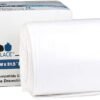
Description
A third party liner for a proprietary can
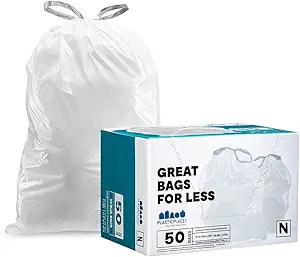
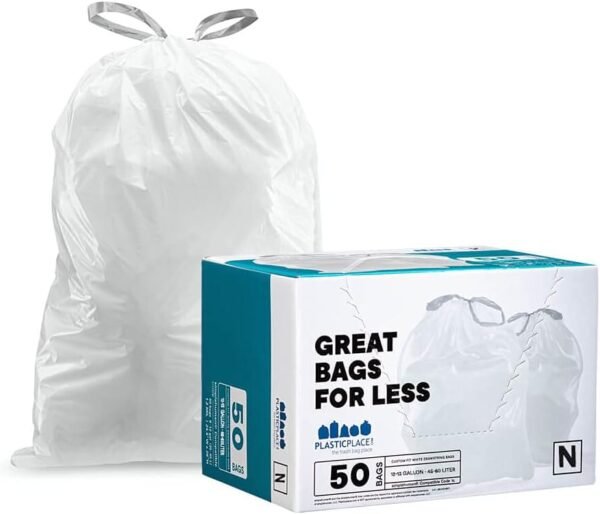
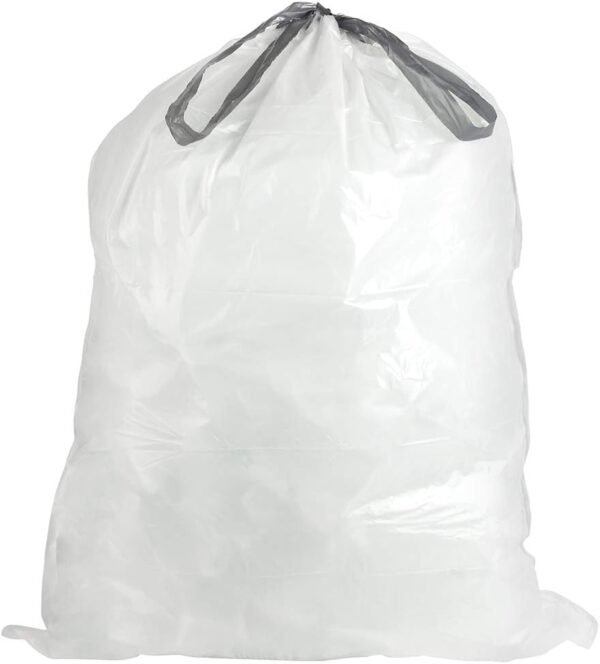
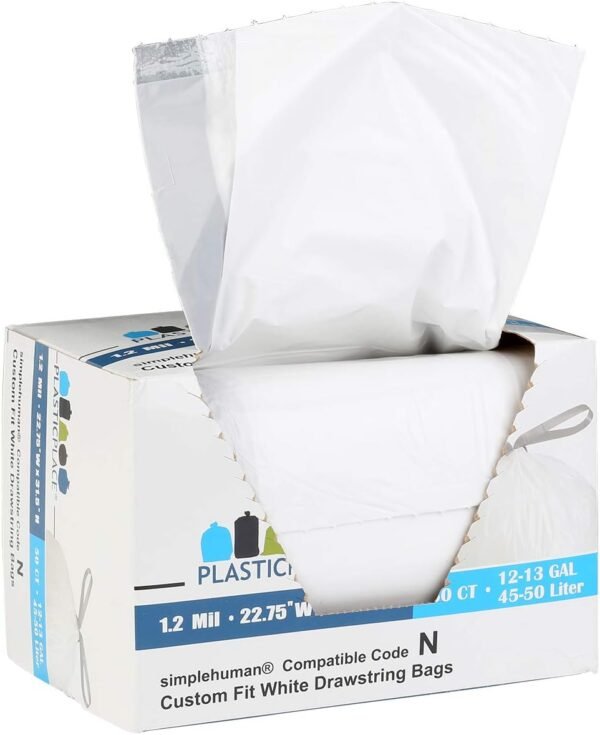
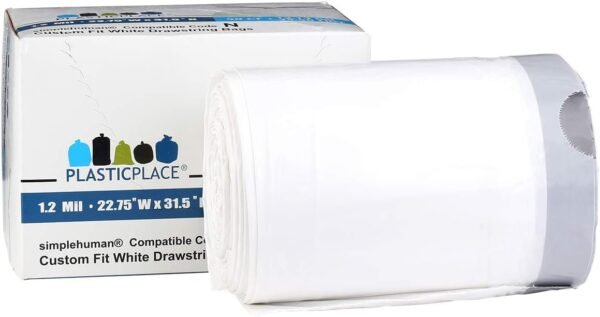
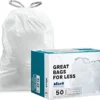
Plasticplace makes replacement liners for branded trash cans, and this listing is the Code N size, fifty bags to a pack, in white with a drawstring closure. Code N is a simplehuman size designation, and the entire reason this product exists is that simplehuman cans use a semi enclosed liner pocket that ordinary supermarket bags fit badly. A bag that is too small slips into the can, and a bag that is too large bunches over the rim and shows.
So the household this suits is narrow and easy to identify: anyone who owns a simplehuman can in Code N and does not want to buy the original branded liners. That is a real and common situation, and there is nothing wrong with a compatible liner. It just means the fit specification matters more than anything else on the page.
The capacity is given as twelve to thirteen gallons, which puts it in the standard kitchen size band, and the gauge is stated as 1.2 mil. Gauge is the number to compare across trash bag listings, because it describes film thickness and therefore tear resistance far more honestly than any adjective in a bullet point.
What 1.2 mil means, and what the film is made of
A mil is one thousandth of an inch, so 1.2 mil is a mid weight kitchen film. Thin bags in the 0.7 to 0.9 mil range are cheaper and split on a can corner or a chicken bone. Heavy contractor grade film runs 2 mil and above and is overkill in a kitchen. At 1.2 mil this sits in the sensible middle, which is where most kitchen liners should be.
Plasticplace states that the bags are produced with a triple layer blend of low density resins and that the drawstrings are reinforced. Low density polyethylene is the usual choice for kitchen liners because it stretches before it tears, which is what you want when something with a corner goes in. High density film is stiffer, crinklier and punctures more easily at the same thickness. The listing does not give a resin identification code or state whether recycled content is used, and it makes no recyclability or compostability claim, which is appropriate: ordinary polyethylene kitchen liners are not compostable and should not be confused with the certified products in the compost bag listings.
The listing gives two different bag sizes
This needs stating plainly rather than being resolved on the reader’s behalf. The product title gives the bag dimensions as 22.5 by 31.5 inches. The feature bullet on the same page gives 22.75 by 31 inches. Those are not the same bag, and a half inch of height is exactly the sort of difference that decides whether a liner tucks neatly into a Code N pocket or sits proud of it. The listing does not say which figure is correct.
Several other fields on this page are import boilerplate rather than data. Capacity is given as thirteen pounds in one field and twelve to thirteen gallons in another, mixing weight with volume. Item weight reads 2.88 pounds while net content weight reads 3.89 pounds. There are fields for batteries included and batteries required, both answered No, on a box of trash bags. The item dimensions of 7.48 by 5.16 by 5.16 inches describe the packed roll, not the bag. None of this changes what arrives, but it means the only figures worth trusting are the ones that appear consistently, which are the count of fifty, the 1.2 mil gauge and the twelve to thirteen gallon class.
What to put in them and what to keep out
These are unscented liners, and the listing flags scent free as a material feature. That is a point in their favor for anyone who dislikes perfumed bags, and it is worth knowing that fragrance in a trash bag masks odor rather than reducing it. If odor is the actual complaint, the fix is emptying more often, rinsing the can, and keeping food waste out of the bin between collections.
Three things should never go into a household liner. Hot ashes from a grill or fireplace, which will melt polyethylene and can start a fire, and which need a metal container until fully cold. Sharp objects such as broken glass or blades, which should be wrapped or boxed first, since a drawstring bag is carried against the leg. And liquid household chemicals, which is the one that matters most in a cleaning catalog: never pour leftover bleach, drain opener, oven cleaner or ammonia into a bin liner. Chemical residues from different products meeting in a warm closed bag is precisely the mixing scenario every product label warns against, and chlorine bleach with an acid or with ammonia generates toxic gas. Leftover cleaning chemicals go to household hazardous waste collection.
Keep the box of unused bags away from infants and toddlers. Plastic film is a suffocation hazard and a flat pack of fifty liners is easy for a child to reach under a sink.
Fitting, using and getting the most from a pack
Fit the liner into the can pocket, hook the drawstring over the rim, and press the air out before you close the lid, because trapped air is what makes a bag balloon and pop off a rim. Do not overfill past the drawstring line, since the drawstring is the weakest point on any liner and a bag lifted at capacity puts all the load there. When you lift, support the base with the other hand rather than dangling the bag from the string.
If your bin regularly gets wet or greasy at the bottom, a sheet of newspaper under the liner absorbs it and stops the liner welding itself to the can. Wash the can itself occasionally with an ordinary cleaner such as the Zep multi purpose cleaner, and let it dry before fitting a new liner.
Cost structure and the alternatives
Compare liners on cost per bag at a given gauge, not on pack price. Fifty bags at 1.2 mil is the unit here. The original branded simplehuman liners for the same can are the direct comparison and are generally the more expensive route, which is the entire premise of this product. If exact fit is less important to you than price, standard thirteen gallon liners such as the Amazon Basics thirteen gallon bags or the Reli SuperValue thirteen gallon bags cost less per bag and will work in most cans, just less neatly in a Code N pocket. For the branded original, the catalog also covers the simplehuman liners themselves, and the wider trash bag listings allow a gauge by gauge comparison.
Amazon ranked this pack three hundred and forty eighth in Trash Bags when the listing data was captured.
Who should buy this and who should not
Buy it if you own a simplehuman Code N can, you want a mid weight 1.2 mil liner that tucks into the pocket, and you would rather not pay branded liner prices. Unscented is a bonus if you dislike perfumed bags.
Do not buy it if you do not own a Code N can, because you are paying for a fit you will not use. Check the two conflicting size figures with the seller if a precise fit is the whole point of the purchase. And do not buy a 1.2 mil kitchen liner for yard waste, renovation debris or anything heavy, where a thicker contractor film is the correct product.