



Description
The job, and the fit numbers that decide it
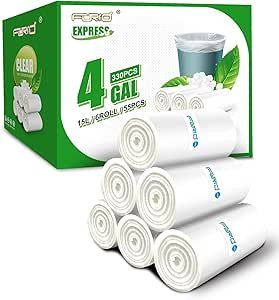
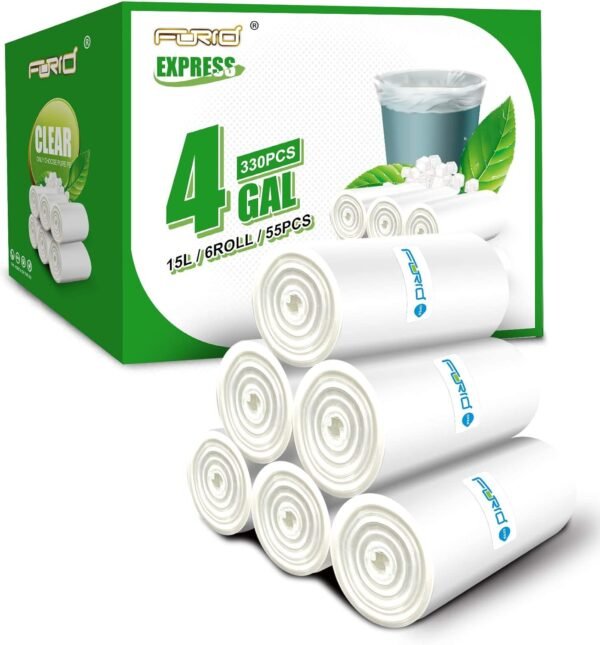
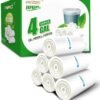
These are small clear liners for wastebaskets rather than kitchen bags: 4 gallons, or 15 liters, in a pack of 330. The bins they suit are the ones scattered around a house rather than the one under the sink, which is to say bathroom baskets, bedroom bins, office bins and desk side cans.
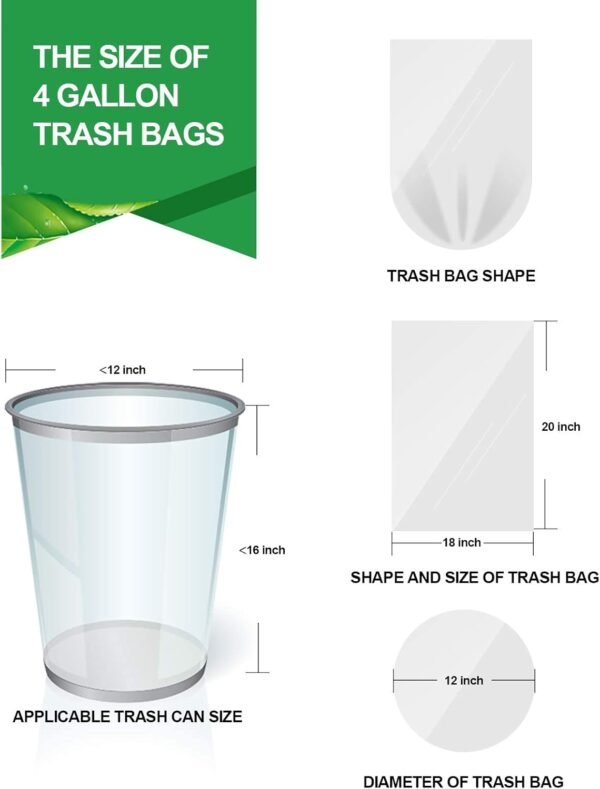
FORID does something in the single feature bullet that most trash bag listings do not, and it is the most useful thing on the page. The bag is given as 18 inches by 20 inches at 0.80 mil, and the fit guidance is specific: round cans with a diameter of 12 inches or less and a height of 16 inches or less, and rectangular wastebaskets with a longest side of 9 inches or less and a height of 16 inches or less. Measure your bin against those numbers before ordering 330 of anything. A liner that is slightly too small pulls into the bin every time somebody drops something in, and one that is too large bunches at the rim.
Reading the gauge honestly
The title describes the bags as durable and thick. The specification gives 0.80 mil, which is 0.0008 of an inch, and that is a light gauge in absolute terms. For context, kitchen bags are typically heavier and contractor bags heavier again. The thick description is relative to other small wastebasket liners rather than a claim about strength in general, and reading it any other way sets up a disappointment.
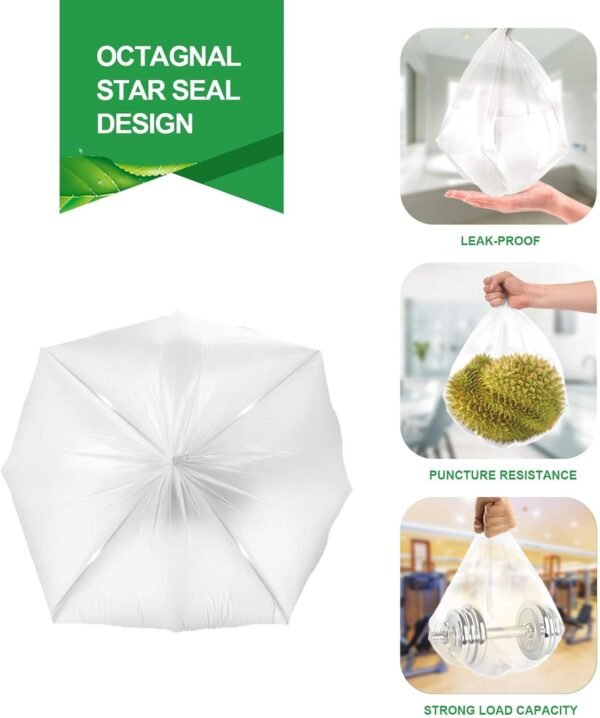
FORID is more candid in the bullet than in the title, adding that the bags are small but thick enough for storing daily waste while avoiding sharp items. That is the accurate framing. A 0.8 mil liner handles paper, packaging, bathroom waste and general dry rubbish. It does not handle broken glass, tin lids, skewers, snapped plastic or anything with a point, because a thin film tears from a nick rather than resisting it.
The material is not stated, and it matters
The specification says only that the material is plastic. Small liners are commonly made from either high density polyethylene, which is the thin crinkly type that resists tension well but tears easily once nicked, or low density polyethylene, which is softer and stretches around an obstruction rather than splitting. Those two behave differently with exactly the sort of waste this bag is designed for, and the listing does not say which is used. Nor does it say whether the bag has a drawstring, a flap top or a plain open top, which is a basic feature question on any liner.
The record otherwise gives 2,186 ratings averaging 4.5 stars, a rank of 335th in Trash Bags, a first availability date of September 2020, and a total weight of 3.08 pounds for the pack, which works out at around four grams a bag and is consistent with the stated size and gauge. Two fields are junk: the Color field contains a merchandising string reading “Best Seller: 4 Gallon – 330 Count” rather than a color, and the Number of Items field reads 1 for a 330 count pack.
Where clear bags help, and where they do not
Clear is a deliberate choice rather than a default, and it cuts both ways. In an office, a workshop or a shared building, clear liners let waste be sorted at a glance and are frequently required for security or recycling reasons. In a rented apartment, some buildings mandate clear bags so that management can see what is being discarded.
In a home bathroom or bedroom, the same transparency is a privacy consideration, and it is worth thinking about before buying 330 of them. Personal care waste, medical waste and anything else you would rather not display is visible through a clear liner from the moment it goes in until the bin is emptied. Opaque liners exist for that reason.
These are also not compostable and the listing makes no claim that they are. If your goal is a caddy liner for food waste going to a composting program, a certified compostable bag such as the Raytid compostable trash bags is the correct product and the compost bags category covers the rest. Putting a polyethylene liner into a compost stream contaminates it.
Using them and storing them
There is no chemistry here, no fragrance and nothing to ventilate, which makes this one of the few products in this catalog with no handling chemistry at all. The listing confirms the bags are unscented, which is worth noting because scented liners are common in this size and the fragrance is not to everyone’s taste in a small bathroom.
The safety point that does apply is the one that applies to every plastic bag: keep them away from babies and small children. A thin film bag is a suffocation hazard, and a pack of 330 loose liners in an accessible cupboard is exactly the sort of thing that gets found. Store the pack closed and out of reach.
Two practical notes. Do not overfill a light gauge liner: the failure point is the moment you lift it, and a bag carrying more than it was designed for splits at the seam over the floor rather than in the bin. And do not press waste down with your hand in a bin you cannot see into, which is the general rule that matters most with any bag rated to avoid sharp items.
Cost structure and the alternatives
Three hundred and thirty small liners is a multi year supply for most households, and that is the cost argument: the per bag price at this quantity is very low, and small liners do not perish on a shelf. The counterweight is storage space and the fact that if the fit turns out to be wrong you own 330 of the wrong thing. Measure first, or start with a smaller pack from another seller and buy the bulk pack once the size is confirmed.
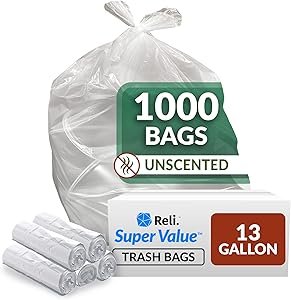
For the larger bins, the Amazon Basics 13 gallon bags and the Reli SuperValue 13 gallon bags cover the kitchen, and the Daoneg M201 liners are another small bin option. If your bin is a branded model with a specific liner shape, a fitted bag such as the simplehuman CW0251 is designed around the can rather than the gallon rating, which solves the fit problem at a higher price per bag. The full trash bags category puts the sizes and gauges together.
Who should buy them, and who should not
Buy them if you have several small bins, you have measured them against the fit guidance, and clear liners suit the setting. The published dimensions, gauge and fit limits make this an unusually easy listing to buy correctly from. Skip them if your bin takes anything sharp, if you want an opaque liner for privacy, if you need a compostable bag, or if you have not measured, since 330 bags is a long time to live with the wrong size. And read the thick description as relative: 0.80 mil is a light gauge and the manufacturer says so itself in the bullet.