Description
A concentrate aimed at robot mop tanks
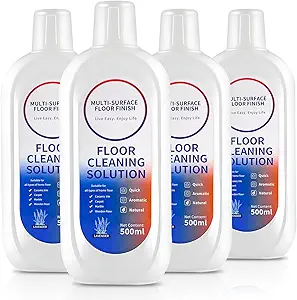
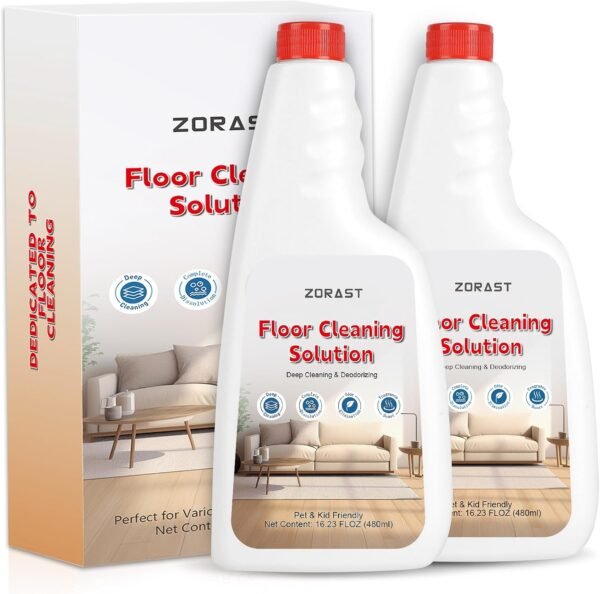
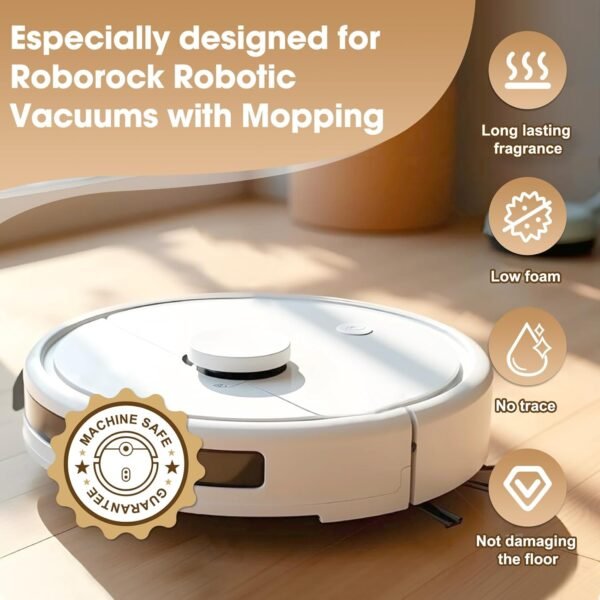
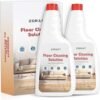
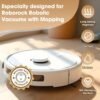
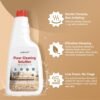
This is a two pack of floor cleaning concentrate, 16.23 ounces per bottle, sold specifically for robot mopping systems. The listing names the Roborock S7, S8, Qrevo, Q7 and Q8 series and states compatibility with all Roborock models that mop. It also gives a dilution of one part concentrate to one hundred parts water, which is the single most useful number on the page and the reason the format works.
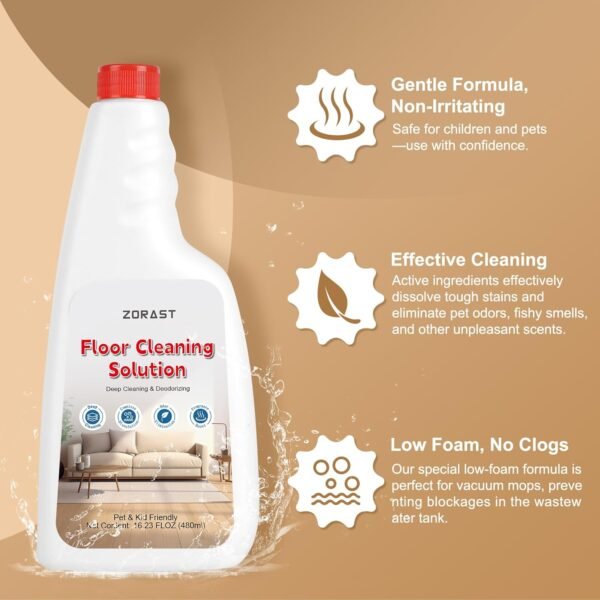
Robot mops changed what a floor cleaner has to be. A traditional mop bucket tolerates foam, because a person wrings the mop and the suds go down a drain. A robot pushes solution through narrow tubing, a small pump and a pad, and then recycles dirty water into a tank. Foam in that system is not cosmetic. It floods sensors, coats the pump and leaves residue in tubes, which is why the listing puts low foam at the centre of the pitch and why using an ordinary floor cleaner or dish soap in a robot tank is a genuinely bad idea.
One point of clarity before anything else. This is a third party product. The compatibility statement is the seller’s, not Roborock’s, and nothing on the listing indicates that Roborock has assessed or endorses it. Anyone with a machine still under warranty should check the appliance manufacturer’s own guidance on third party solutions before pouring anything into the tank, because appliance makers frequently restrict this.
The claims, and what the page does not disclose
The listing is written in strong marketing language and every substantive claim needs attributing rather than repeating. It describes the formula as plant based and non toxic, gentle on kids, pets and the planet, and as eco safe. Those are the seller’s statements. None of them has a fixed regulatory meaning in cleaning products, and the listing provides nothing to support them: there is no ingredient list, no surfactant named, no preservative named, no fragrance disclosure and no pH figure anywhere on the page. There is also no specification block at all, so no manufacturer field, no weight beyond the bottle size, and no certification is cited for any of the environmental wording.
That absence matters most for the pets and children line. A cleaner left as a thin film on a floor is a surface that a crawling child and a walking dog are in constant contact with, and it is exactly the situation where a shopper would want to read an ingredient panel. This one cannot be read, because it is not published. The printed bottle is the only source, and it should be read before first use.
The stone and marble claim deserves particular caution
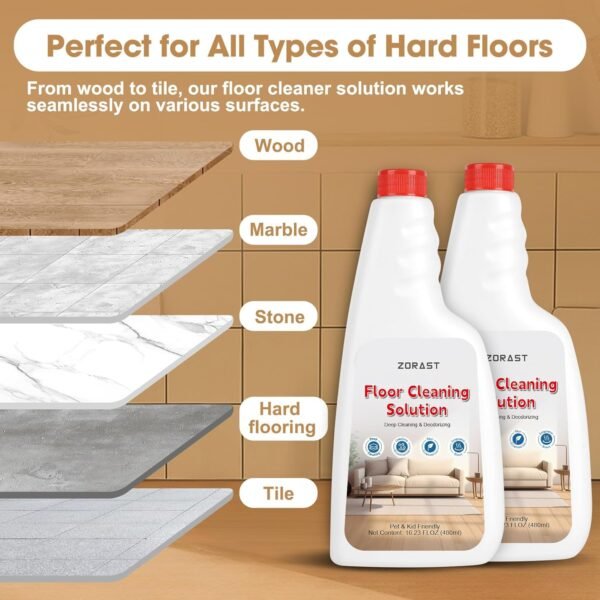
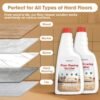
One bullet states the product works on wood, tile, marble and stone with no residue. Natural stone is the surface where floor cleaners most often cause permanent damage, because marble, limestone and travertine are calcium based and etch on contact with anything acidic, while some alkaline cleaners dull polished finishes and strip sealers. Without a published pH, a stone owner has no way to evaluate that claim from this page. Test on an offcut or an out of sight corner, or use a product formulated and labeled for stone such as the Bar Keepers Friend stone cleaner.
Floors it suits, and floors to keep it away from
Sealed hard floors are the intended target: sealed hardwood, laminate, vinyl plank, porcelain and ceramic tile. On sealed wood the critical variable is water volume rather than chemistry, and a robot mop already runs at low moisture, which is why robots are generally kinder to wood than a wet mop. Even so, standing water at a plank joint is what causes swelling, so a robot should not be left to run repeatedly over one spot.
Keep it off unsealed or waxed wood, which needs a product matched to the finish, and off carpet and rugs, where a mop pad simply grinds solution into the pile. Carpet spots need a spot treatment rather than a floor cleaner. Unglazed terracotta, unsealed concrete and unsealed stone absorb whatever you put on them and should be treated as porous, meaning any cleaner can leave a mark. If your floors are traditional hardwood cleaned by hand rather than by robot, a wood specific product such as the Weiman hardwood cleaner or the approach taken by the Murphy oil soap is a better match than a robot concentrate.
Dilution, tank care and safe handling
Follow the stated one to one hundred ratio and resist the urge to make it stronger. Overdosing a robot tank is the most common way people cause the exact problems the low foam formula is designed to prevent, and it also leaves a tacky film that attracts dirt and shows footprints. Mix in the clean water tank, not in the dirty water tank, and mix only what the tank holds rather than storing diluted solution for weeks.
Rinse the tank and the pad after use, and run the machine’s own self cleaning cycle if it has one. A tank left with solution standing in it grows biofilm, and that produces the sour smell people blame on the cleaner. Replace or wash mop pads regularly, since a loaded pad redistributes dirt rather than removing it.
On safety, treat the undiluted concentrate as a chemical whatever the marketing says. Keep it capped, upright, out of reach of children and away from food. Avoid eye contact when pouring, and wash hands after handling. Never combine it with another cleaning product in the tank or in a bottle, and in particular never add bleach, an ammonia based cleaner or an acidic descaler to a mop tank. Combining household cleaners is how avoidable poisonings happen, and a sealed appliance tank is a bad place to do it. Label any bottle you decant into, and never reuse a bottle that held a different cleaner.
A wet floor is slippery. Keep people and pets off the area until it dries, particularly at the top of stairs.
What the concentrate format costs over time
At one to one hundred, a single 16.23 ounce bottle makes a very large volume of working solution, and two bottles is a long supply for a household robot that mops a few times a week. That is the real economic argument for concentrate: you are not paying to ship water, and the per use cost is low. The offsetting cost is the discipline of measuring correctly every time.
If your interest is robot mopping more broadly, the catalog covers machine specific solutions such as the Dreame floor cleaner and the Narwal Freo Z Ultra solution, and the full floor cleaner listings put concentrates and ready to use products side by side. For manual cleaning, the wet and dry mop listings cover the hardware side.
Who should buy it and who should not
Buy it if you run a Roborock mopping robot, you want a low foam concentrate rather than a general floor cleaner, and you are comfortable measuring a one to one hundred dilution. The stated ratio and the low foam design are the two things that make it appropriate for the machine.
Do not buy it if your appliance warranty restricts third party solutions, since the compatibility claim here comes from the seller rather than from Roborock. Do not buy it for unsealed wood, waxed floors or natural stone without testing first, because no pH or ingredient information is published. And do not read the non toxic and plant based wording as a safety assurance, because nothing on the page supports it.