Description
A sealed cartridge for two specific robots
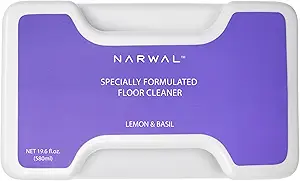
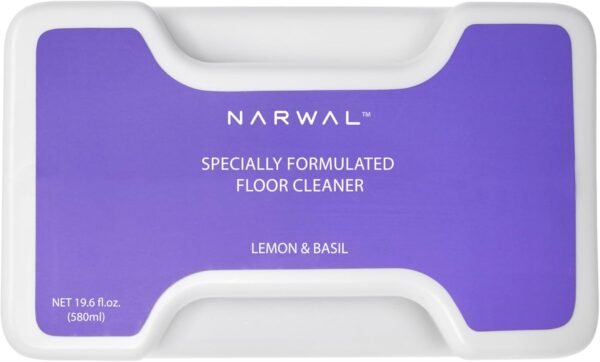
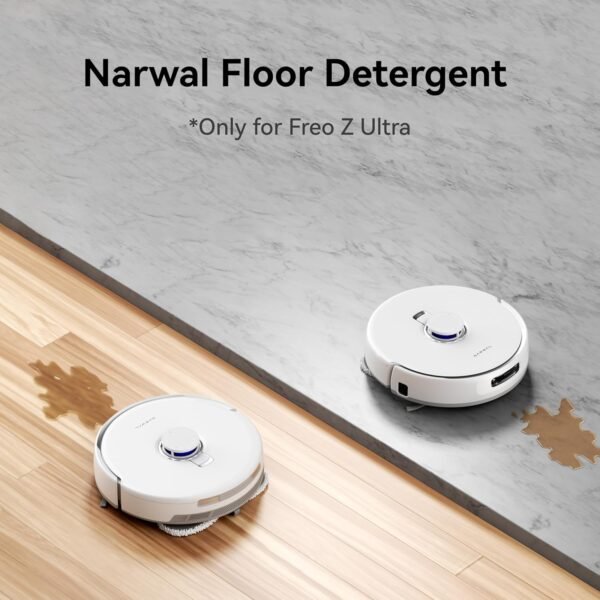
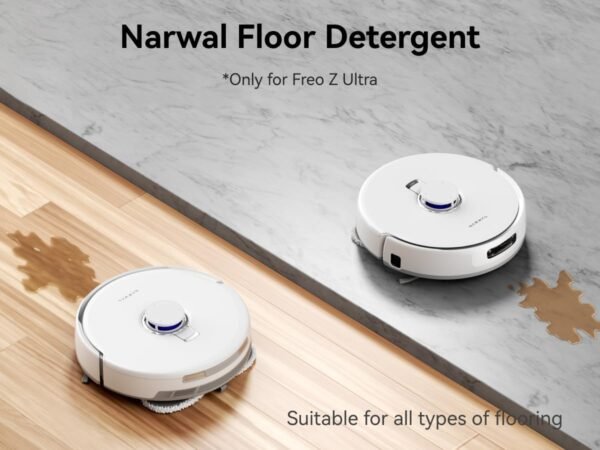
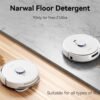
This is Narwal’s own floor detergent for its Freo Z Ultra and Freo Z10 robot vacuum and mop base stations. It is not a bottle you pour; it is a sealed container that pushes horizontally into a detergent bay behind the front cover of the station, and the machine draws from it automatically as it mops. Narwal opens the bullet list by telling buyers to check their robot model before purchasing, which is the correct first instruction and the one most likely to be skipped.
Robot mop consumables are their own small category with their own logic. The base station meters liquid through narrow tubing into mop pads, so the formula has to be very low foaming, has to leave no film that would stiffen a pad, and has to leave no residue that dries in a dosing channel. That is why manufacturers sell their own and why the manuals for these machines commonly say to use only the maker’s solution. If you own a different brand, the equivalent product for that ecosystem, such as the Dreame multi surface floor cleaning solution for the L20 Ultra, is what to look for instead.
What Narwal publishes, which is remarkably little
The description field for this item consists of three words: Wood Floor Maintainer. There is no ingredient list, no active, no pH, no volume, no dilution and no coverage figure. Nothing states how many cleaning sessions one cartridge provides, which is the only number that would let a buyer calculate what the consumable costs to run. The package weighs 1.72 pounds and measures 6.54 by 4.41 by 4.29 inches, which is the closest the listing gets to telling you how much liquid you are buying.
Wood floor maintainer is a claim with consequences
Those three words are the only surface guidance on the entire page, and they point at the most demanding floor type in the house. Finished wood is sensitive to standing moisture, to alkaline cleaners that dull a finish, and to anything that leaves a film, which is why wood floor products are usually formulated at a neutral pH and marketed as residue free. This listing publishes no pH figure, so the claim has nothing behind it that a buyer can check.
The bigger gap is what is not named. Tile, luxury vinyl, laminate, sealed stone and marble are not mentioned anywhere, even though a robot mop crosses all of them in a normal house, and no floor type is excluded either. Treat unsealed wood, waxed or oiled floors, unsealed stone and unglazed terracotta as outside the intended range and exclude them from the robot’s mopping map. If your floors are finished hardwood and you want a product that states its surface compatibility in writing, a manual option such as the Weiman hardwood floor cleaner publishes far more, and a spray mop system like the Bona multi surface spray mop at least states a neutral pH.
Installing it, and the seal warning that matters
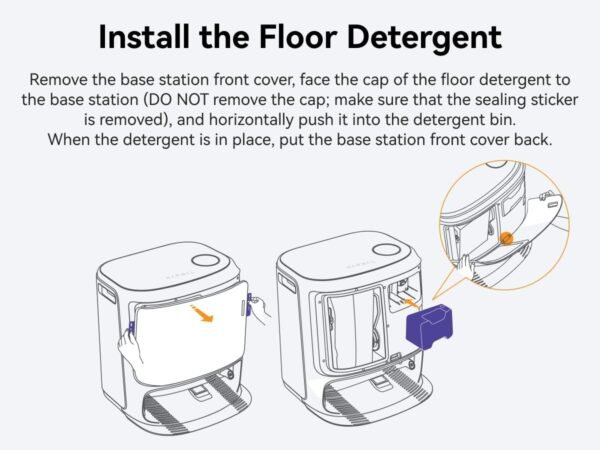
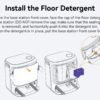
Narwal’s method is short: remove the base station front cover, face the cap of the detergent toward the station, and push it horizontally into the detergent bin. The station pierces or engages the seal itself.
The caution attached to that is the most consequential line in the listing and deserves repeating in full: the seal is meant for one time use, and it should not be opened forcefully, because doing so risks leaks or damage to the base station. In plain terms, do not open the cartridge by hand, do not decant it into another container, do not try to refill it, and do not top it up with anything. A leak inside a base station is not a mopping problem, it is an electronics problem, and the station is the expensive half of the machine.
Storage guidance is given and is worth following: keep the product in a cool, shaded place and keep it sealed until it goes into the station. Add the usual household rule that the listing does not state: keep it out of reach of children and pets, and do not store it where it could be mistaken for a drink or a food container.
The rule about what else goes in the machine
Never put anything into a robot mop’s water tank or detergent bay except what the manufacturer specifies. Not bleach, not vinegar, not an ammonia glass cleaner, not a general purpose floor detergent, not a disinfectant and not an essential oil. There are three separate reasons and all of them apply here. The machine is a sealed system with no venting, so a reaction has nowhere to go and you cannot see it. Foam from a general purpose cleaner floods the pump and the recovery path. And most base station warranties are written around the manufacturer’s own consumable.
If a floor genuinely needs disinfecting rather than cleaning, do that pass by hand with a product labeled for it, let the surface dry, and let the robot handle routine cleaning afterward. Products designed for wet vacuum hardware, such as the Bissell hard floor formula, belong in the machines they were built for and not in a robot’s cartridge bay.
Two maintenance habits do more for results than the detergent does. Empty and rinse the dirty water tank after every session, because a sealed reservoir of dirty water develops a smell within days that owners usually blame on the cleaning solution. And wash the mop pads regularly without fabric softener or a dryer sheet, since a softening coating destroys a pad’s ability to pick up soil.
Cost, and the alternatives worth weighing
Without a published volume or a sessions per cartridge figure there is no honest way to state a running cost from this page, and that is the main criticism to make of the listing. What is clear is the structure of the decision: you are buying a proprietary consumable for an appliance, which is the same arrangement as printer ink or a coffee pod, and the value question is really about how much the base station is worth protecting.
The comparison that puts it in perspective is a bottle of ordinary floor cleaner such as Murphy oil soap, which costs far less per ounce and is entirely unsuitable for this machine; oil soap leaves exactly the residue a robot mop cannot tolerate. That gap is the price of automation. The rest of the shelf sits under floor cleaners, and the manual hardware is in wet and dry mops.
Record oddities to flag: the description consists of three words, the volume of the cartridge is never stated, and no ingredient list, pH or surface compatibility list appears. The only stated compatibility is with two robot models, and the item model number field simply repeats those two model names rather than giving a part number. The item currently ranks 132nd in the retailer’s household floor cleaners chart on 70 ratings averaging 4.5 stars, and has been listed since June 2024.
Who should buy it
Buy it if you own a Narwal Freo Z Ultra or Freo Z10 and you want the consumable the manufacturer built for the station, which is the low risk choice for both the hardware and the warranty. Do not buy it for any other robot, do not open the seal by hand, and do not expect the listing to tell you what is in it or how long it lasts, because it does neither.