
Description
The manufacturer’s own liner, and why that matters here
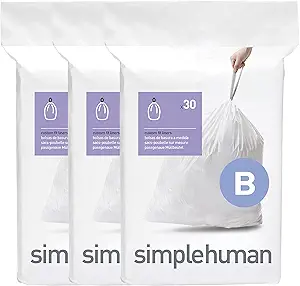
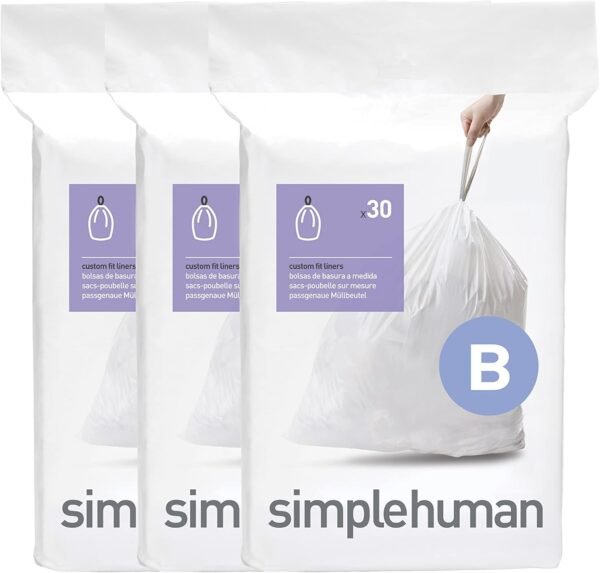
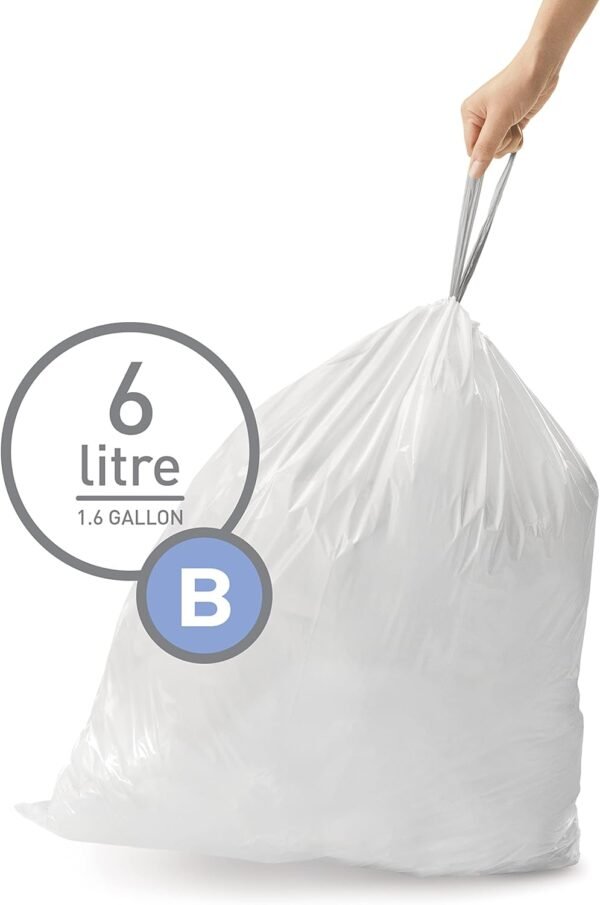
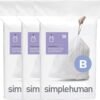
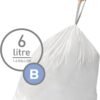
This is simplehuman’s Code B liner, ninety bags to a dispenser pack, sized for a six liter or 1.6 gallon can, in white, part number CW0251. Code B is one of the smallest sizes in the simplehuman range and it covers the compact cans people put in a bathroom, a home office or beside a desk.
simplehuman cans hold the liner in an enclosed pocket behind the inner bucket rather than draping it over a rim, and that design is the reason a fit specific liner exists at all. A supermarket bag in the same can either disappears into the bucket when the trash presses down, or bunches visibly at the rim when the lid closes. The company states that its liners are designed to fit its own cans so there is no overhang or bunching and they never slip, and it describes them as genuine liners guaranteed to fit. That is a manufacturer guarantee about its own hardware, which is about as strong as a fit claim gets, and it is the main reason to pay the brand premium over a third party alternative such as the Plasticplace compatible liners.
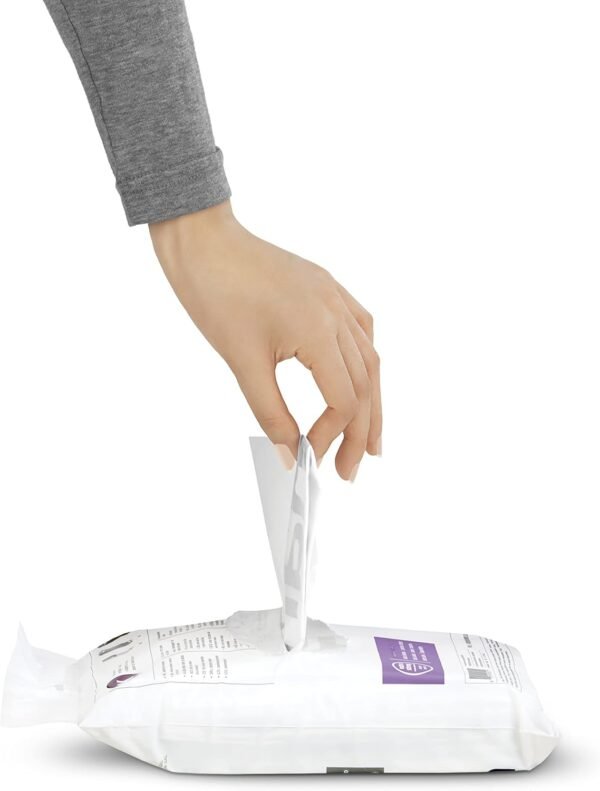
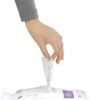
The dispenser pack is a genuine convenience rather than packaging fluff. simplehuman says the pack lets you pull liners one at a time without hunting for perforations or unraveling a roll, and in a small can that gets emptied often, that saves a repeated small annoyance.
Film, thickness and the claim you cannot check
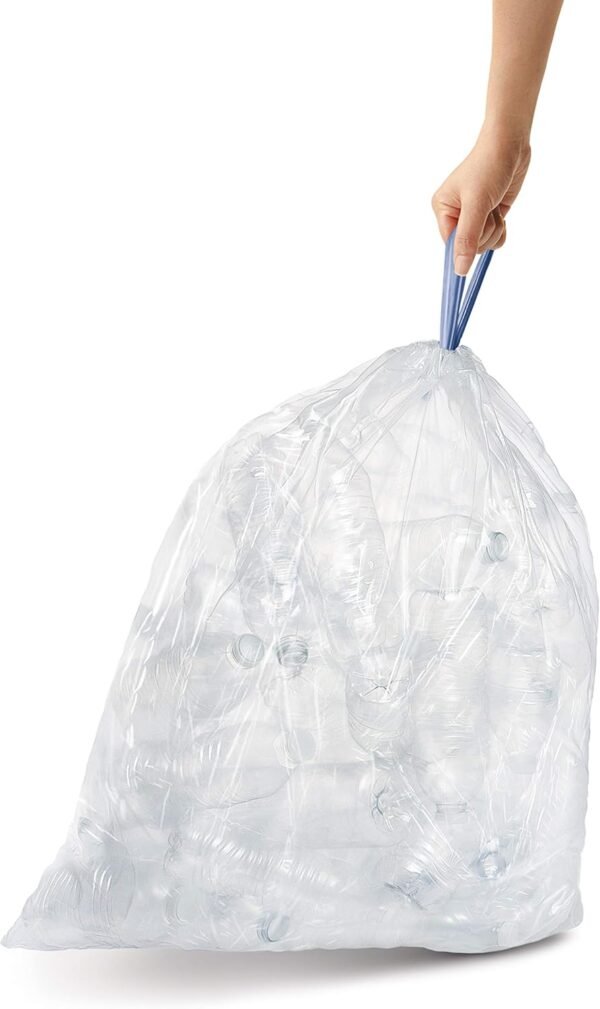
simplehuman describes the plastic as extra thick with double seam construction, states that you can pack trash to the rim without tears or leaks, and claims the film is over twice as thick as typical trash bags. That last claim is the interesting one, and the listing undermines it by never publishing a gauge. Trash bag thickness is measured in mils, and every liner worth comparing states a mil figure. This listing does not give one anywhere, so the two times claim has no baseline and no number attached and cannot be checked against another product.
What the listing does state clearly is more useful. The material field reads made with fifty percent post consumer recycled plastic. That is a specific, quantified recycled content claim rather than a vague environmental adjective, and it is the kind of statement a reader can weigh. Note that recycled content and recyclability are different things: a liner made partly from recycled plastic still goes into the waste stream with the trash inside it, and household plastic film is not accepted in most curbside recycling programs. Nothing here is compostable either, and it should not be confused with the certified products in the compost bag listings.
Two specification fields that contradict each other
The item weight field reads 0.352 ounces while the net content weight field on the same listing reads 0.5 kilograms, which is around seventeen and a half ounces. Those cannot both describe the pack. Similarly, the number of items and number of pieces fields both read 1 while the unit count reads 90, and the listing carries batteries included and batteries required fields, both answered No, on a box of trash bags. The item dimensions of 2.75 by 6.75 by 8.46 inches describe the dispenser pack, not the bag. The figures worth trusting are the ones stated consistently: ninety liners, six liters, Code B. Amazon ranked this pack one hundred and ninety second in Trash Bags when the data was captured.
What belongs in a six liter liner and what does not
A 1.6 gallon can is a small bin, and the things that go in it are usually bathroom waste, office paper, and small kitchen scraps in a compact kitchen. The liners are unscented, which is worth knowing if you dislike perfumed bags, and it is worth saying that fragrance in a liner masks odor rather than reducing it. In a small bathroom bin the more effective approach is emptying it more often.
Three things should stay out of any household liner. Hot ashes, which melt polyethylene and can start a fire, and which need a metal container until completely cold. Broken glass and blades, which should be wrapped or boxed first, because a small bag is carried close to the body. And liquid cleaning chemicals, which matters particularly in a bathroom bin: never pour leftover toilet cleaner, bleach, drain opener or an ammonia based product into a bin liner. Residues from different products meeting inside a closed bag is exactly the mixing scenario every product label warns against, and chlorine bleach with an acid or with ammonia produces toxic gas. Leftover cleaning chemicals go to a household hazardous waste collection point.
Keep the pack away from infants and toddlers, since plastic film is a suffocation hazard and a dispenser pack of ninety liners is easy to reach.
Fitting, using and getting the pack to last
Slot the liner into the can pocket, hook the drawstring, and press the air out before closing the lid, because trapped air is what pops a bag off its rim. Do not fill past the drawstring line. The drawstring is the weakest point of any liner and lifting a full bag by the string alone puts every pound of load there, so support the base with your other hand.
Ninety liners in a small can is a long supply, so store the remaining pack somewhere dry. Wipe the inside of the can occasionally with an ordinary cleaner such as the Zep multi purpose cleaner and let it dry before fitting a new liner, since a damp can is what makes a liner stick and tear on removal.
Running cost and the alternatives
Branded fit liners cost more per bag than generic film, and that premium is what you pay for the fit and the dispenser. Ninety liners in a small bathroom bin can last most of a year, so the annual cost is modest even at a premium price, which is a fairer way to look at it than cost per bag.
If you would rather not pay for a proprietary size, standard liners will work in most cans just less tidily, and the Amazon Basics thirteen gallon liners cover the larger kitchen size at a much lower cost per bag. For larger or heavier jobs the catalog also carries the Amazon compactor bags, and the full trash bag listings let you compare counts and sizes across brands.
Who should buy this and who should not
Buy it if you own a simplehuman Code B can and want the liner the can was designed around, with the dispenser pack and the stated fifty percent recycled content. In a small bin that gets emptied often, the fit and the one at a time dispensing are worth something real.
Do not buy it if you do not own a Code B can, since the fit you are paying for is the entire premium. Do not expect the two times thickness claim to be verifiable, because no gauge is published. And do not treat recycled content as recyclability, because a used liner still goes to landfill with its contents.