
Description
The job, and what compostable actually means here
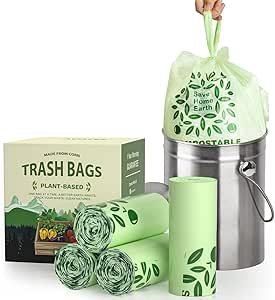
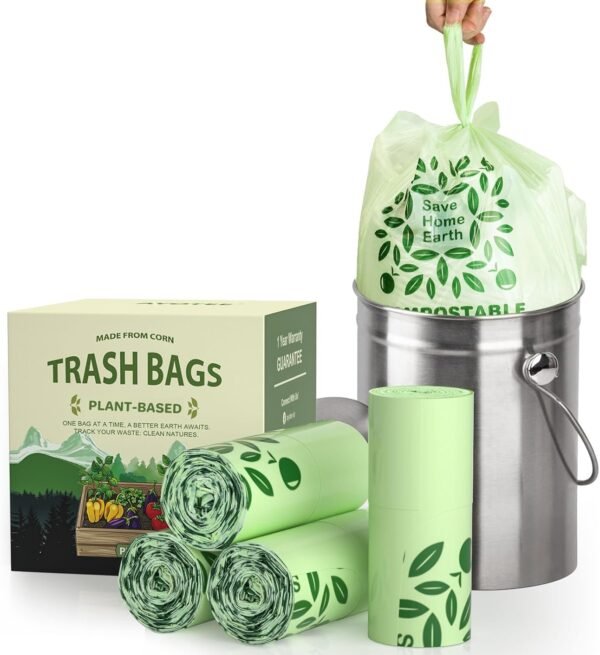
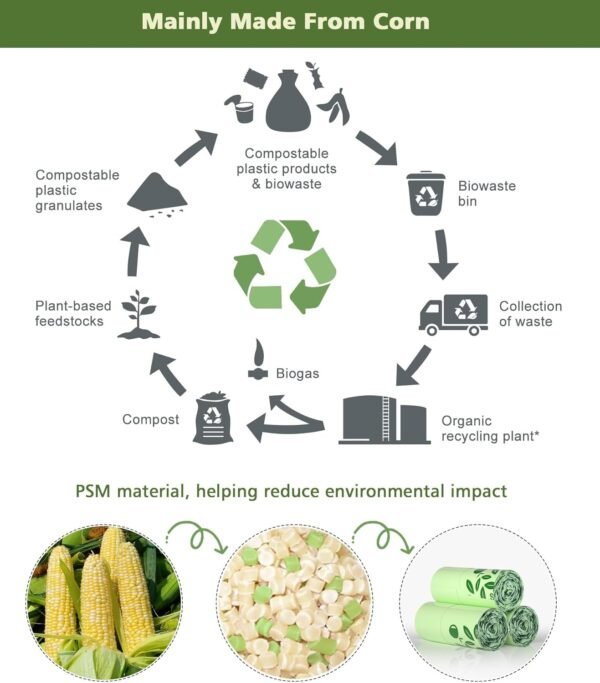
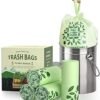
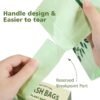
These are 2.6 gallon liners for a kitchen countertop food waste caddy, sold as 100 bags with integrated handles for tying. AYOTEE names the material specifically, which is more than most bag listings manage: plant based bioplastic made from corn starches, in a green half translucent film.
The important qualification is in the manufacturer’s own last bullet, and it should be read carefully. AYOTEE states that under the certain temperature and humidity conditions of composting facilities, the bags return to the earth as water, carbon dioxide and biomass. That is a description of industrial composting, where material is held at elevated temperature under controlled moisture for a defined period. It is not a claim that the bag breaks down in a backyard compost heap, in a landfill, in a garden, or in water. Those are different environments and a bag certified for one is not automatically suitable for another.
So the household this fits is one on a municipal or commercial food waste collection that accepts certified compostable liners. Check what your program accepts before ordering, because some accept only certified bags, some accept only paper liners, and some accept none at all.
The certification claim needs a number
AYOTEE states that the bags meet a United States ASTM standard, and does not say which one. That is the gap that matters most on a compostable product. The relevant specification for compostable plastics in the United States is ASTM D6400, and products certified against it commonly also carry a third party certification mark with a number that a waste program can check. Neither the standard designation nor a certification number appears anywhere on this listing.
Compostable and biodegradable are not the same word
The listing uses both terms interchangeably, describing the same bags as compostable in one place and biodegradable in another. Under the Federal Trade Commission’s environmental marketing guidance those are distinct claims with different substantiation requirements, and an unqualified biodegradable claim is specifically discouraged because most materials do not meaningfully degrade in a landfill. Read the compostable claim as the operative one and treat the biodegradable wording as loose copy rather than additional information.
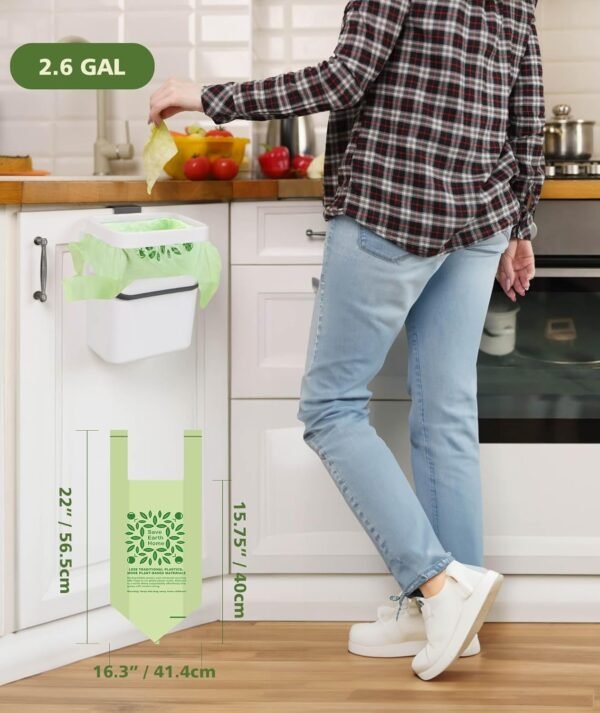
The listing also contradicts itself on size repeatedly. The title, the capacity field and the model number all say 2.6 gallons, or 10 liters. Three of the five feature bullets describe the product as 3 gallon bags, and one gives the dimensions as 16.3 by 22 inches while calling it a 3 gallon bag. AYOTEE also says the bags are slightly oversized against an ordinary 2.6 gallon bag so they fit most countertop containers, which may be the explanation, but the page never resolves it. One bullet describes a box dispenser while another says 100 bags per roll. No film thickness is published, and the recorded pack weight of 1.19 pounds across 100 bags works out at around five grams each, which is light for a bag described as thickened.
What to put in them, and what not to
Food waste is what these are for, and the Recommended Uses field says exactly that. Vegetable trimmings, peelings, coffee grounds, plate scrapings and similar organic kitchen waste all belong in a compostable liner going to a composting program.
The listing then undermines that by suggesting the bags for office waste, bathroom waste, car waste, baby diapers, pet litter and general recycling. If the bag is going into a compost stream, most of those are contaminants. Diapers and pet litter in particular are excluded by many municipal food waste programs, and putting them in a certified compostable bag does not make them compostable. Using these as ordinary trash liners is fine and wastes the certification, but do not mix the two uses in the same bin.
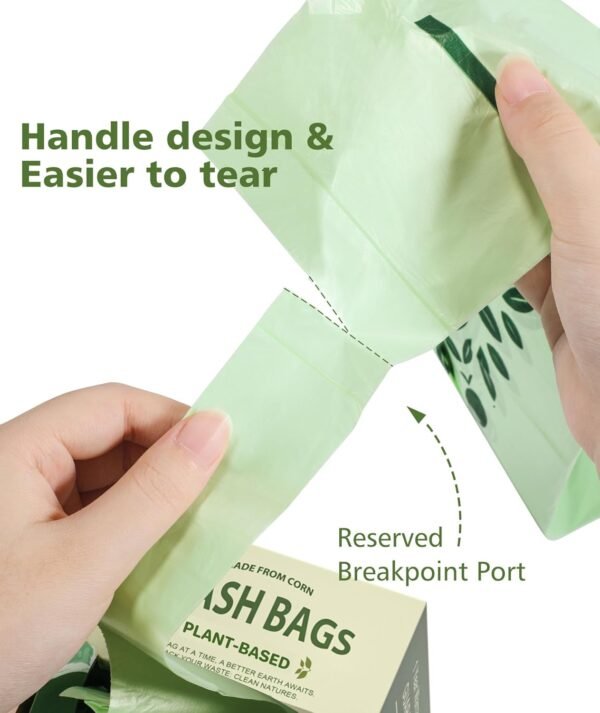
The handles are a genuine practical feature for this application. Food caddy waste is wet and smells, and a bag you can lift and tie without touching the contents is worth more here than in a dry office bin.
Storage, which matters more than for ordinary bags
AYOTEE gives a storage instruction that most bag listings do not and it should be followed: avoid excessive heat, and store the bags in a cool, dry place. Compostable bioplastics are designed to break down under warmth and moisture, which means a box left in a hot garage or a damp cupboard begins doing what it was made to do before you have used it. Bags that have gone brittle or tacky in storage tear when loaded.
That also means buying 100 at a time only makes sense if you will use them within a reasonable period. Ordinary polyethylene liners keep indefinitely on a shelf. These do not, and no shelf life is published.
Two further practical notes. A wet caddy liner is weaker than a dry one, so empty the caddy more often than you would a plastic bin, and do not leave a loaded bag standing for days. And do not double bag with a conventional plastic liner underneath, which is a common habit to protect the caddy and which contaminates the compost stream at the other end.
The only safety point is the one that applies to every film bag: keep them away from babies and small children, because a thin film is a suffocation hazard, and store the box closed and out of reach.
Cost, and the alternatives
Certified compostable bags cost more per bag than polyethylene and always will, because the material is more expensive and the market is smaller. The honest framing is that you are not buying a better bag, you are buying compatibility with a waste stream. If your council or hauler does not collect food waste, or does not accept liners, the extra cost buys nothing.
Other compostable options on this site include the Raytid compostable bags and the Tforing 1.2 gallon compost bags, which is a smaller size for a small counter caddy. For ordinary waste where compostability is irrelevant, a conventional liner such as the FORID 4 gallon liners or the Daoneg M201 bags costs far less. For garden waste, which is a different collection again, the paper lawn bags are usually what programs require. See the compost bags category and the wider trash bags category for the comparison.
Who should buy them, and who should not
Buy them if you have a countertop food waste caddy, your collection program accepts compostable liners, and the handles and the box dispenser suit how you use it. Naming the material as corn starch based bioplastic is more disclosure than most bag listings offer. Skip them if your program does not collect food waste or requires paper, if you need a certification number to satisfy a hauler, or if you were planning to use them as general trash bags, where they cost more and offer nothing. And check the size against your caddy before ordering 100, since this listing describes the product as both 2.6 gallon and 3 gallon and never reconciles the two.