



Description
A bag built for a machine that crushes its contents
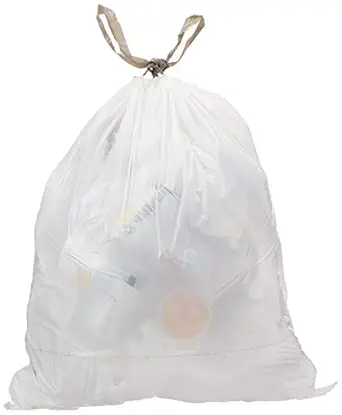
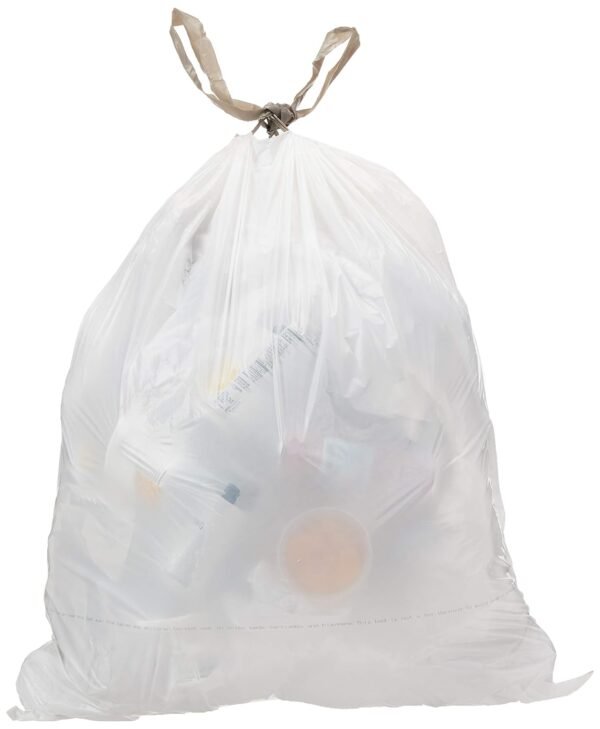
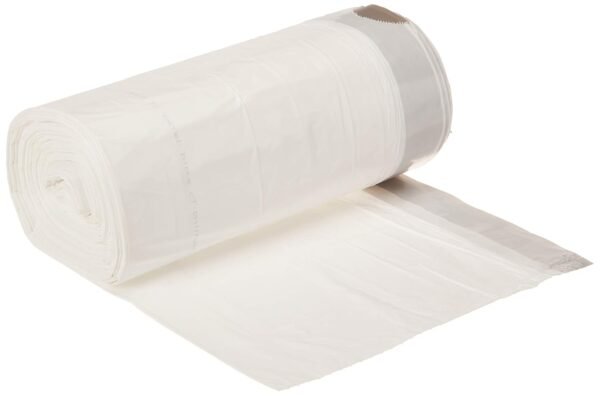
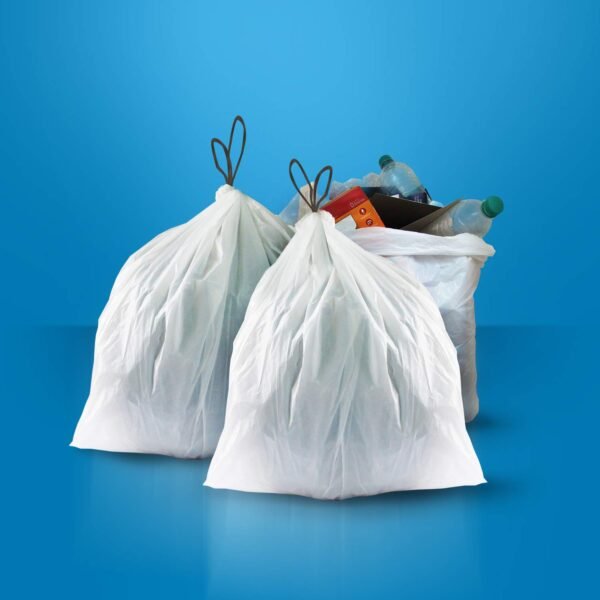
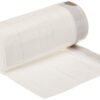
AmazonCommercial 18G Compactor Bags are sold as fifty bags at eighteen gallons in a 2 mil gauge, model AMZB-18GW-2.0DS. Amazon describes them as compactor trash bags for commercial businesses and properties, made of durable opaque plastic, with a drawstring closure, designed for built in kitchen trash compactors with an eighteen gallon capacity.
Compactor bags are a distinct product and it is worth being clear why. A built in trash compactor drives a ram down into the bin and crushes the contents to a fraction of their volume. That process pushes waste hard against the bag walls, forces sharp edges outward, and puts the bag under load in a way an ordinary kitchen liner never experiences. A regular thirteen gallon liner in a compactor splits, and then you are cleaning compressed waste out of a machine.
The household or business this suits is one that actually owns a compactor. If you do not, an eighteen gallon 2 mil bag is a heavy duty liner that will work in a large bin, but you are paying for strength you do not need.
The gauge, and why this listing is unusually easy to compare
The specification most trash bag listings hide is stated plainly in the title here: 2 mil. A mil is one thousandth of an inch, so 2 mil is double the thickness of a typical mid weight kitchen liner and roughly three times a budget bag. That is exactly the sort of number a shopper can compare against another product, and it is worth noting how rare it is in this catalog: several trash bag listings on this site claim heavy duty performance and publish no gauge at all.
The product dimensions field gives 28 by 25.75 by 0.01 inches at 5.43 pounds. The first two figures are the flat bag dimensions and the 0.01 is a placeholder for thickness rather than a real measurement, since 2 mil is 0.002 inches. The pack weight across fifty bags is consistent with a heavy film.
The listing description consists entirely of the phrase “An Amazon Brand”. No material composition, no resin type, no recycled content statement and no recyclability claim appears. The absence of a recyclability claim is appropriate rather than a gap: household plastic film is not accepted by most curbside programs, and a bag full of compacted waste goes to landfill with its contents. These are not compostable and should not be confused with the certified products in the compost bag listings. Amazon ranked this pack sixty third in Trash Bags when the data was captured.
What must never go into a compactor
This is where a compactor bag review differs from every other trash bag review, and it is the most useful section here.
Never put an aerosol can into a trash compactor. Compressing a pressurized can can rupture it, releasing propellant that is usually flammable, inside a metal box with an electric motor. That is the single most dangerous thing you can do with the appliance, and it means every empty air freshener, spray starch, aerosol cleaner and hairspray can needs to go into ordinary trash rather than the compactor.
Never put liquid cleaning chemicals into a compactor either. Crushing sealed bottles forces contents out, and residues from different products meeting under pressure inside a closed bag is exactly the mixing scenario every product label warns against. Chlorine bleach with an acidic cleaner releases chlorine gas and bleach with ammonia releases chloramine. Leftover cleaning chemicals belong at a household hazardous waste collection point.
Never put hot ashes in, which will melt the film and can start a fire. Never put batteries or anything with a lithium cell in, since crushing a lithium battery is a well documented cause of fires in waste equipment. And be careful with glass: compacted glass produces sharp fragments that will find the weakest part of any film, so bottles are better in a recycling stream anyway.
Keep the flat pack of bags away from infants and toddlers, since plastic film is a suffocation hazard.
Fitting and using them
Fit the bag into the compactor drawer, hook the drawstring over the rim if the machine allows it, and make sure no part of the bag can foul the ram. Check the machine’s manual for the bag size it expects, because a bag that is too large folds into the crush path and tears on the first cycle.
Do not run the compactor to full capacity every time if you have to carry the result. Eighteen gallons of compacted waste is extremely heavy, which is the trade off of the whole appliance: you take the bin out less often and the bin is much harder to lift when you do. Support the base with both hands and do not lift by the drawstring alone, since the drawstring is the weakest point on any bag.
Compacted waste also smells more than loose waste, because compression squeezes liquid out of food scraps. Wipe the compactor drawer periodically with a general cleaner such as the Zep multi purpose cleaner and let it dry before fitting a fresh bag. Fragrance in a liner masks odor rather than reducing it, and these bags are unscented.
Cost per bag and the alternatives
Compare on cost per bag at a stated gauge, which this listing makes possible. Fifty bags at 2 mil is a mid size commercial pack, and the cost per bag will be higher than a kitchen liner because there is roughly twice as much plastic in each one. That is the correct comparison, not the headline pack price.
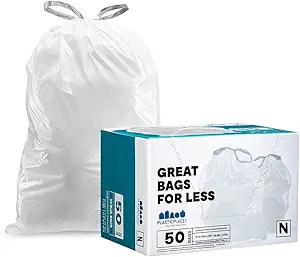
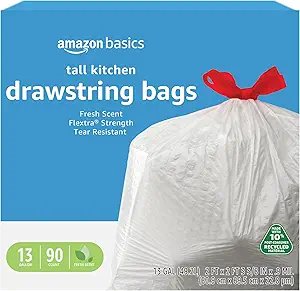
If you do not own a compactor, the catalog has cheaper options for the same volume of ordinary waste, including the Amazon Basics thirteen gallon bags for a standard kitchen bin, the Plasticplace Code N liners for a fitted can, and the thirty three gallon drawstring bags for a garage or workshop bin. Where an exact fit matters, the simplehuman liners show what a proprietary size costs. The full trash bag listings allow a gauge by gauge comparison where gauges are published.
Who should buy these and who should not
Buy them if you have a built in eighteen gallon trash compactor, in a home, a restaurant or a rental property, and you want a stated 2 mil film rather than an unspecified heavy duty claim. The published gauge makes this one of the easier bags in the catalog to buy with confidence.
Do not buy them for a standard kitchen bin, where you are paying for twice the plastic you need. Do not put aerosols, batteries, hot ashes or liquid chemicals into a compactor under any circumstances. And be realistic about weight, because a full eighteen gallon compacted bag is a two handed lift.