Description
Small bags for a countertop food waste bin
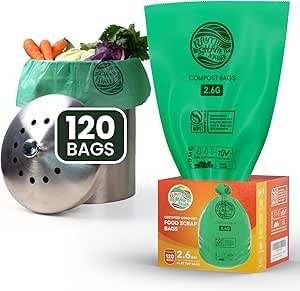
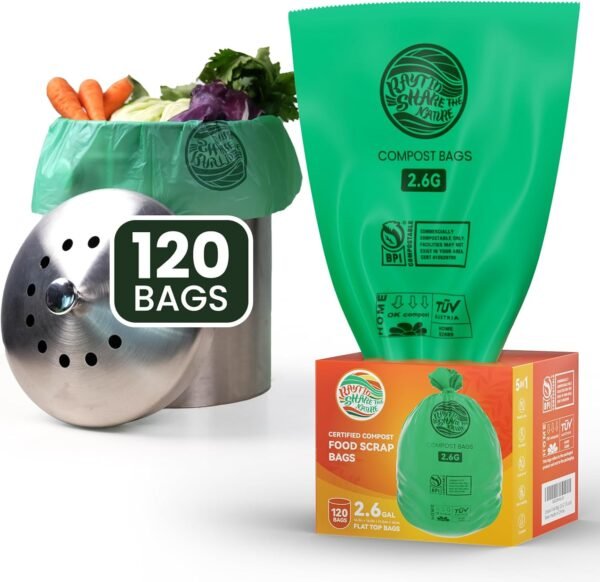
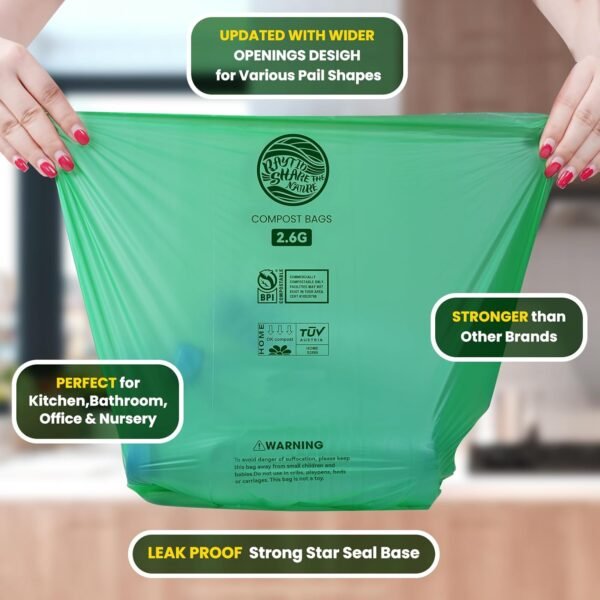
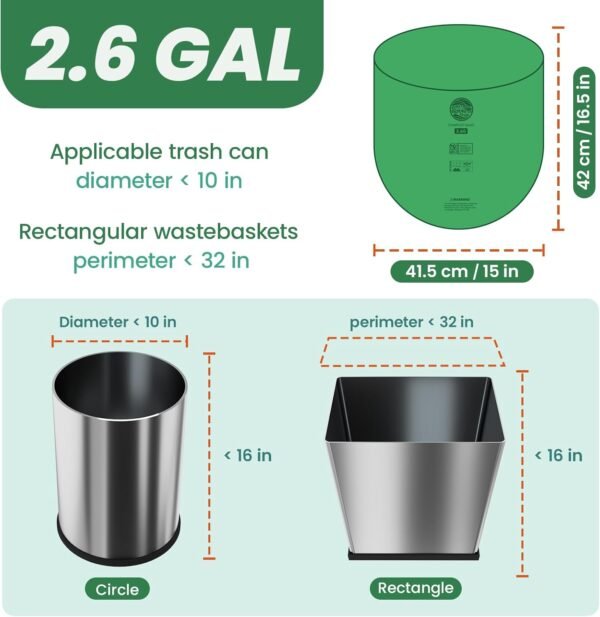
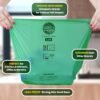
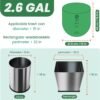
Raytid compostable bags are sold here as one hundred and twenty bags on a roll, at a stated 2.6 gallon size, measuring 16.3 by 16.5 inches. The intended use is a kitchen countertop food scrap bin, the small caddy that sits by the sink and gets emptied every day or two.
That size and that use go together. A compostable bag is not a general purpose trash liner, it is a container for food waste on its way to a compost stream, and the small format exists because food waste in a warm kitchen needs emptying frequently. Raytid describes the bags as stretching to accommodate oversized loads without punctures, leaks or tears, which is the standard claim in this category and one that plant starch films historically struggled to meet.
One quantity note before ordering. The product title reads 2.6 gallon and then separately lists 1.3, 2 and 3 gallon, which reads as a size selection menu rather than as a description of what is in this pack. The bullet gives 2.6 gallon and 16.3 by 16.5 inches, so that is the figure to work from, but check the size selected at checkout against the caddy you actually own.
The certifications, which are the substance of this listing
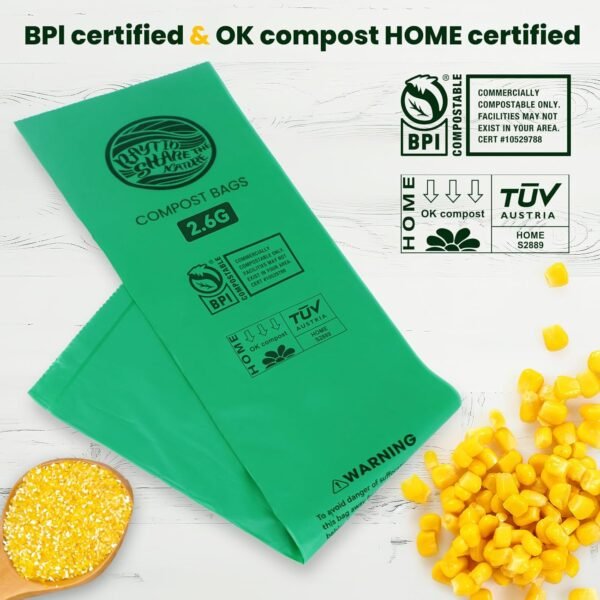
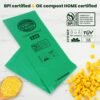
This is the rare listing in the catalog where the environmental claims come with real standards attached, and they are worth explaining because they are not interchangeable.
ASTM D6400 is the American standard for compostable plastics, and BPI is the certifying body that verifies products against it in the United States. Both refer to industrial or commercial composting, meaning a managed facility that holds material at high temperature for a sustained period. A bag certified to D6400 is not, by that certification alone, guaranteed to break down in a backyard heap.
EN 13432 is the equivalent European standard, and the listing also cites OK Compost HOME, which is a separate certification specifically for home composting conditions at ambient temperature. That is the one that supports backyard use, and it is a meaningfully stronger claim than industrial certification alone.
The listing states the bags degrade into humus, carbon dioxide and water within one hundred and eighty days in a standard compost pile. Read that as the certification timeframe rather than a promise about your particular heap, since real world breakdown depends on temperature, moisture and turning.
Raytid also describes the bags as made from plant starches with no polyethylene, and as having the highest biobased content, nontoxic, and great for the environment. The material statement is specific and checkable. The words nontoxic and great for the environment are unqualified terms with no standard behind them and belong to the seller rather than to this review.
Where these bags should and should not end up
Three destinations matter and they are not equivalent. In a home compost heap, an OK Compost HOME certified bag should break down. In a municipal or commercial food waste collection, check first, because a surprising number of programs refuse all bags including certified compostable ones and require food waste loose or in paper. In landfill, a compostable bag does very little, because landfill conditions are anaerobic and these materials are designed to break down aerobically.
They must never go into plastic recycling. A starch based film contaminates a polyethylene recycling stream, which is the reverse of the problem people usually worry about. Do not mix them with the ordinary liners in the trash bag listings, and keep them clearly separate in the cupboard so nobody grabs the wrong roll.
Storage, which matters more than with ordinary bags
This is the practical point most buyers miss, and the listing states it plainly: avoid excessive heat, store in a cool dry place, and use within ten months of purchase.
Compostable films begin degrading in storage. A roll left in a hot garage, in a sunny window, or simply kept for two years will get brittle and split when you try to open a bag. That makes bulk buying a false economy in this category in a way it is not with polyethylene. One hundred and twenty bags at one bag every day or two is roughly six months to a year of use, which fits the ten month window reasonably well, but a slower household should buy a smaller roll.
Keep the roll away from the sink and away from a dishwasher vent, both of which are warm and damp.
Using them, and the safety points
Line the caddy, fill it with food scraps, and empty it every day or two. A compostable bag holding wet food scraps in a warm kitchen will start to soften from the inside, which is expected behavior for the material rather than a defect, and it is another reason not to leave a full caddy sitting for a week.
Do not put liquids in. Do not put cooked fats or oils in unless your compost program accepts them. Do not put pet waste in unless your program accepts it, which most do not.
Never put cleaning chemicals into a compost bag. This is more important than with ordinary trash, because the contents are destined for a composting facility or a garden heap, and household chemicals contaminate finished compost that may end up on food growing soil. Leftover bleach, drain opener, oven cleaner and similar products go to a household hazardous waste collection point. Never pour two different products into the same container, since residues meeting in a closed bag are exactly the mixing scenario every label warns against, and bleach with acid or with ammonia produces toxic gases.
Keep the roll away from infants and toddlers. Plastic film is a suffocation hazard whether or not it is compostable.
Cost and the alternatives
Compostable bags cost several times more per bag than polyethylene liners of the same size, and that gap is inherent to the material rather than a markup. One hundred and twenty bags is a large roll for this category, which brings the cost per bag down, provided you actually use them within the storage window.
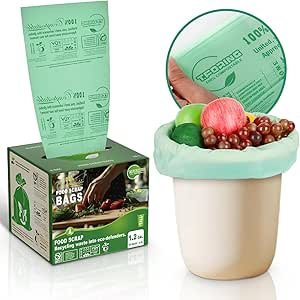
Within the catalog, the Tforing compost bags and the Ayotee small compost bags cover the same caddy sized format, and the Home Depot paper lawn bags are the paper route for garden waste, which many municipal programs prefer. If what you need is an ordinary kitchen liner rather than a compost bag, the Amazon Basics thirteen gallon bags cost far less, and the compost bag listings keep the two categories apart.
Who should buy these and who should not
Buy them if you separate food waste, you have either a home compost heap or a municipal food waste collection that accepts certified bags, and you will get through one hundred and twenty bags inside the ten month storage window. The ASTM D6400, BPI and OK Compost HOME certifications are real and specific, which is more than most bags in this category offer.
Do not buy them as general trash liners, where the extra cost buys nothing and the material does not break down in landfill. Do not put them in plastic recycling. And check with your municipal program first, because many food waste collections refuse all bags regardless of certification.