
Description
Paper bags for yard waste, and why the material matters
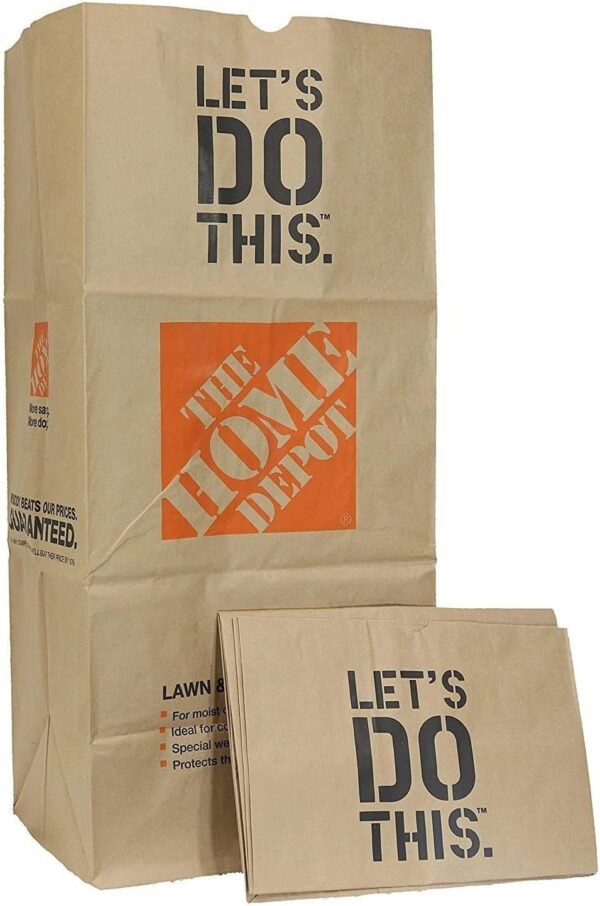
These are heavy duty brown paper lawn and refuse bags from The Home Depot, part number 49022-25PK, at thirty gallons each. The specification block resolves the quantity as two packs of twenty five, so fifty bags in total, with a listed pack weight of 28.1 pounds.
Paper is the whole point. Most municipal yard waste programs in the United States require yard waste to be set out in paper bags or in a labeled bin, precisely because paper breaks down in a composting facility and plastic does not. A plastic bag full of leaves has to be opened and emptied by hand at the facility, or it is rejected outright. If your town collects leaves and grass separately from trash, paper bags are usually not a preference, they are a rule, and it is worth checking your local requirements before buying either type.
The listing names lawn and leaf disposal, moist or dry refuse, and composting in a garden as the intended uses. Home Depot describes the bags as tear resistant two ply construction that stays strong when wet, and as self standing, meaning the bag holds its shape open on the ground so you can rake straight into it rather than wrestling a bag with one hand.
What two ply construction gets you, and what it does not
Two ply means two layers of kraft paper bonded together, which gives a paper bag its wet strength and its resistance to being punctured by a stick or a rose stem. It is the difference between a bag that survives being dragged across a lawn and one that splits at the base.
What it does not give you is indefinite wet strength. Paper is paper. A bag filled with wet grass clippings and left standing on a lawn overnight will weaken at the base, and a bag left in the rain for a week will fail. The practical rule is to fill paper bags on the day they go out, keep filled bags on a hard dry surface rather than on wet grass, and lift from underneath rather than by the top edge.
Weight discipline matters more with paper than with plastic. Thirty gallons of wet leaves or soil is far heavier than most people expect and will exceed what a paper base can hold and what a person can safely lift. Fill by weight, not to the top.
One specification field that is genuinely alarming
The recommended uses field on this listing reads “Biohazard Waste”. That is wrong and it is worth stating plainly rather than passing over. These are unlined kraft paper garden bags. They are not biohazard containers, they carry no biohazard marking, they are not liquid tight, and they must never be used for medical waste, sharps, soiled dressings or any regulated waste stream. Biohazard waste is handled under specific rules with specific containers, and a paper leaf bag meets none of them. The field appears to be an import data error, but it is the kind of error that could lead someone badly astray.
Two smaller data notes: the product description field contains only the character “2”, and the number of items field reads 2 while unit count reads 50, which are reconciled by the size field of twenty five count, pack of two. Amazon ranked these bags twenty second in Disposable Lawn and Leaf Bags when the data was captured.
What belongs in them and what does not
Leaves, grass clippings, weeds, prunings, hedge trimmings and garden soil in small amounts are the intended contents. Many composting programs also accept small branches within a size limit, and some accept food scraps, though rules vary considerably by town.
Several things should never go in. Hot ashes from a fire pit, grill or fireplace, which is the most dangerous mistake possible with a paper bag, since paper ignites readily and a bag of leaves is essentially kindling. Ashes belong in a metal container until completely cold, and then usually in the trash rather than in yard waste. Rocks, bricks and construction debris, which are too heavy and are not compostable. Pet waste, which most yard waste programs exclude. Treated lumber offcuts. And anything liquid, because paper does not hold liquid and a wet base fails without warning.
Cleaning chemicals deserve their own line in a catalog like this one. Never pour leftover bleach, drain opener, weed killer, fertilizer concentrate or any other household or garden chemical into a yard waste bag. Chemical residues meeting in a closed bag are exactly the mixing scenario every product label warns against, and chlorine bleach with an acid or with ammonia releases toxic gas. Leftover chemicals go to a household hazardous waste collection point. A yard waste bag is destined for a composting facility, and chemicals sent there contaminate finished compost.
Keep the flat pack away from small children as you would any bag, and store unused bags somewhere dry, since a damp stack of kraft paper loses most of its strength before it is ever used.
Using them well
Open the bag fully and roll the top edge down two or three inches before filling. That cuff stiffens the opening, keeps the bag standing, and gives you something solid to grip when you close it. Rake directly into the standing bag rather than filling a barrow and transferring twice.
Fold the top over to close, rather than trying to tie paper. If your collection service requires bags closed, a strip of paper tape is usually acceptable while plastic tape is often not, so check the rules. Do not staple, since staples end up in the compost stream.
Set filled bags out on the collection morning rather than the night before if rain is forecast. A soaked paper bag is a burst paper bag.
Cost, and the alternatives worth knowing
Fifty bags is a season’s worth of leaf clearing for most yards, and paper bags cost more per bag than thin plastic liners. The comparison is not really a fair one, because if your municipality requires paper, plastic is not an option at any price.
Where plastic is permitted, general purpose liners such as the Amazon Basics thirteen gallon bags or the larger thirty three gallon drawstring bags cover ordinary waste more cheaply, though neither belongs in a composting stream. If your goal is kitchen composting rather than yard waste, certified compostable liners such as the Raytid compostable bags or the Tforing compost bags are the right product and are made to a different standard entirely. The lawn and leaf bag listings and the compost bag listings keep those two categories separate.
Who should buy these and who should not
Buy them if your municipality collects yard waste in paper bags, you have a yard that generates leaves and clippings, and you want a self standing bag you can rake into directly. Fifty bags at thirty gallons is a sensible quantity for a fall clearing season.
Do not buy them for household trash, where they will fail as soon as anything wet goes in. Do not use them for ashes, rubble, pet waste or anything liquid. And ignore the biohazard waste line in the specification block entirely, because these are garden bags and nothing else.