Description
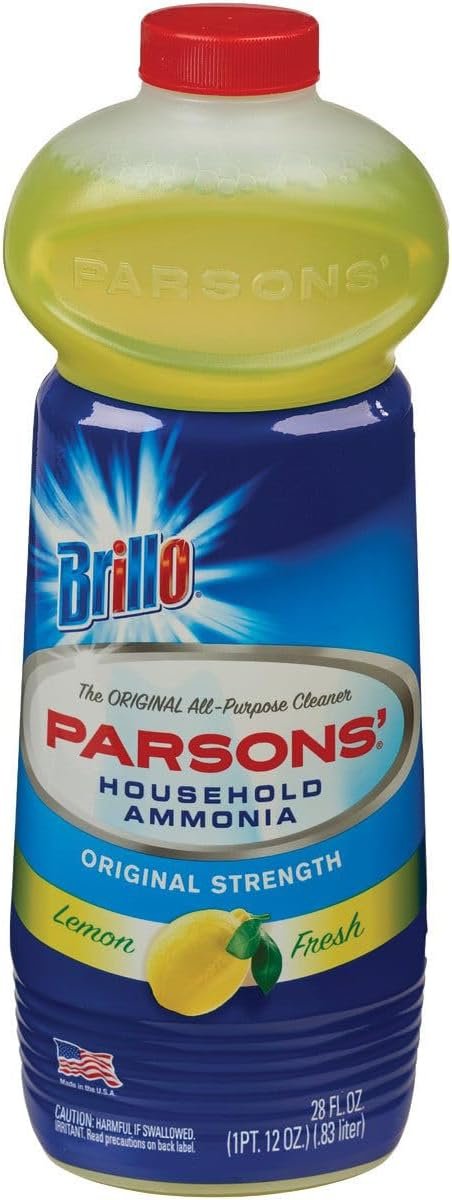
Parsons Lemon Scent Ammonia from Church and Dwight is a 28 ounce bottle of household ammonia, model number 855, a product that has been on the listing since 2008. Ammonia is one of the oldest cleaners still in general use and one of the few household chemicals with a genuinely serious mixing hazard, so this review spends more space than usual on how to use it and less on what it promises.
What household ammonia does well
Ammonia is a strongly alkaline cleaner that cuts grease and dissolves the oily film that settles on glass, and it evaporates without leaving a residue. That last property is why it earned its reputation on windows and mirrors: a cleaner that dries away completely does not leave the streaks that a soap based product leaves behind. It also works on greasy kitchen surfaces, on oven exteriors and on stove hoods, where the alkalinity does the work that a mild detergent cannot.
The household this fits is one doing occasional heavy cleaning rather than daily wiping, and one where the person using it understands what they are handling. A lemon scent has been added, and it is worth saying clearly that the scent does not make the product mild. Ammonia is pungent on its own, and the fragrance masks the smell rather than reducing the vapor. If anything, a scented version deserves more care, because the smell is the natural warning that tells you when ventilation is inadequate.
What this listing does and does not tell you
The page is minimal. The description is a single line stating 28 ounces of Parsons lemon scent ammonia, followed by a note that it is sold in twelve packs only. That note directly contradicts a title advertising one 28 ounce bottle, and there is no way to tell from the page whether an order delivers one bottle or a case. Check the quantity carefully before buying, because a case of twelve is a very different amount of a hazardous chemical to have in a house.
There is no concentration on the listing. Household ammonia is sold as a dilute aqueous solution, and the percentage varies between products and between grades, so without a figure there is no way to compare this against another bottle or to work out a dilution. There is also no ingredient panel, no pH, no dwell time and no surfactant statement, and the specification block carries only dimensions, a shipping weight of 1.9 pounds, a model number, the manufacturer name and ranking data placing it 403rd among all purpose household cleaners. The bottle label is the only real source of information here.
The mixing hazard, stated plainly
Ammonia must never be mixed with chlorine bleach. The combination produces chloramine vapors, which cause serious respiratory injury and have caused deaths in domestic settings. This is not a theoretical caution: it happens most often when someone cleans a toilet or a shower with one product, gets a poor result, and reaches for a second bottle without rinsing. Nothing about a lemon scent changes this. Do not use ammonia in the same bowl, the same bucket, the same sink or on the same wet surface as any bleach product, and never pour the two into one container. Rinse thoroughly and ventilate before switching products. Many multipurpose cleaners and mold removers contain bleach, so read the label of whatever you used last.
Surfaces to use it on, and to keep it away from
Glass, mirrors, glazed ceramic tile, stainless steel and sealed hard surfaces are the natural range for a diluted ammonia solution. It is at its best cutting grease and clearing film, and its residue free evaporation is what makes it useful on anything you look through.
Keep it away from several materials. Aluminum reacts with alkaline cleaners and can discolor or corrode. Unsealed wood, waxed floors and oiled finishes are damaged by an alkaline solution that strips the finish. Natural stone should be avoided, as should anything with a delicate painted or lacquered surface. Fabric and carpet are not sensible targets, since ammonia can affect dyes and is difficult to rinse out of a pile. On electronics and screens it should not be used at all: anti glare and oleophobic coatings on modern displays are damaged by ammonia, which is why screen cleaning products specifically say ammonia free.
Using it safely
Ventilation is the first requirement, not an afterthought. Open windows, run an extractor, and do not use ammonia in a small closed bathroom or a closet. Wear gloves, keep it well away from your eyes, and avoid spraying it, because atomizing ammonia puts vapor directly into the air you are breathing. A cloth dampened with a diluted solution is the safer method for most jobs.
Dilution matters and the listing does not provide a ratio, so use the bottle instructions. Ammonia is normally used well diluted in water for general cleaning, and stronger only for specific heavy jobs. Never heat it, never use it on a hot surface, and never leave a bucket of solution standing where the vapor collects. Anyone with asthma or another respiratory condition should think carefully about whether to use ammonia at all, and should certainly not be in the room while it is being used.
Store the bottle closed and upright, in a cool, ventilated cupboard, out of reach of children and pets, and physically separate from bleach so the two cannot be picked up together or knocked into each other. Do not decant it into an unlabeled bottle, and never into a drink container. Dispose of unused solution by flushing with plenty of running water rather than pouring it into a bucket with anything else.
Cost, and what else to consider
Ammonia is inexpensive per bottle and cheaper still per use, since it is diluted heavily for most jobs. That is its main practical advantage over modern formulated sprays, along with the residue free finish. The cost that does not appear on the label is the handling: it demands ventilation, protective habits and separate storage, and for many households that is a real reason to choose something else for routine work.
For everyday surface cleaning without the vapor, our reviews of the Mr Clean liquid cleaner and the Zep multi purpose cleaner cover dilutable general cleaners, and the Stardrops Pink Stuff multi purpose spray is a ready to use option. The all purpose cleaners category lists the alternatives together.
If glass is the job you bought ammonia for, a dedicated glass product achieves the same streak free result without the vapor, and the glass cleaners category covers those. One more link is worth following for the opposite reason: our review of the Clorox disinfecting all purpose cleaner covers a bleach based product, and it is precisely the kind of thing that must never share a surface, a cloth or a bucket with this bottle.
Who should buy it, who should not
Buy it if you want an inexpensive, residue free grease cutter for glass and hard surfaces, you can ventilate properly, and you will store it away from bleach. Skip it if anyone in the household has a respiratory condition, if you clean mainly in small enclosed bathrooms, or if you keep several bleach based products and would rather not manage the separation. Also check the quantity before ordering, because the description says the product is sold in twelve packs while the title describes a single bottle.