Description
Two products for one pan
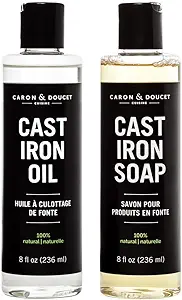
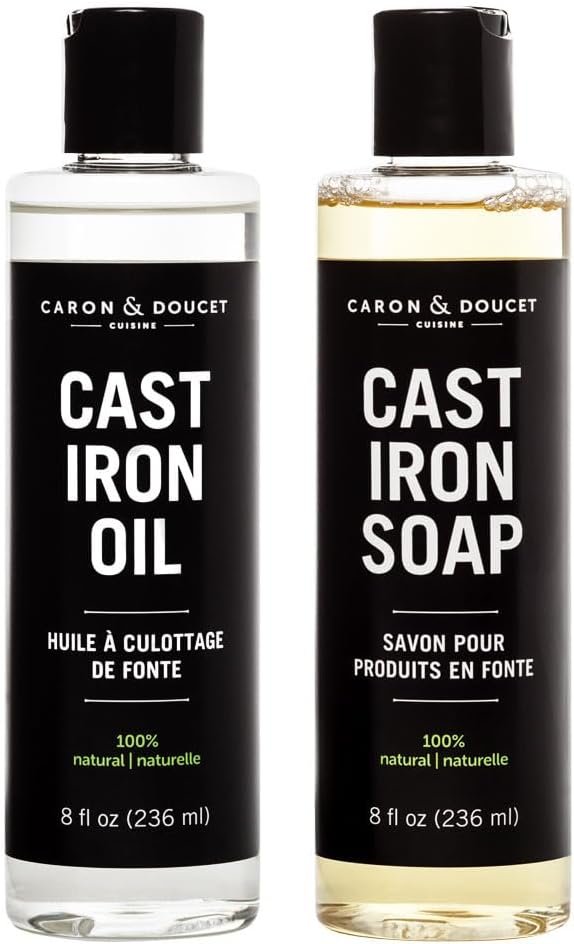
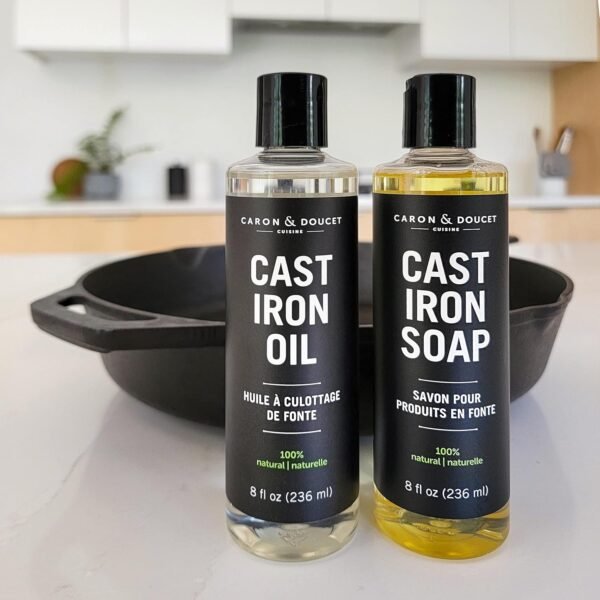
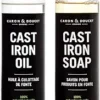
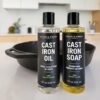
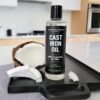
Caron and Doucet sell this as a cast iron cleaning and conditioning set: a cast iron soap and a seasoning oil, eight ounces each, model 8541966737. The two bottles do different halves of the same job, and understanding the split is most of what you need to know before buying.
Cast iron care has one governing principle. The black, slick surface on a well used pan is polymerized oil bonded to the metal, built up over many heating cycles. Everything you do to a cast iron pan either preserves that layer or removes it. A harsh detergent, long soaking and a dishwasher remove it. Gentle washing, drying immediately and a thin film of oil preserve it.
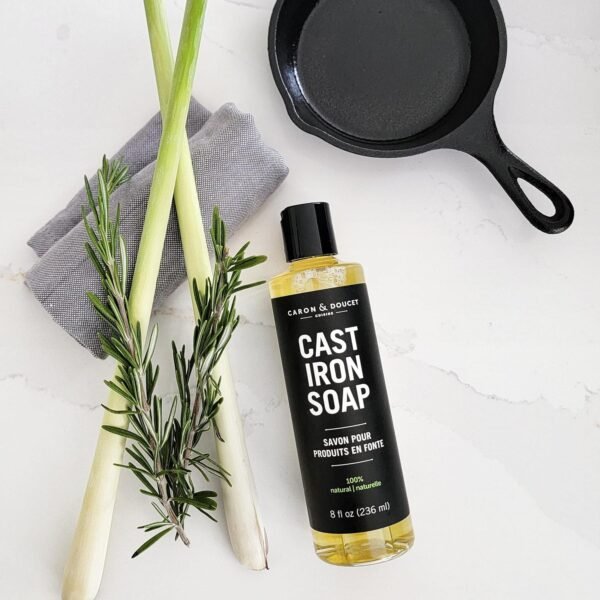
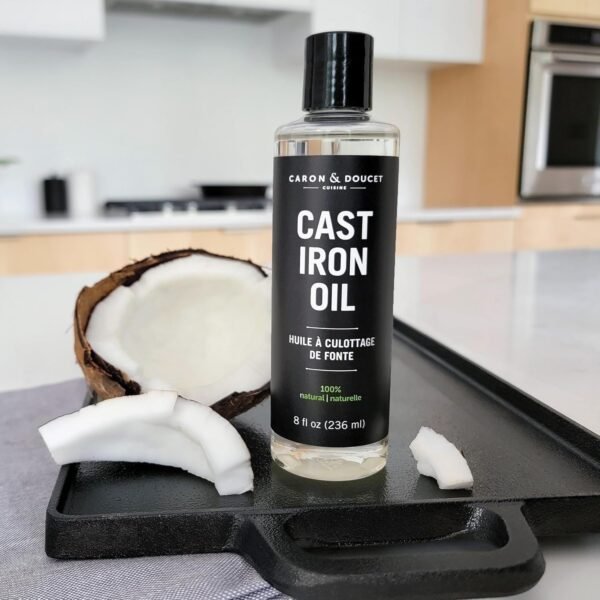
So the soap in this set is sold on being gentle enough not to strip seasoning, and the oil is sold as the thing you put back on afterward. Caron and Doucet describe the soap as formulated with plant based oils and free of sulfates, phosphates, parabens and petrochemicals, and gentle on both the seasoning and your hands. The oil is described as food grade, solvent free, refined coconut oil that is safe for food contact.
The claims, and what is not published
Several claims here are worth separating. The description of the oil as food grade and safe for food contact is a meaningful statement about a product you will cook on. The claim that the oil is guaranteed not to go rancid, unlike competitors, is a manufacturer guarantee with no shelf life figure, no test and no storage condition attached, so treat it as a warranty position rather than as data.
The listing also states that a proprietary blend of pure essential oils helps naturally eliminate food odors, making cookware easier to clean and leaving food tasting better. No essential oil is named, no concentration is given, and the claim that food tastes better is subjective and unsupported. Anyone sensitive to fragrance should note that a scented product is going onto a cooking surface.
Beyond coconut oil and unnamed essential oils, there is no ingredient list. No surfactant in the soap is identified, no preservative is named and no pH is published. The words natural and plant based have no fixed regulatory meaning in cleaning products.
The seasoning instruction that is missing
This is the practical gap. Seasoning cast iron is a heat process: a very thin film of oil, wiped almost dry, heated past the point at which it polymerizes, usually in an oven, until the pan stops looking wet. The two variables that decide whether it works are how thin the film is and how hot the pan gets, and different oils polymerize at different temperatures.
This listing gives neither. No oven temperature, no duration, no smoke point for the coconut oil and no instruction about how thin to wipe. Too much oil is the classic failure and it produces a sticky, blotchy surface rather than a hard one. Follow the instructions printed on the bottle, and if they are absent there too, that is worth knowing before you commit a favorite pan to the process.
What to use it on, and what to keep it away from
The set is for bare cast iron and carbon steel: skillets, pans, griddles, Dutch ovens and grill grates. Enameled cast iron is a different product with a glass surface and does not need seasoning at all, so oiling it achieves nothing except a sticky residue.
Cast iron should not go in a dishwasher. An alkaline automatic dishwasher detergent strips seasoning and leaves the bare metal to rust within hours, which is why every cast iron manufacturer says to wash by hand. For the same reason, do not soak a pan, and dry it immediately and thoroughly rather than leaving it on a rack.
For stuck on residue, mechanical action beats chemistry, and a chainmail scrubber or a stiff brush is the traditional answer. The catalog carries the Herda chainmail scrubber and the Herda cast iron pan brush for exactly this, and the mushroom style chainmail scrubber is a variation on the same idea. Steel wool and oven cleaner strip a pan back to bare metal, which is occasionally what you want during a full restoration and never what you want during routine washing.
Handling, storage and one real fire precaution
Store both bottles capped, upright and out of reach of children, away from heat and direct sun. Oil degrades with heat and light regardless of any guarantee, so a cupboard is better than a windowsill above the stove.
The fire precaution matters and it is specific to oil products. Cloths and paper towels soaked in drying or semi drying oils can generate heat as the oil oxidizes, and a wadded up oily rag left in a bin is a documented cause of spontaneous fires. Spread used cloths flat to dry outdoors, or soak them in water and seal them in a metal container before disposal. Do not leave a pile of oily paper towels in a kitchen bin overnight.
When seasoning in an oven, ventilate. Oil taken past its smoke point produces a lot of smoke, and a smoke alarm in a closed kitchen will find it. Use a tray under the pan to catch drips, and let the pan cool in the oven rather than moving hot cast iron.
Never combine this soap with another cleaning product, and never use bleach, oven cleaner or a caustic drain product on cast iron. Chlorine bleach must never be mixed with an acid or with an ammonia based cleaner anywhere in the kitchen, since both combinations produce toxic gases. For ordinary dishes, a standard liquid such as the Dawn Ultra dish soap covers the rest of the sink.
Cost, a data note, and the alternatives
Eight ounces of each is a modest quantity, and a seasoning oil used as thinly as it should be lasts a long time. The set costs considerably more than a bottle of general dish soap and a jar of neutral cooking oil, which is the honest comparison, and what you are paying for is a formulation aimed at one specific job.
One data point worth flagging: the item weight field reads eight ounces, while the title describes two eight ounce bottles. Eight ounces cannot be the weight of the set, so treat that field as describing one bottle or as an error. The listing is also filed under Dish Soap and Amazon ranked it one hundred and first in that category, which fits the soap half of the set better than the oil half.
The wider dish soap listings and the dish scouring pad listings cover the general kitchen alternatives.
Who should buy this and who should not
Buy it if you cook on bare cast iron or carbon steel regularly, you want a soap formulated not to strip seasoning and a dedicated food grade seasoning oil, and you like the idea of buying both together.
Do not buy it for enameled cast iron, which does not need seasoning. Do not expect the listing to teach you the seasoning process, since it publishes no temperature, duration or film thickness. And treat the guaranteed not to go rancid line as a warranty rather than as a tested shelf life.