
Description
What a 357 or 303 cell actually powers
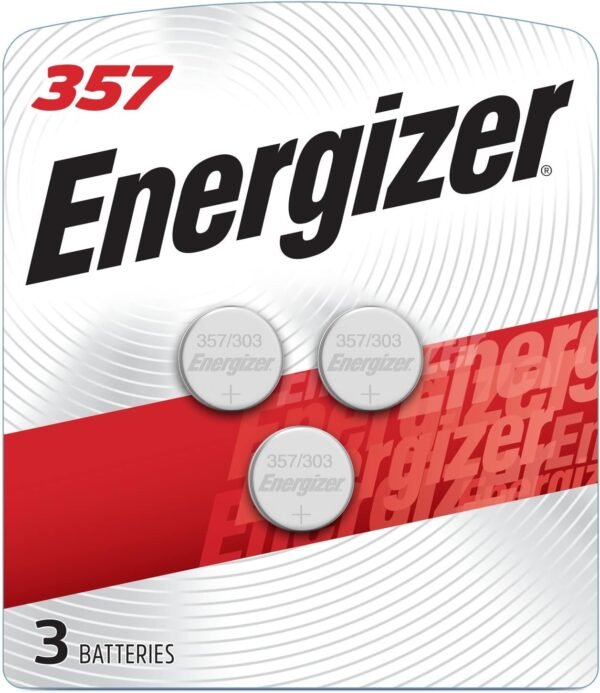
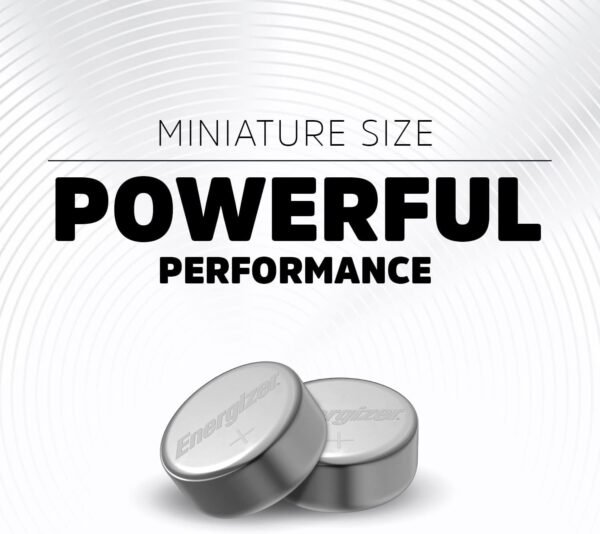
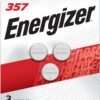
This is a three pack of Energizer 357/303 button cells, 1.5 volt silver oxide, model 50202. Energizer names the devices directly: kitchen scales, calculators, keyless entry systems, watches, and medical devices such as a glucose monitor or a heart rate monitor. The cell is small, flat and roughly the size of a shirt button, and it lives inside things that need a stable voltage over a long, low current discharge.
Silver oxide is the reason this cell type exists alongside cheaper alkaline equivalents. A silver oxide cell holds its voltage almost flat across most of its life and then drops sharply at the end, while an alkaline button cell sags gradually. For a watch, a scale or a meter that depends on a stable reference voltage, that flat curve is the difference between an accurate reading and a slowly drifting one, and it is why watch and instrument manufacturers usually specify silver oxide.
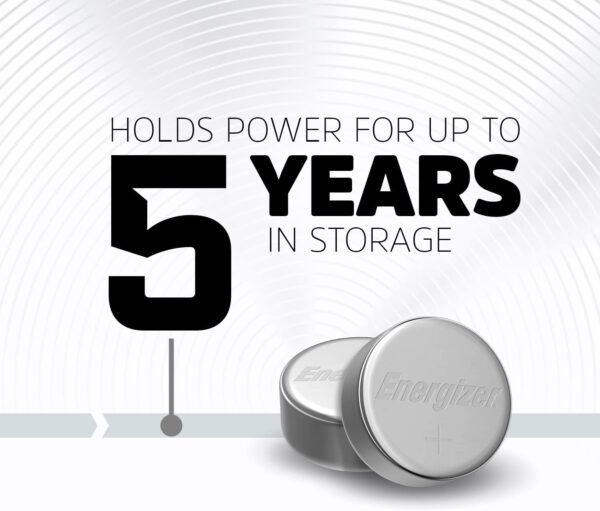
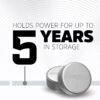
Energizer states the cells hold power for up to five years in storage and contain no mercury. Mercury was removed from button cells across the industry some years ago, so that is a category wide position rather than something unique here, but it is accurate and worth knowing for disposal.
The safety issue that outranks everything else in this review
Button and coin cells are the most dangerous batteries in an ordinary home, and it has nothing to do with fire.
A swallowed button cell lodged in a child’s throat can cause severe chemical burns to the esophagus in a very short time, because current from the cell reacts with body tissue and generates a caustic substance at the point of contact. This is a well documented and serious hazard, and it is the reason button cell packaging carries child resistant blisters and warning symbols. The same risk applies to a cell pushed into a nose or an ear.
The practical rules follow directly from that. Keep loose cells, new and used, completely out of reach of children, in a latched drawer rather than a kitchen junk drawer. Do not leave a cell on a worktop while you change a battery. Check that the battery compartment on any device a child can reach is secured with a screw. Dispose of used cells immediately rather than putting them back in a drawer, since a partly discharged cell still carries enough current to cause injury. And if a cell is swallowed or you suspect it has been, treat it as an emergency and seek immediate medical attention. Do not wait to see whether symptoms develop.
The same applies to pets, which will chew anything that fits in a mouth. The other coin cell products in the coin and button cell listings all carry the identical hazard, and it is worth applying one storage rule to the whole category rather than to individual packs.
A specification contradiction that affects compatibility
The listing has a real technical inconsistency. The title and description describe 1.5 volt silver oxide cells in the 357 and 303 designation, which corresponds to the SR44 size. The specification block, however, contains a field reading “3 LR44 batteries required (included)”. LR44 is the alkaline equivalent in the same physical size, not the silver oxide type, and the two behave differently in service despite being interchangeable dimensionally.
For most casual uses the substitution does not matter. For a watch, a light meter or an instrument that specifies silver oxide, it does, because the alkaline cell’s sloping discharge curve produces drifting readings toward the end of its life. Buy the chemistry the device asks for, and read the title rather than the specification field on this listing.
Energizer helpfully lists the cross references this cell replaces: 280-03, 280-08, 303/357, D303/357, SB-A9, SR 1154 SW, SR 44 SW and WS14. That list is genuinely useful, because button cell naming is a mess of competing manufacturer codes and matching a number from an old cell is often the only way to identify a replacement.
Two smaller data points: the product dimensions of 4.3 by 3.7 by 0.3 inches describe the blister card rather than the cells, and the department field reads Unisex-Adult, which is apparel metadata. Amazon ranked this pack forty first in Coin and Button Cell Batteries when the data was captured.
Handling, fitting and disposal
Handle cells by the edges. Fingerprints on the flat faces leave a film that raises contact resistance, which in a low current device can be enough to cause an intermittent connection. Wipe a new cell with a dry cloth before fitting it if you have handled it.
Watch the orientation. The flat, wider face is the positive terminal on almost all button cells, and fitting one upside down in a spring contact holder can short it.
Never mix a new cell with a partly used one in a device that takes two or three, and never mix silver oxide with alkaline in the same device. The stronger cells drive the weaker one into deep discharge, and that is when a cell vents or leaks. Leaked electrolyte from any cell is caustic, so if you find a crusty deposit in a compartment, wear gloves, keep it away from your face, clean the contacts with a dry brush, and do not use a household cleaner inside the compartment.
Store spares in the original card at room temperature, away from coins, keys and other metal, because a shorted cell heats up. Tape the terminals of used cells before disposal. Many states and municipalities require button cells to be recycled rather than binned, and the mercury free composition does not change that requirement, so check your local rules. The larger cells in the household battery listings follow different disposal rules again.
Cost and the alternatives
Three cells in a pack is a small quantity, which suits the way these get used: one at a time, years apart. Silver oxide costs more per cell than the alkaline LR44 equivalent, and for a low drain instrument that premium buys a stable voltage and a long service life rather than raw capacity.
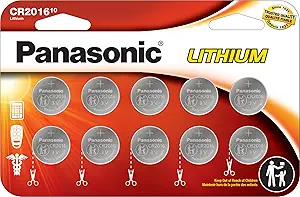
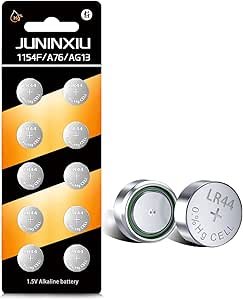
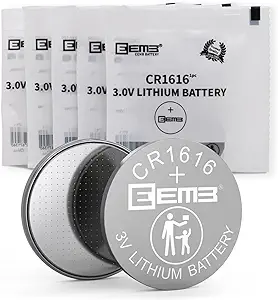
Within the catalog, the Panasonic CR2016 coin cells and the EEMB CR1616 cells cover the 3 volt lithium coin cell family, which is a different chemistry used in key fobs and motherboards and is not interchangeable with a 1.5 volt button cell. The Juninxiu L1154 cells are the alkaline equivalent of this size. For ordinary household devices, the Energizer MAX AA pack covers the everyday size.
Who should buy these and who should not
Buy them if a device specifies 357, 303 or SR44 silver oxide, particularly a watch, a scale or an instrument where a stable voltage matters, and you want the long storage life. The cross reference list on the listing makes identifying the right cell easier than most.
Do not buy them for a device that specifies a 3 volt lithium coin cell, which is a different chemistry and voltage entirely. Do not substitute alkaline in an instrument that asks for silver oxide, despite the LR44 reference in the specification block. And do not keep loose button cells anywhere a child or a pet can reach them.