



Description
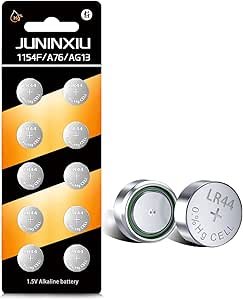
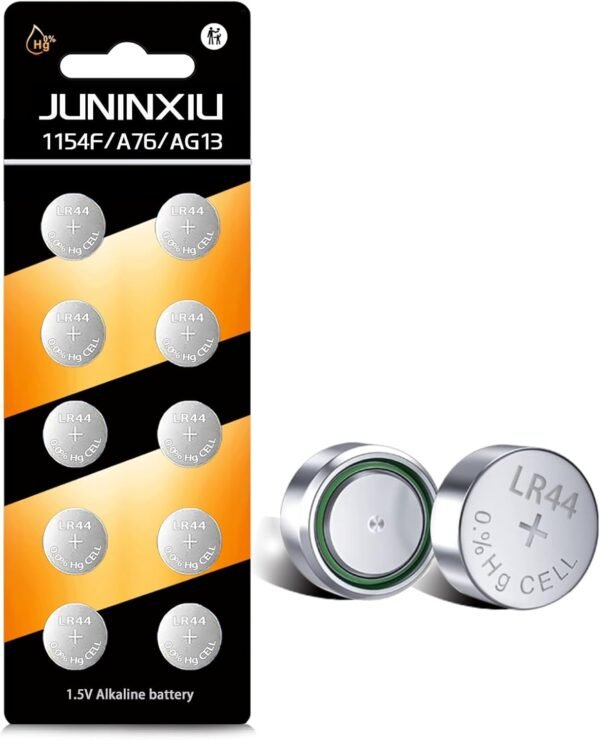
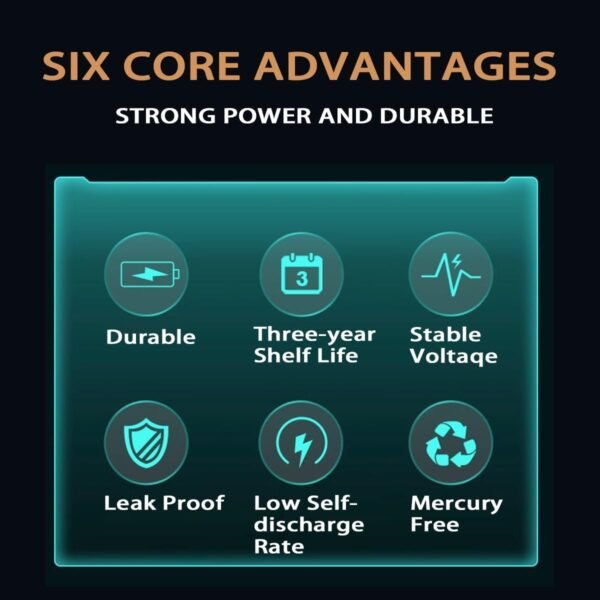
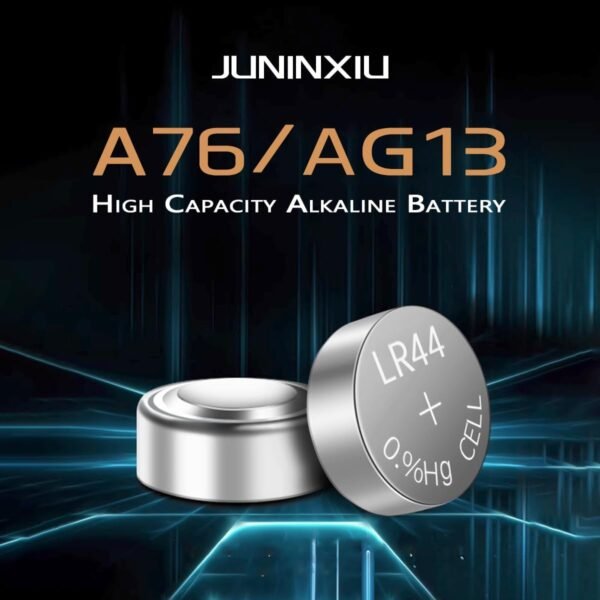
This is a ten pack of alkaline button cells listed under the designation L1154, with the same listing also naming AG13, LR44, A76, SR44 and a long tail of alternative codes. The manufacturer gives the chemistry as alkaline, the capacity as 180 milliamp hours, the voltage as 1.55 volts, the weight as 1.95 grams per cell and the shelf life as three years. Those numbers are the useful part of the page, and two of them need a closer look.
Where these cells go
A button cell of this size powers small, low drain electronics: bathroom scales, kitchen timers, laser pointers, thermometers, small remote controls, calculators, toys, novelty lights and many watches. The listing names watches, calculators and toys. Devices in that group draw very little current, which is why a cell rated at 180 milliamp hours can run one for a year or more, and why buying ten at a time makes sense in a household that has a drawer full of small gadgets that all die at inconvenient moments.
The household this suits is a practical one: replace the cell, get on with the day, keep spares. It is a poor fit for anyone maintaining a precision instrument or a quality watch, and the next section explains why that distinction is not pedantry.
The alkaline and silver oxide question the listing blurs
The cross reference list on this page includes both alkaline designations such as LR44, AG13 and A76 and silver oxide designations such as SR44, 357 and 303. Those are physically interchangeable in that they share the same case size, and they are not electrically equivalent. Alkaline cells are nominally 1.5 volts and their voltage falls steadily as they discharge. Silver oxide cells are nominally 1.55 volts and hold a much flatter voltage until they are nearly empty. In a toy that difference is invisible. In a light meter, a precision scale or a quality quartz watch, a sagging voltage shows up as drifting readings or a device that behaves oddly long before the cell is actually flat.
The listing also states an exact fresh full 1.55 volts while giving the type as alkaline, which sits awkwardly with the 1.5 volt nominal figure normally associated with that chemistry. A fresh alkaline cell can measure above its nominal rating, so the statement is not impossible, but the page presents 1.55 volts as the working figure rather than as an off load reading on a new cell. This review will not resolve the discrepancy. If your device specifies a silver oxide cell such as a 357 or an SR44, buy that chemistry rather than an alkaline substitute, whatever a cross reference list says.
What the specification block adds, and what it garbles
The specification block repeats the model number as L1154 Battery and then carries a batteries field reading that ten LR44 batteries are required and included, which is the standard Amazon field for a device that takes batteries rather than for a pack of batteries themselves. It is a data artifact rather than information. There is no manufacture date, no expiry date and no country of origin, and no mercury content statement appears, which some buyers look for on button cells. The listed package dimensions describe a flat card of ten cells.
The safety point that outranks everything else on this page
Button cells are a serious ingestion hazard for young children and for pets. A swallowed cell lodged in the throat or the gut can cause severe internal injury quickly, and the risk is not limited to fresh cells, because a spent cell can still do damage. This is the single most important thing to know about a ten pack, since a card of ten is far more likely to end up loose in a drawer than a single cell in a blister pack.
Handle them accordingly. Keep the pack sealed and stored high and out of sight, never loose in a bag, a pocket or a bedside drawer. Do not leave a removed cell on a counter while you fit the new one. Make sure the battery compartment on any toy or device is screwed shut rather than clipped, and stop using a device whose compartment no longer closes properly. If a cell is swallowed, treat it as an emergency and seek medical help immediately rather than waiting for symptoms. Dispose of used cells at a battery collection point, not in household trash.
Two more rules. Never attempt to recharge an alkaline button cell, since these are primary cells and charging them can cause leakage or rupture, and never mix new and used cells or different brands in the same device. Store them at room temperature, away from heat and away from metal objects such as coins and keys that can bridge the terminals.
Getting the most from a ten pack
Fitting a button cell correctly is worth thirty seconds of care. Handle the cell by its edge rather than pressing a finger flat across both faces, because skin oils and moisture across the terminals give a poor contact and can start a slow discharge. Wipe the cell with a dry cloth before fitting it, and check the orientation, since the positive face is the larger flat side and the case is easy to insert upside down in a shallow holder.
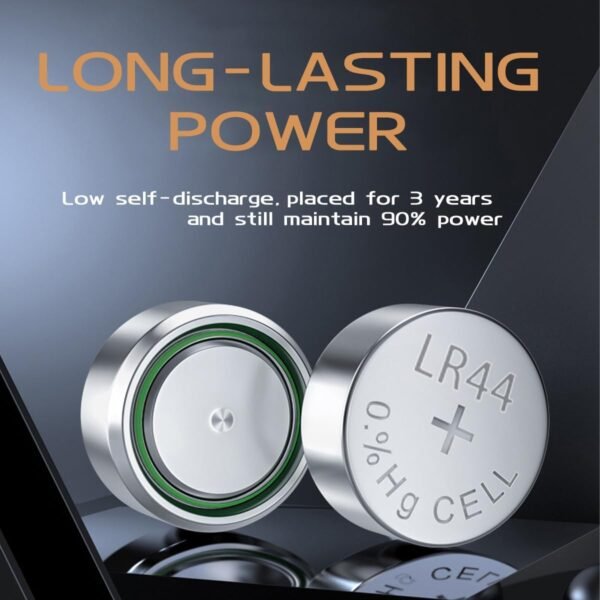
The three year shelf life the manufacturer gives is the reason a ten pack is worth buying only if you will use them. Alkaline chemistry self discharges slowly and a cell that has spent four years in a drawer is not a fresh cell, which is the usual explanation for a new battery that seems flat straight out of the pack. Buy the quantity you will actually get through, keep the pack somewhere cool and dry, and take cells from one end of the card so you know which are oldest.
Cost per cell, and the alternatives
The cost structure of a multipack is straightforward: the price per cell falls sharply with quantity, and the only waste is cells that expire unused. For a household with several low drain devices, ten cells is a sensible horizon against a three year shelf life. For a single device, it is not, and a smaller pack of the correct chemistry is the better purchase.
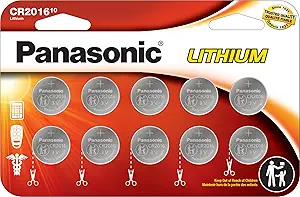
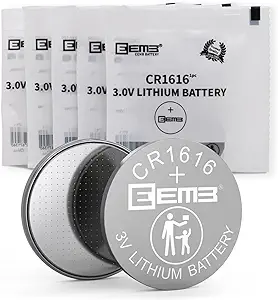
For other common formats in the same drawer, our reviews of the Panasonic CR2016 coin cells and the EEMB CR1616 coin cells cover lithium coin cells, which are a different chemistry at three volts and are not interchangeable with these. The LICB CR2025 lithium cells are another widely used size worth knowing.
If your device calls for a silver oxide cell rather than alkaline, our write up of the Energizer 357 and 303 button cells covers that chemistry directly. The coin and button cell category lists the sizes together, and the wider household batteries category covers the cylindrical formats.
Who should buy it, who should not
Buy the ten pack if you have several low drain devices, you want spares on hand, and the pack can be stored safely away from children and pets. Skip it if your device specifies silver oxide, if you need a dated or certified cell for an instrument, or if you only need one and would rather not have nine loose button cells in the house. The listing gives good headline numbers and blurs the chemistry distinction that matters most, so check what your device actually calls for.