

Description
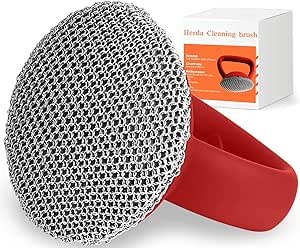
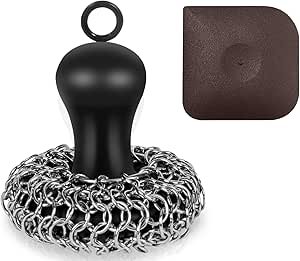
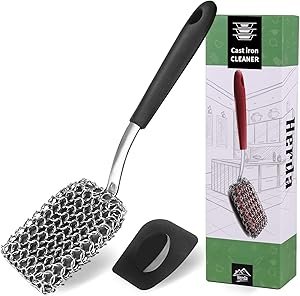
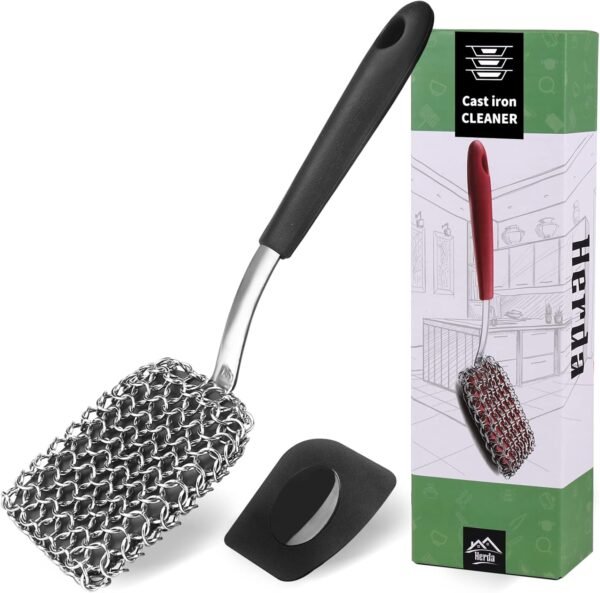
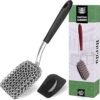
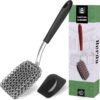
This Herda kit pairs a chainmail scrubber mounted on a long handle with a separate plastic pan scraper that has four differently shaped edges. The scrubber head is stainless steel rings bonded to silicone, the whole tool measures about nine and a half inches long, and the assembly weighs 6.7 ounces. It exists for one material above all others, and that material is cast iron.
Why cast iron needs its own tool
A seasoned cast iron pan carries a thin polymerized oil layer bonded to the metal, and that layer is what makes the pan release food and resist rust. It is also the thing every general cleaning method attacks. Soap and a sponge are gentler on it than most people fear, but a scouring pad or a wire brush strips it, and once stripped the pan has to be re seasoned before it works properly again.
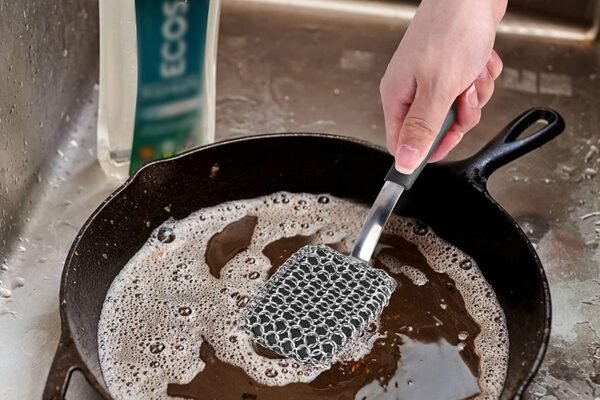
Chainmail works differently. Interlocking metal rings roll across the surface and knock off stuck food without the fine abrasion of a scouring pad, which is why the format became standard for cast iron. Herda states that its stainless rings remove tough grease while keeping the seasoning intact, and that is the manufacturer’s claim rather than a measured result, though the mechanism is well understood and the format has a long track record.
What the handle adds, and what the specifications say
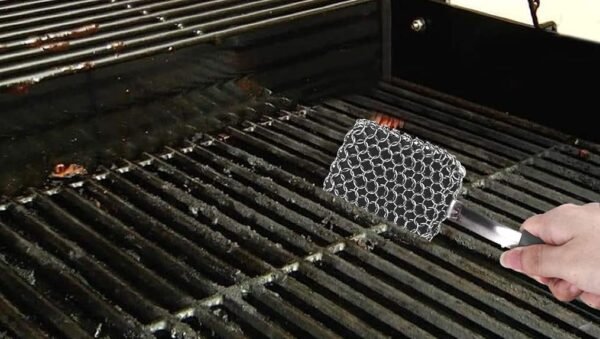
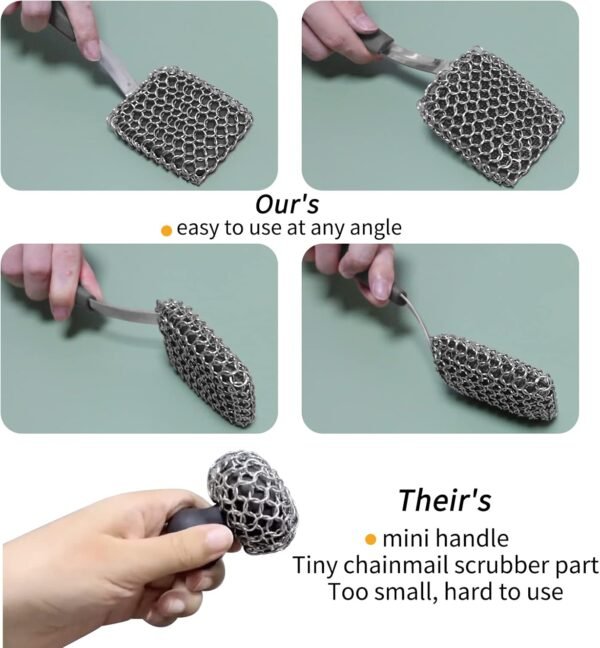
Most chainmail scrubbers are a bare square of rings that you hold in your hand, which means your fingers are in the grease and in hot water. This one puts the mail on a handle with a silicone body, which is the meaningful difference and the reason to choose it over a plain square. It also lets you reach the bottom of a deep Dutch oven or a stock pot without submerging your forearm, and it gives leverage on a grill or a griddle where a hand held pad is awkward.
The listing states 316L stainless steel in the specification block, which is a marine grade with good corrosion resistance, while the product title says 316 chain maille without the L. Those are related but not identical designations, and the page never reconciles them. The count fields disagree too: number of items reads two while unit count reads one, and the description confirms the pack contains one scrubber and one scraper. The scrubber side is described as extremely thin, around three tenths of an inch, so it can get into narrow gaps.
The scraper is the underrated half
The plastic scraper with four edge profiles is the tool most people reach for more often than they expect. A shaped plastic edge lifts stuck residue off a pan without touching the seasoning at all, and it works on a stove top, a counter, a grill and a baking sheet. Herda describes the edges as sharp and non scratch in the same sentence, which is the sort of pairing that needs care in practice: plastic is softer than seasoned iron and softer than glass, but any edge pressed hard into a soft surface can mark it. Use it at a low angle with moderate pressure. One bullet on the listing also ends with a fragment of untranslated Chinese text, which is a sign of how carefully the page was assembled.
What it is for, and what to keep it away from
Cast iron skillets, Dutch ovens, carbon steel pans, woks, grill grates and griddles are the natural range, along with stainless steel pans and stainless sinks. The surface recommendation field simply says metal, and that is the right summary: this is a tool for bare metal cookware.
Keep it well away from anything coated. Nonstick pans, enameled cast iron, ceramic coated cookware, glass cooktops, hard anodized aluminum and any polished or plated finish will all be damaged by metal rings dragged across them, and that damage is permanent. Enameled Dutch ovens are the most common casualty, because they look like cast iron and are not. If a pan has a colored glossy interior, this is the wrong tool.
Using it and looking after it
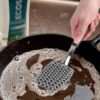
The routine that works on cast iron is simple. Clean the pan while it is still warm rather than after it has cooled and hardened, use hot water and as much or as little dish soap as you prefer, work the chainmail in circles rather than scrubbing back and forth, then rinse. The critical step is what comes next: dry the pan completely, ideally on a warm burner for a minute, and wipe a very thin film of cooking oil over the interior before it goes away. A cast iron pan put away damp rusts, and no scrubber prevents that.
Look after the tool itself as well. Herda says it can be cleaned with water and soap in the sink and lists it as dishwasher safe. Rinse it thoroughly after use, since food trapped between rings is what makes a scrubber smell, and hang it or stand it to dry rather than leaving it in a wet sink. Stainless steel resists rust but does not enjoy sitting in standing water indefinitely.
Two safety points. The rings and the scraper edges can catch skin, so keep fingers behind the head when you are working hard at a stuck spot, and keep the tool out of reach of children. And a general kitchen rule applies: never mix cleaning products in a sink. If you have used a bleach based cleaner in the basin, rinse it out completely before washing cookware in it, and never combine bleach with an acidic or ammonia based product in the same water.
Cost, and the alternatives
The cost structure is a one time purchase with no consumables at all, which is the strongest argument for the format. A stainless chainmail scrubber outlasts a great many sponges, and it does not need replacing on a hygiene schedule the way a foam pad does, because there is nothing porous to hold residue. That makes it cheap over years even if it costs more than a pack of pads on day one.
Within the same brand there are close relatives worth comparing, and our reviews of the Herda mushroom style chainmail scrubber and the Herda chainmail cast iron scrubber cover different handle and head arrangements from the same maker. For a complete cast iron routine including seasoning oil, our write up of the Caron cast iron cleaning set is the wider comparison.
For pans that are not cast iron, a softer abrasive is the right choice, and the Brillo steel wool scrub pads cover the disposable end of that. The dish scouring pads category lists the grades side by side, and the dish soap category covers the detergent that does the chemical half of the work.
Who should buy it, who should not
Buy it if you cook on cast iron or carbon steel and want your hands out of the grease, or if you have a deep Dutch oven that a hand held pad cannot reach. Skip it if your cookware is nonstick, enameled or ceramic coated, because chainmail will damage all three. The tool is well matched to its job, and the listing contradicts itself on steel grade and item count, so read the packaging for what actually arrives.