
Description
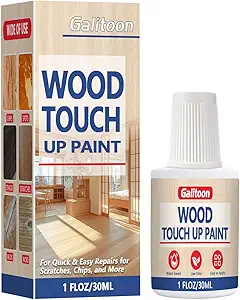
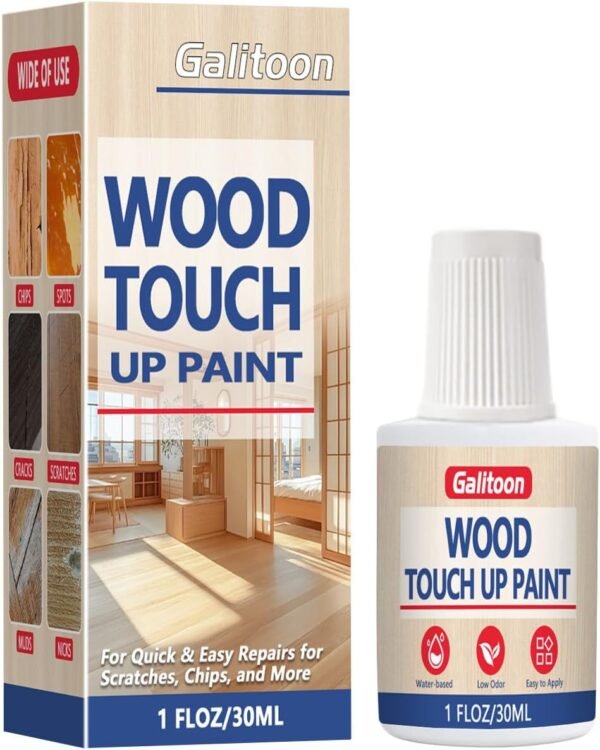
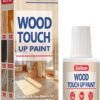
The Galitoon touch up pen is a one fluid ounce container of white wood paint with a brush built into the cap, sold for covering scratches, chips and scuffs on furniture, cabinets, doors and tables. It is a cosmetic repair tool rather than a filler, and that distinction decides whether it will help you at all. Paint hides a mark. It does not rebuild missing material. Before reading anything else on the listing, look at the damage and decide which of those two things you actually need.
The damage this pen can hide, and the damage it cannot
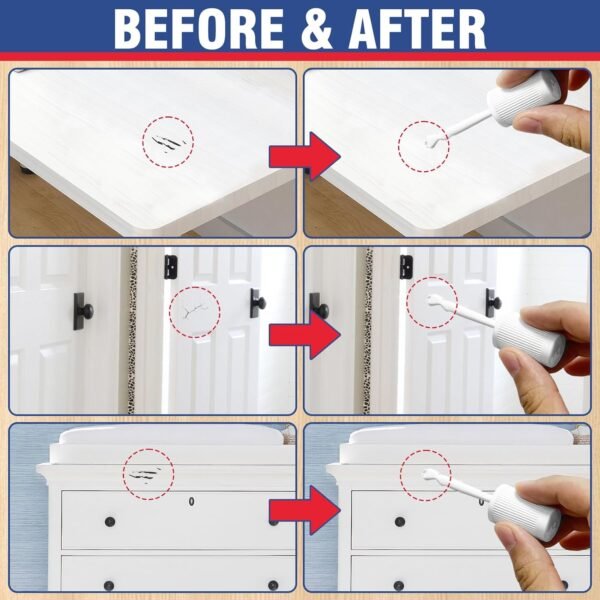
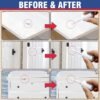
A touch up pen works on shallow surface damage where the finish has been marked but the material underneath is still level. A scuff along a cabinet edge, a light scratch across a painted table leg, a chipped corner on white trim, the pale line left where a chair back has rubbed a door: those are the cases where laying a thin film of matching paint over the mark makes it disappear at normal viewing distance. The repair is visual, and it succeeds or fails on color match and on how thin you can keep the coat.
What the listing says the paint is, and where it contradicts itself
The specification block names the paint type as milk paint, gives the color as white, the finish type as semi gloss, and the volume as one fluid ounce. The product title, in the same listing, describes a matte finish. Those two statements cannot both be true, and the difference is not cosmetic trivia: on a satin cabinet door a semi gloss touch up catches light and shows as a shiny patch, while a matte touch up on a gloss door shows as a dull one. This review will not pick a side. Check the sheen printed on the container you receive before applying anything to a visible surface, and test on a hidden area first.
Several other fields are unreliable. The special feature is recorded in untranslated Chinese characters rather than English, so whatever attribute the manufacturer meant to advertise did not survive the listing process. The color code is given as a string of five characters where a valid hexadecimal color needs six, so it cannot be used to predict the exact shade. The specific use field says exterior while the surface recommendation says wood, and no weather resistance, ultraviolet stability or exterior grade statement appears anywhere in the description. Do not plan an outdoor repair on the strength of that one word.
Milk paint is a real category, and it behaves differently
Milk paint is traditionally a casein based coating rather than a modern acrylic or alkyd, and coatings sold under that name generally differ from enamel on adhesion, water resistance and sheen. Most people picking up a touch up pen are expecting enamel behavior. The listing offers no binder information and no ingredient statement, so there is no way to confirm from the page what this particular formula is. That matters most on wipe down surfaces such as kitchen cabinets and bathroom doors, where a repair that softens when cleaned is worse than no repair at all. The container label is the place to check.
Surfaces, color matching and the test that saves the job
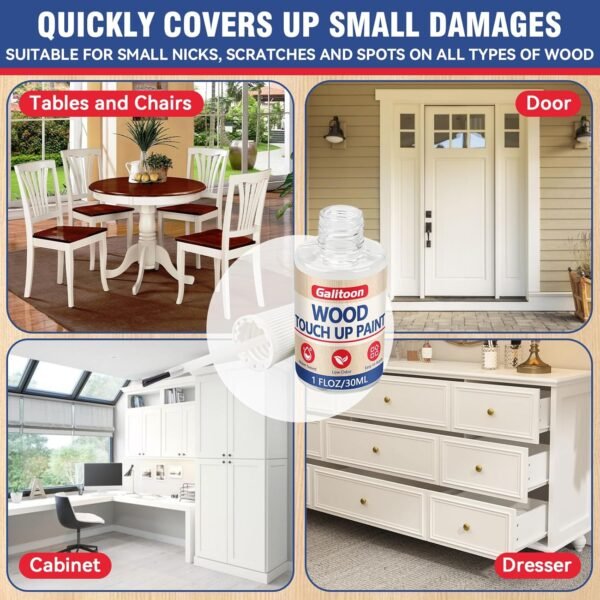
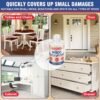
The listing recommends wood, and the marketing text names furniture, cabinets, doors and tables. White is the only color offered, which narrows the useful range considerably, because white is not one color in a house. Builder trim white, warm cream cabinets, cool modern white and aged paint that has yellowed over a decade all read as different shades once a fresh dot of paint sits beside them. Galitoon describes the shade only as a neutral white that blends with various wooden surfaces, which is a statement of intent rather than a specification you can plan around. Nothing on the page recommends it for floors, for laminate or melamine, or for any surface that contacts food, so keep it to the wood items the manufacturer names.
Applying it, drying it and storing it safely
The applicator is a fine brush in the cap, which means the amount of paint you deliver depends entirely on how much you wipe off against the neck of the bottle before touching the wood. Overloading the brush is the most common way a touch up goes wrong, because a thick bead dries proud of the surface and catches light along its ridge. Two thin coats with drying time between them look better than one heavy coat in almost every case.
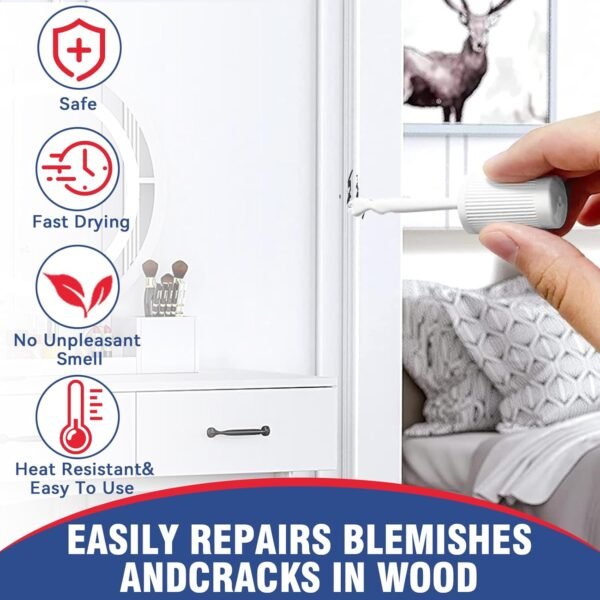
The listing states that the formula sets in minutes and describes it as quick drying and drip free. It gives no full cure time, no recoat interval and no temperature or humidity guidance, so treat set to touch and fully cured as different things, and avoid cleaning or heavy use on the repaired area for longer than the drying claim suggests. The one ounce container has a screw top lid, which the manufacturer presents as the reason it can be reused across several small jobs. Wipe the neck before closing it, since dried paint on the threads is what turns a reusable bottle into a single use one.
Basic paint handling applies even to a small container. Work in a ventilated room, keep the pen off skin and out of eyes, and store it upright, closed and out of reach of children, away from heat. The listing publishes no ingredient statement and no safety information at all, which is a real gap on a coating product. If anyone in the household needs to avoid particular solvents or preservatives, the container label is the only place that information will exist.
Cost over time, and when a different product is the right answer
One fluid ounce is a small volume, but touch up work consumes paint in drops rather than in coats, so a single container covers a surprising number of small repairs provided it does not dry out in storage. The real cost question is waste: a pen that skins over after two uses is expensive whatever it cost, and a pen kept sealed and clean is cheap. Lid discipline is the main variable you control.
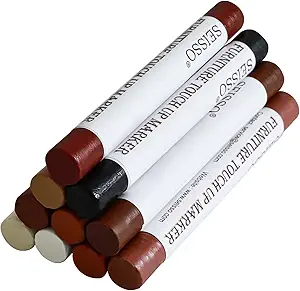
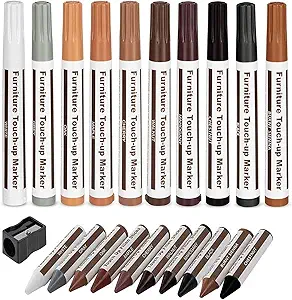
If the damage has depth, start with a filler and finish with color. A hard wax or filler stick such as the Seisso wood filler stick rebuilds the missing material first, and a marker style product like the Daixism furniture marker handles fine lines where a brush is too broad. For damage on a floor rather than furniture, a dedicated kit such as the Puyd hardwood floor repair kit is built for a surface that gets walked on. The scratch covers and removers category collects those options in one place.
Some marks are not damage at all and disappear with cleaning and conditioning. Before painting over a dull patch on real wood, it is worth trying a finishing product such as the Howard Products wood polish, since a restored finish beats a painted one on any surface where the grain shows. The wood polish category covers that route.
Who it suits, who should look elsewhere
This pen suits a renter or homeowner dealing with shallow white on white marks, who wants a small sealed container that can live in a drawer between jobs. It does not suit anyone repairing stained or natural wood, anyone facing damage with depth, or anyone who needs certainty about sheen before starting, because the listing contradicts itself between matte and semi gloss and never resolves the exterior claim it makes in passing.