






Description
What a septic additive is and what it is not
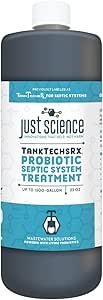
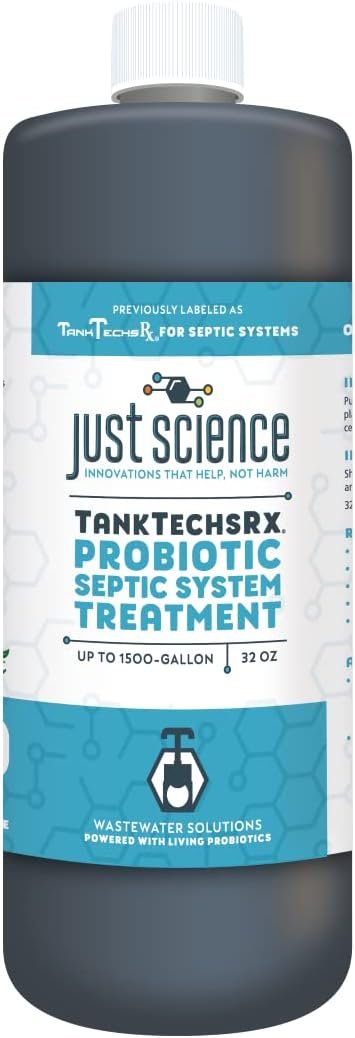
TankTechsRx Probiotic Septic System Treatment is a 32 ounce liquid described as a fermented, live, multiplying probiotic blend that eliminates sludge and odor from the tank and the drain field. Just Science is the manufacturer, the listing dates to December 2021, the bottle weighs 2 pounds, and Amazon places it 95,295th in Health and Household and 62nd among septic tank treatments.
A septic tank is a biological reactor. Solids settle, grease floats, and a population of anaerobic bacteria digests what is in between, with the clarified liquid passing out to a drain field where soil organisms finish the job. That biology arrives on its own, continuously, from the house. A healthy household septic system is not short of bacteria.
That is the context for any additive, and it is the context this listing does not provide. Additives are sold on the premise that the resident population needs help, and the position taken by most state health departments and by wastewater professionals is that routine pumping on schedule, and keeping harmful substances out of the system, are what maintain a tank. Some states restrict or require registration of septic additives, and the Environmental Protection Agency’s guidance for homeowners centers on inspection and pumping rather than on products poured down a drain. None of that means an additive does nothing. It means the burden of evidence sits with the seller, and this page carries none.
The five claims, and what is missing behind them
The listing consists of one sentence of description and five short bullets: renews the drain field, increases efficiency in all types of septic systems, consumes odor, liquefies waste, and inhibits mineralization buildup.
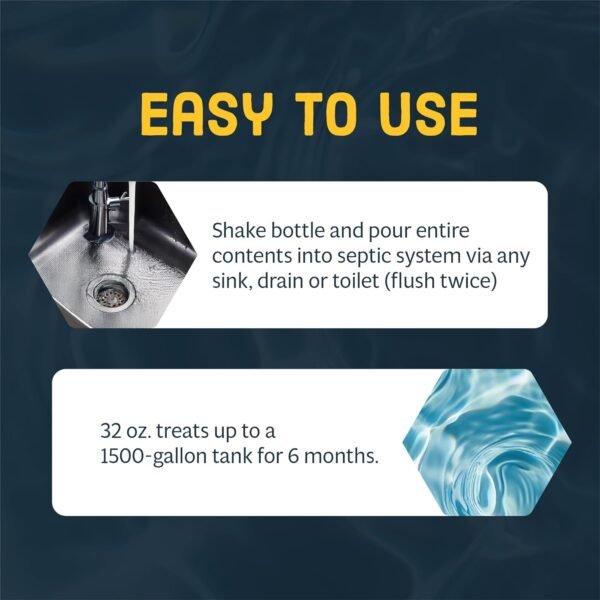
There is no dose. Not one line says how much to use, where to pour it, or how often. There is no organism named, no colony forming unit count, no shelf life, and no storage temperature, which is a genuine omission for a product described as live. Live cultures are temperature sensitive, and a bottle that has sat in a delivery van in July is not necessarily the product that left the factory. There is no ingredient statement and no safety data reference.
Two claims that deserve real scrutiny
Renewing the drain field is the strongest claim on the page. A failed drain field is one of the most expensive repairs a rural property can face, and a biological mat clogging the soil interface is the usual cause. Restoring one is a significant engineering outcome, and this listing asserts it in three words with nothing attached. Anyone with a drain field showing symptoms, standing water, soggy ground, backups or odor outdoors, needs a septic professional and an inspection, not a bottle. Treat the claim as unsupported.
Liquefying waste sounds unambiguously good and is not. The tank’s whole design depends on solids settling out so that only clarified liquid passes to the drain field. A product that converts settled solids into suspended material can carry that material out of the tank and into the soil, which is precisely where it must not go. It is a recognized concern with additives generally, and it is why the pumping schedule exists: solids are supposed to be removed by a truck, not dissolved into the effluent. The listing presents liquefaction as a benefit without addressing the question at all.
Using it, and the things that actually protect a septic system
With no dose published, the bottle label is the only source, and it should be read before anything is poured. A treatment of this kind is normally flushed down a toilet or a drain rather than poured into the tank access, which brings a safety point with it: never open a septic tank or a riser to add a product. Tank atmospheres contain hydrogen sulfide and methane and are immediately dangerous to life, and nobody should ever enter a tank. If a lid does need lifting for a professional, it should be secured again afterward with every screw fitted, which is what a proper cover such as the Polylok riser cover is for.
The measures that genuinely protect a septic system cost nothing and are worth more than any additive. Pump on the schedule your tank size and household demand require. Keep chlorine bleach, drain openers, solvents, paint and antibacterial products out of the system in quantity, since they are hostile to the biology the tank depends on and are the fastest way to damage it. Never flush wipes, even those labeled flushable. Fix leaking fixtures, because hydraulic overload from a running toilet floods the tank and pushes solids out to the field. Keep vehicles and heavy equipment off the drain field.
If a drain is slow, deal with the drain rather than the tank, and prefer a mechanical approach over a caustic one. Products in the drain openers aisle vary enormously in how they behave downstream, and something like the Thrift drain opener or a foaming product such as the Wild Tornado sink and drain cleaner should be checked against your system before use.
Safety and storage
Keep the bottle out of reach of children and pets. Do not decant it, do not mix it with any other product, and do not combine it with bleach, which would defeat the entire premise of a live culture product as well as being a general rule.
Store it as the label directs. For a live product that generally means cool, dark and not frozen, and this listing does not say. Do not leave it in an unheated garage over winter or in a hot vehicle.
Cost and the alternatives
A 32 ounce bottle with no stated dose cannot be costed per treatment, which is the honest summary of this listing’s economics. Judge it against the cost of a pump out, which is the maintenance that a tank actually requires, and against a professional inspection, which is what any real symptom warrants.
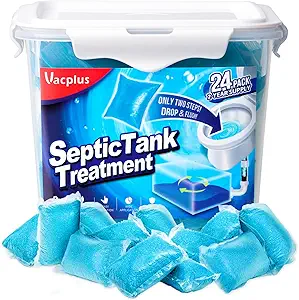
Within the category, the VacPlus septic treatment is the closest comparison, and the RootX treatment addresses a different and more specific problem, root intrusion into lines, which is a mechanical issue with a chemical answer. Browse the range under septic treatments.
Who should buy it and who should not
Buy it if you want a probiotic additive as part of a routine that already includes scheduled pumping and careful use of the drains, and you are treating it as an optional extra rather than as maintenance.
Do not buy it as a substitute for pumping, which is the only thing that removes accumulated solids from a tank. Do not buy it to fix a failing drain field, because that is a job for a septic professional and the claim on this page carries nothing behind it. And do not buy it expecting a dose, an organism count or storage guidance, because the listing publishes none of them.