Description
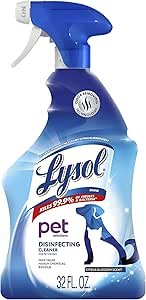
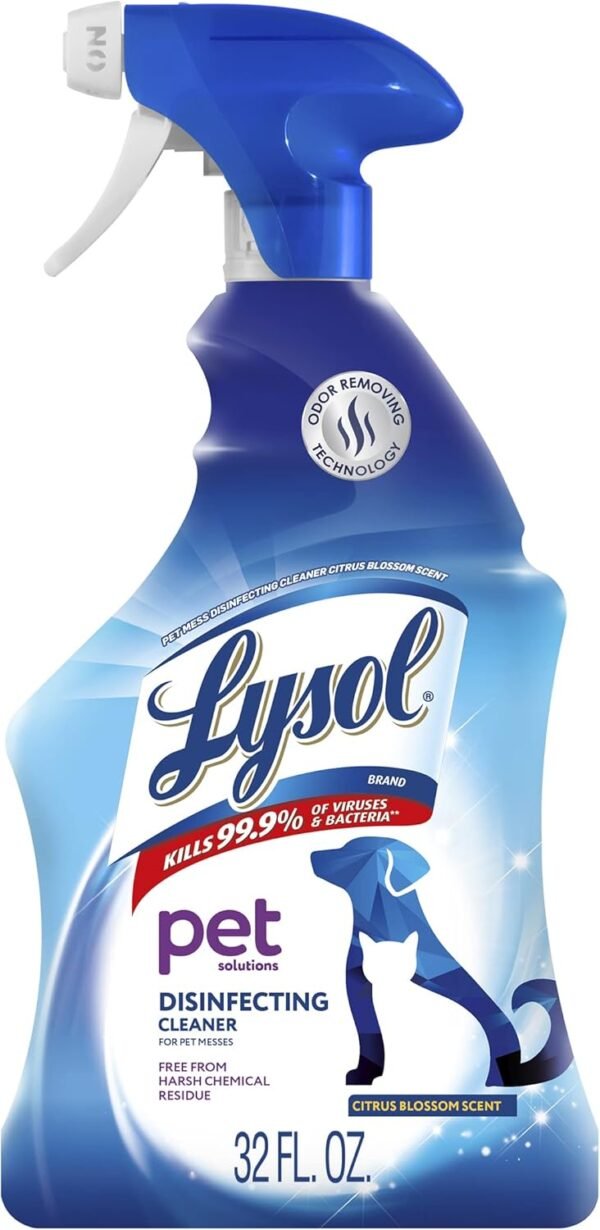
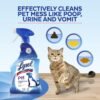
Lysol Pet Solutions Disinfecting Cleaning Spray is a 32 fluid ounce trigger bottle in a citrus blossom scent, made by Reckitt and built around hydrogen peroxide rather than the chemistry used in the brand’s better known aerosols. It is aimed squarely at the mess a pet leaves behind, which is a job with three parts: cleaning the physical soil, dealing with the smell, and treating the surface.
The three jobs a pet mess creates
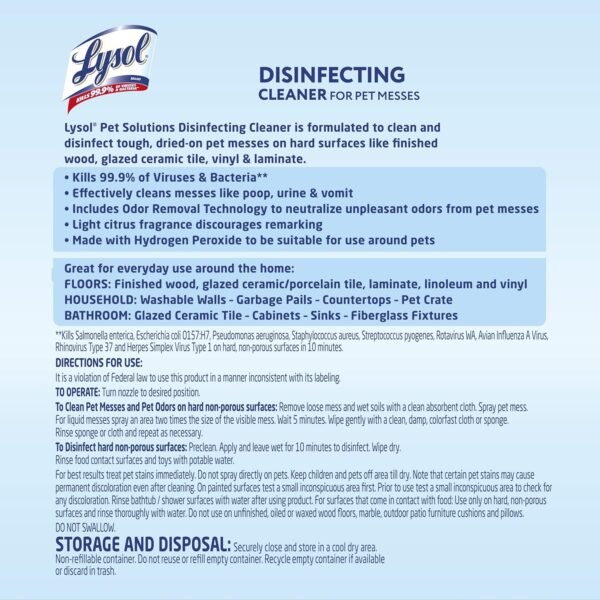
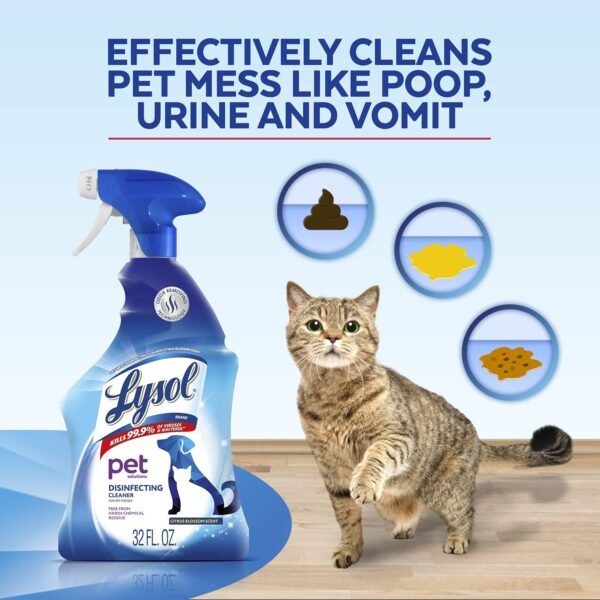
Urine, feces and vomit each leave organic residue that soaks into whatever it lands on and continues to smell long after the visible mess has gone. A general spray usually removes the visible part and leaves the rest. Reckitt describes this product as formulated for tough dried on pet messes, with an odor removal technology that neutralizes the smell rather than covering it, and a light citrus fragrance that the company says discourages a pet from marking the same spot again.
The household this fits has an animal and hard floors. It is a hard surface product, and the reason that matters is that most pet accidents happen on the floor, where a hard surface can be cleaned and treated properly and a carpet cannot. A pet that has had an accident on a rug needs a carpet product with a different mechanism, and no hard surface spray substitutes for one.
The disinfection claim, and how to read it
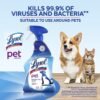
This is one of the few listings in this catalog that carries a proper registration. The label states that the spray eliminates 99.9 percent of viruses and bacteria when used as directed, and it gives an Environmental Protection Agency registration number of 777-126. That is a checkable reference, and it is what separates a claim that has been through a regulatory process from a claim printed on a bottle by a seller. This review repeats the claim as Reckitt’s, attached to that registration, and adds nothing to it.
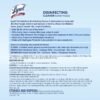
The qualifier when used as directed is doing real work. A disinfection claim depends on the surface staying visibly wet for a stated period, and if the spray is wiped off immediately the claim does not hold. The contact time is the number that matters most here, and the listing does not publish it. That is a significant omission, because the difference between cleaning and disinfecting is entirely a matter of how long the product stays on the surface. Read the back label on the bottle, find the stated wet time for the organisms you care about, and let the surface stay wet for that long before wiping. Also note that no pathogen is named on this listing beyond viruses and bacteria in general, and this review names none.
The hydrogen peroxide angle
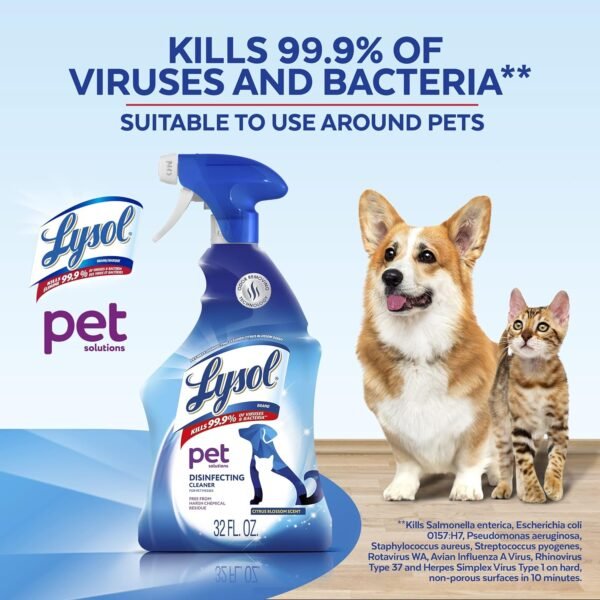
Reckitt states the product is made with hydrogen peroxide to be suitable for use around pets. Peroxide chemistry is used here rather than a quaternary ammonium or phenolic system, and one practical property follows: hydrogen peroxide breaks down into water and oxygen, so a properly rinsed surface is not left holding a persistent residue. Suitable for use around pets is the manufacturer’s phrase and it means the product is intended for the areas animals occupy, not for the animals themselves. The listing says so twice and it is worth repeating: do not apply this product directly to an animal.
Surfaces it belongs on
Reckitt names hard non porous surfaces, including pet crates and the areas around them. That covers sealed floors, plastic crates and trays, tiled surfaces, metal bowls stands and the like. Hard and non porous is not a throwaway phrase in a disinfection context, because a porous surface cannot be reliably treated and the claim does not extend to it.
Keep it off natural stone, unsealed wood and unfinished concrete, which are porous. Be careful on waxed or oiled floors, since a peroxide based cleaner can strip a finish, and test on any painted or plated surface before regular use. Bedding, soft toys and upholstery are outside what this product addresses, and food and water bowls should be washed with dish soap and rinsed thoroughly rather than treated with a disinfectant spray. The listing gives no material compatibility list at all, so a discreet test area is the sensible first step on any surface you care about.
Using it safely around animals and people
Keep pets and children out of the room while you are spraying and until the surface is dry. That is the simplest rule and it covers most of the risk, since the concern with any disinfectant around animals is contact with wet product and with paws that later get licked. Ventilate the room, avoid spraying toward faces, and wear gloves if your skin is sensitive.
Rinsing is worth doing on any surface a pet will lie on or eat from, even where the label does not require it. And because peroxide bleaches, treat any colored or delicate surface as at risk until you have tested it, particularly grout lines and anything with a printed pattern.
The mixing rules for a peroxide product are firm. Never combine it with chlorine bleach, never with vinegar or any other acid, and never with ammonia or a drain opener. Do not spray it onto a surface that still holds another cleaner, do not mix it into a bucket with anything, and rinse the area first if you are switching products. Store the bottle upright, closed, out of direct sun and out of reach of children and pets, and do not decant it into an unlabeled sprayer.
Cost over time, and the alternatives
The cost structure is that of a ready to use trigger spray, so you are paying to ship water and there is no concentrate to dilute. Against that, 32 ounces goes a long way on the kind of small localized mess this is designed for, and using it as a general floor cleaner would be an expensive way to buy a floor cleaner. Keep it for the job it was made for and it lasts.
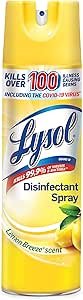
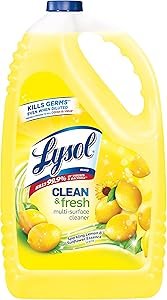
For general disinfection elsewhere in the house, our reviews of the Lysol disinfectant spray and the Lysol multi surface cleaner cover the wider range, and the Clorox disinfecting all purpose cleaner is a bleach based comparison that must never share a surface with a peroxide product. The disinfectant sprays and liquids category lists them together, and every one of them has its own contact time on its own label.
If the accident landed on carpet, a hard surface spray is the wrong tool. Our write up of the Hoover carpet deodorizer covers the odor side of that problem, and the carpet spot cleaning sprays category covers products designed to lift a stain out of a pile rather than off a floor.
Who should buy it, who should not
Buy it if you have a pet, hard floors and a crate or a tray to keep clean, and you will read the label for the contact time the listing omits. Skip it if your problem is carpet or upholstery, if your floors are natural stone or unsealed wood, or if you were looking for something to use on the animal itself, which this explicitly is not.