Description
What this product is for, and how to read its claims
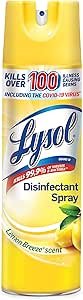
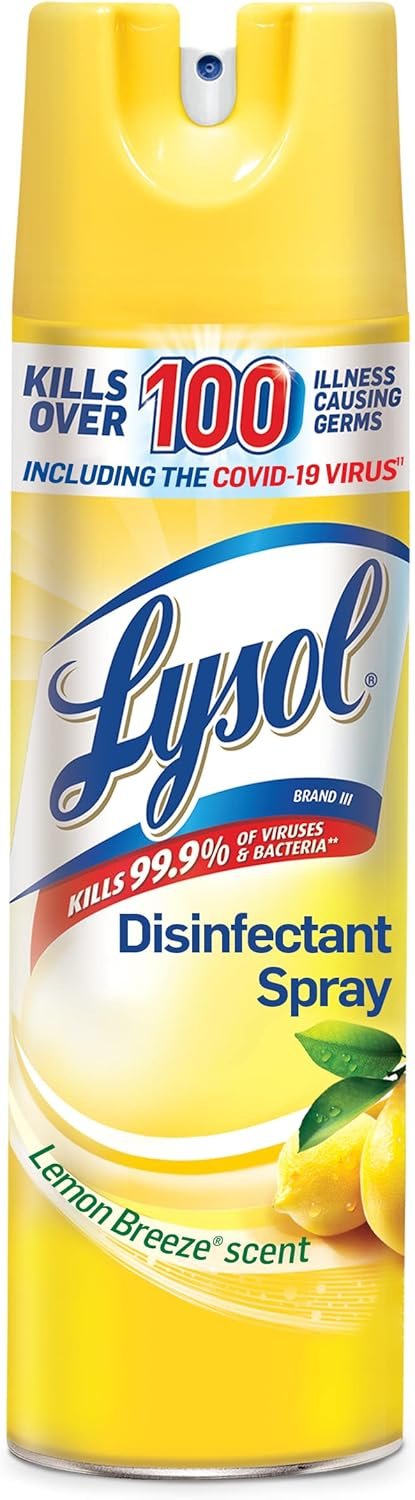
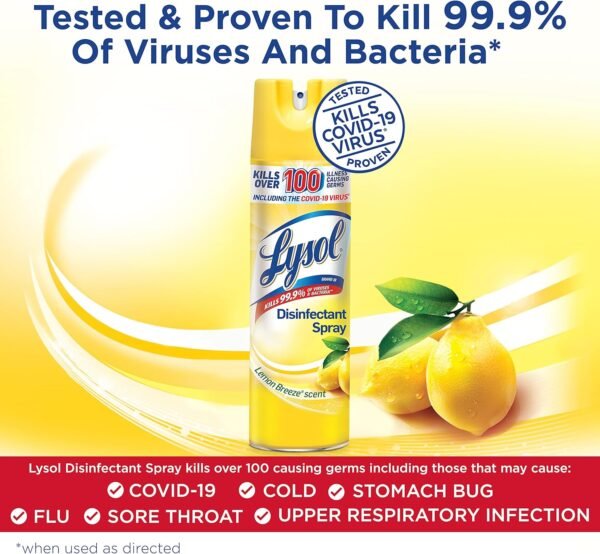
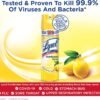
Lysol Disinfectant Spray in Lemon Breeze is a 19 ounce aerosol from Reckitt, sold as a surface disinfectant for hard and soft surfaces around the home. The manufacturer’s claims are the reason people buy it, so they need stating precisely rather than loosely. Reckitt states that the product kills 99.9 percent of viruses and bacteria, kills 99.9 percent of mold and mildew, and kills 99.9 percent of bacteria on soft surfaces. Every one of those is followed on the listing by the qualifier “when used as directed”.
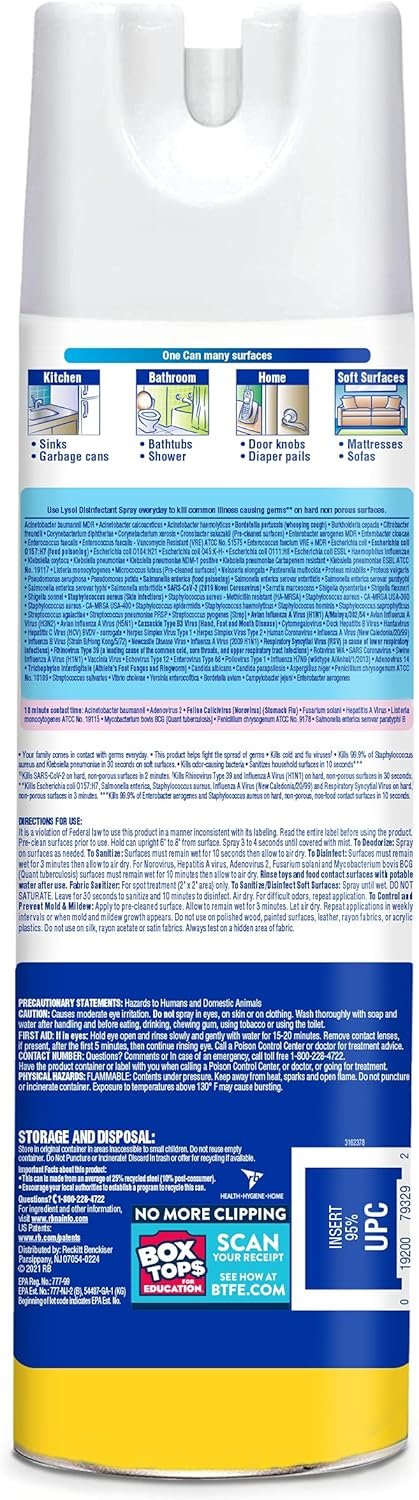
Those are the label’s claims, not our findings. We have not measured anything, and no claim about killing germs should be read as ours. In the United States, products that claim to kill microorganisms on surfaces are regulated as antimicrobial pesticides by the Environmental Protection Agency, and the claims a product may make are fixed by its registered label. The listing does not publish the EPA registration number for this product, which is the detail a buyer would use to look up exactly what the label is approved to say.
The detail that decides whether it works at all
Contact time is the single most misunderstood thing about disinfectants, and this listing does not give it. A surface disinfectant works only if the surface stays visibly wet for the period the label specifies, which for products in this class is commonly measured in minutes rather than seconds. Spraying a doorknob and wiping it dry immediately does not disinfect it. It cleans it.
Read the can, then set a timer
The printed label on the can gives the contact time, and it may give different times for different claims, since bacteria, viruses, mold and mildew are not all addressed on the same schedule. Read it before the first use, note the longest time that applies to what you are trying to do, and leave the surface wet for at least that long before wiping or letting it air dry. If the surface dries early, reapply. This is not a detail to skip: it is the difference between the product doing what the label says and doing nothing beyond wetting the surface.
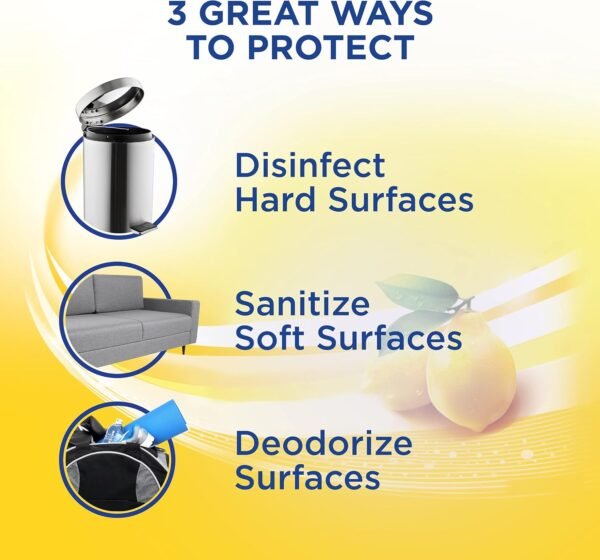
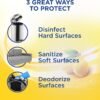
Note also the distinction the bullets themselves draw. Two of them address viruses, bacteria, mold and mildew, while a third addresses bacteria on soft surfaces specifically and does not mention viruses. Hard surface disinfection and soft surface sanitizing are separate label claims with separate requirements, and the narrower wording on the soft surface bullet is deliberate. Do not assume a claim made for a countertop carries over to a mattress.
Surfaces named, and the ones to keep it off
Reckitt names a wide list. In the bathroom: bath tubs, showers and toilet seats. In the kitchen: sinks, garbage cans and refrigerator exteriors. Around the home: door knobs, diaper pails and telephones. On soft surfaces: couches and sofas, mattresses and pet beds. The description adds that it can be used in the air to freshen, which is a freshening statement rather than an air sanitizing claim and should not be read as the latter.
Two surface cautions belong here and neither is on the listing. First, food contact surfaces. A disinfectant applied to a counter where food is prepared, a cutting board or the inside of a refrigerator generally requires a potable water rinse afterward unless the label specifically says otherwise, and the listing names refrigerator exteriors rather than interiors for that reason. Read the can. Second, soft surfaces and finishes: test an inconspicuous area of upholstery, a mattress or a pet bed before treating the whole thing, because aerosols can mark fabric and can affect some dyes, and let treated soft furnishings dry fully before anyone uses them. Avoid unsealed wood, and avoid anything with a delicate coating, including electronics screens, where a wipe formulated for the purpose such as the CaviWipes disinfectant wipe or a dedicated screen product is the right choice.
Ventilation, storage and the rules that are not optional
This is an aerosol, and the listing records the manufacturer field as Reckitt Benckiser Hazmat, which reflects how the product ships. Aerosol cans are pressurized and their propellants are commonly flammable. Do not spray near an open flame, a pilot light, a gas hob or any ignition source. Do not spray onto or into a hot appliance. Do not puncture or incinerate the can, do not store it in a car in summer, and keep it away from heat and direct sunlight.
Ventilate the room while spraying and afterward. Do not spray toward your face, do not use it on skin, and keep it away from pets, birds and fish tanks while you work, since aerosolized products settle wherever the air carries them. Keep the can out of reach of children and store it upright with the cap on.
The mixing rule is absolute here as everywhere on this site. Never combine this with a bleach product, an ammonia based glass cleaner, an acidic bathroom descaler or any other cleaner, and do not spray it onto a surface still wet with something else. A bathroom is the most likely place for that to happen, because people reach for two products in the same ten minutes. Finish with one, rinse, ventilate, and then start the next. Combining household cleaning chemicals is a genuine and well documented route to a toxic gas exposure in a confined bathroom.
Cost structure and the alternatives
Aerosols are the most expensive way to buy disinfectant per treated square foot, because a large share of the can is propellant and a large share of the spray does not land on the target. What you buy in return is reach: an aerosol covers a soft surface, a garbage can or an awkward corner in a way a trigger spray does not, and it needs no cloth. For a household treating a few high touch points, that convenience is the point. For a household disinfecting large hard surfaces regularly, a trigger spray or a wipe is more economical.
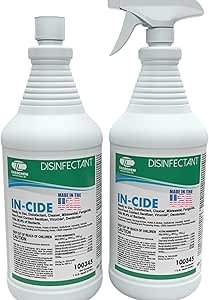
The comparisons worth making are within the same family. The Lysol disinfecting cleaning spray is the trigger bottle version of a similar job, the Lysol multi surface cleaner covers general cleaning rather than aerosol disinfection, and the Theochem disinfectant spray is an alternative in the same category. For mold and mildew specifically, a targeted product such as the Lysol mold and mildew remover is formulated for that surface problem. The broader disinfectant sprays and liquids category and the disinfectant wipes category put the formats side by side.
Who should buy it, and who should not
Buy it if you want a widely available aerosol disinfectant for high touch points and soft furnishings, you will read the can for the contact time, and you will actually leave surfaces wet for it. Skip it if you need to disinfect food contact surfaces without a rinse step, if aerosols are a problem in your household because of asthma, birds or small children, or if you want a product whose EPA registration number is visible before you buy. And do not treat the 99.9 percent figures as a guarantee of a germ free room: they are label claims tied to specific organisms, specific surfaces and a specific contact time, and all three conditions have to be met.