Description
A large bottle of everyday detergent, and the number that matters
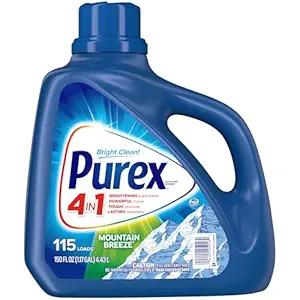
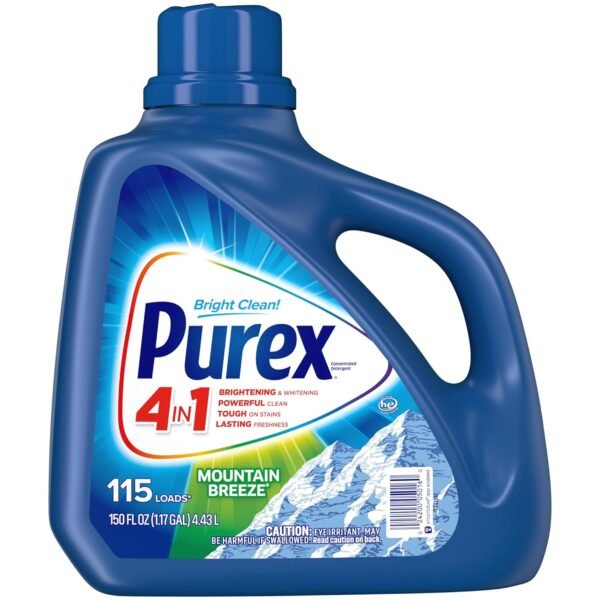
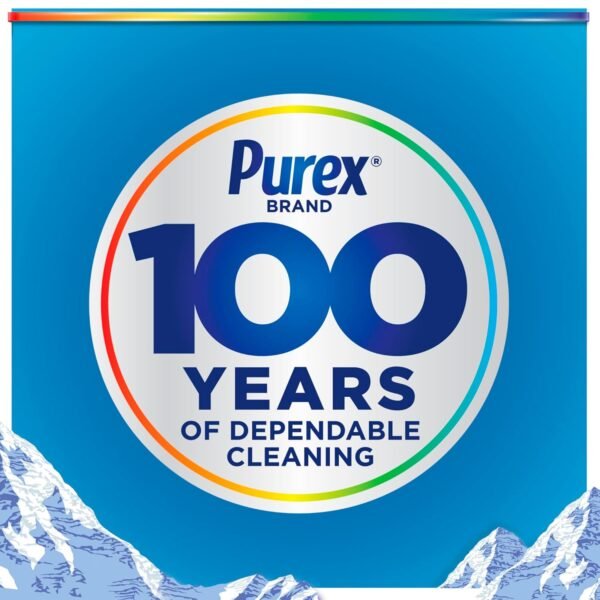
Purex Liquid Laundry Detergent in Mountain Breeze is sold here as a 150 fluid ounce bottle rated at one hundred and fifteen loads, model DIA 05016. Purex positions itself plainly on value, and its own tagline in the listing is Bright Clean, Smart Value. There is no pretense here that this is a premium formulation, and that honesty is worth something.
The figure to hold on to is one hundred and fifteen loads from one hundred and fifty ounces, which works out at about one and a third fluid ounces per load. That is the manufacturer’s dosing assumption and it is a small dose by the standards of how most people actually pour. It matters because the loads per bottle number on any detergent is calculated at the recommended dose, and the moment you fill the cap to the brim instead of to the marked line you get far fewer loads and the value argument disappears.
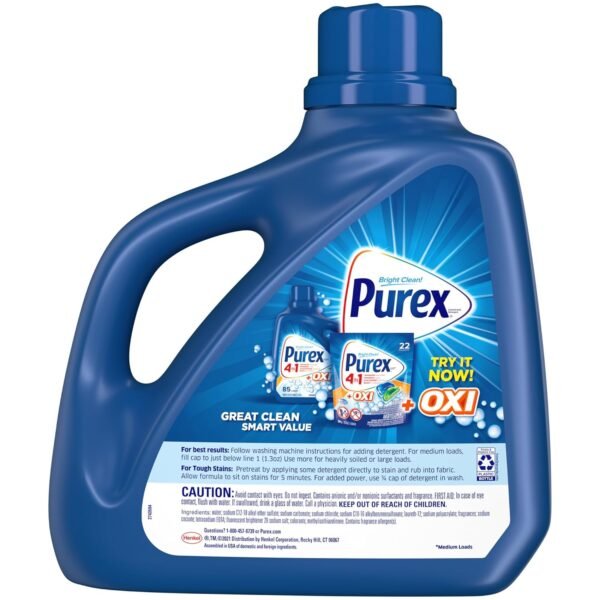
The listing gives the dosing instruction clearly: fill to the appropriate line on the cap and follow the washing machine’s instructions for adding detergent. Detergent caps usually carry two or three fill lines for different load sizes, and using the right one is the single easiest way to save money on laundry.
What the listing says about the formula, and what it does not
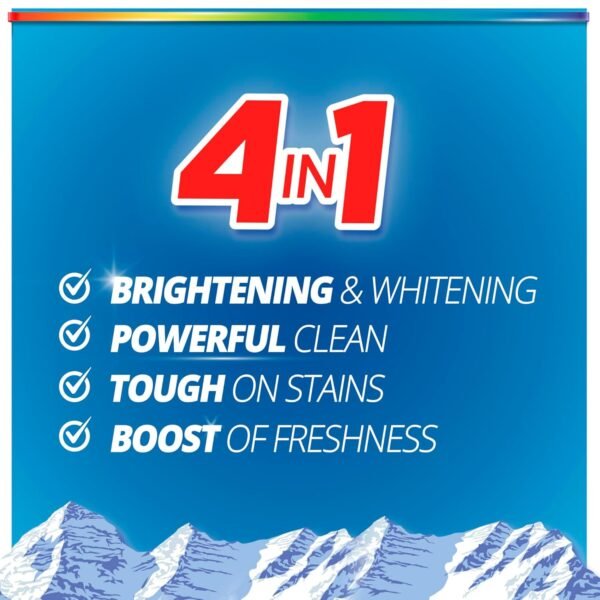
Purex describes the detergent as specially formulated with stain fighting actives that go deep into fabric fibers to remove ground in dirt and stains. No active is named. There is no ingredient list, no enzyme identified, no surfactant disclosed and no pH given. The phrase stain fighting actives is a description of intent rather than a specification.
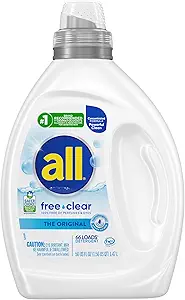
The other claim is the fragrance, which the listing describes at some length as crisp mountain air with springtime floral blooms. Fragrance is a large part of what distinguishes one mainstream detergent from another, and it is entirely a matter of taste. What matters practically is that no fragrance allergen information is published, so anyone in the household who reacts to scented laundry has nothing to check here and should look at a free and clear product instead, such as the All Free Clear liquid detergent.
The listing does not say whether it is high efficiency compatible
This is the most significant omission on the page. Nothing in the title, description, bullets or specifications states whether this detergent is formulated for high efficiency machines. High efficiency front loaders and modern top loaders use far less water, and a detergent that foams normally in a traditional machine can over suds in an HE drum, which produces poor rinsing, a residue smell and in some machines an error code.
Most mainstream detergents sold in the United States today are HE compatible and carry the HE symbol on the bottle, but this listing does not say so, and it is not something to assume. Check the front label before pouring it into a front loader, and if in doubt, dose low.
Fabrics, machines and how to get the dose right
A general purpose liquid detergent suits ordinary cotton, polyester and blended everyday laundry. It is not a delicates detergent, so wool, silk and fine lingerie want a product formulated for protein fibers or fine fabrics, such as the Woolite liquid detergent. It is not a stain treatment either. A set stain needs neat treatment before the wash, and no amount of extra detergent in the drum substitutes.
Dose down rather than up. Overdosing liquid detergent is the most common laundry mistake and it produces the opposite of what people expect: residue in fabric, a stale smell in a front loader’s door seal, and a gasket that grows biofilm. If your washer smells, the answer is usually less detergent, a hot maintenance wash and drying the seal, not more product.
Pour into the dispenser drawer or the dosing ball as the machine’s manual directs. Do not pour detergent directly onto a dry load of colored clothing, since concentrated liquid sitting against fabric can leave marks.
Storage and safety
Liquid laundry detergent is a common source of pediatric exposure calls in the United States. A large bottle is heavy, gets stored low because of its weight, and looks harmless. Store it capped, upright, out of reach of children, and wipe the cap after pouring so it does not become slippery and get dropped.
Do not decant it into an unlabeled container, and never into a drink bottle. Avoid skin and eye contact when pouring ten pounds of liquid, wash hands afterward, and if detergent reaches an eye, rinse thoroughly with water and seek medical advice.
Never combine it with another product in the same dispenser compartment. In particular, never add chlorine bleach to the detergent compartment, and never mix bleach with an ammonia based cleaner anywhere in the house, since that combination produces toxic gas. If you use bleach, add it to the compartment the machine provides for it and follow the machine’s instructions.
A specification note worth flagging: the UPC field on this listing contains thirteen different codes strung together, and the department field reads Health and Personal Care. Neither affects what arrives, but both are signs of a listing assembled from merged data rather than checked. Amazon ranked this bottle three hundred and twenty seventh in Liquid Laundry Detergent when the data was captured.
Cost per load and the alternatives
Cost per load is the only fair comparison in this category, and at one hundred and fifteen loads a bottle Purex is generally at the value end of it. The saving over a premium detergent is real, and what you give up is typically enzyme count, stain performance on difficult marks and fragrance longevity. For a household washing ordinary lightly soiled clothes, that trade is usually worth making.
Against it, the Tide liquid detergent is the mainstream premium comparison, and unit dose formats such as the Tide Bright and White pacs remove the dosing decision at a higher cost per load. The full liquid detergent listings and the detergent pac and tablet listings let you compare loads per pack directly, which is the number that matters.
Who should buy this and who should not
Buy it if you want a large, inexpensive everyday detergent for ordinary family laundry, you are willing to dose to the cap line, and the Mountain Breeze fragrance suits you. At one hundred and fifteen loads a bottle it is straightforwardly good value.
Do not buy it if anyone in the household reacts to fragrance, since this is a strongly scented product with no allergen disclosure. Do not buy it for wool, silk or fine delicates. And confirm the high efficiency symbol on the bottle before using it in a front loader, because this listing does not state compatibility either way.