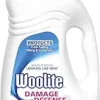
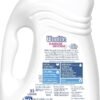


Description
The job, and what Damage Defense is actually claiming
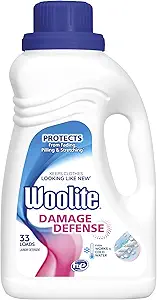
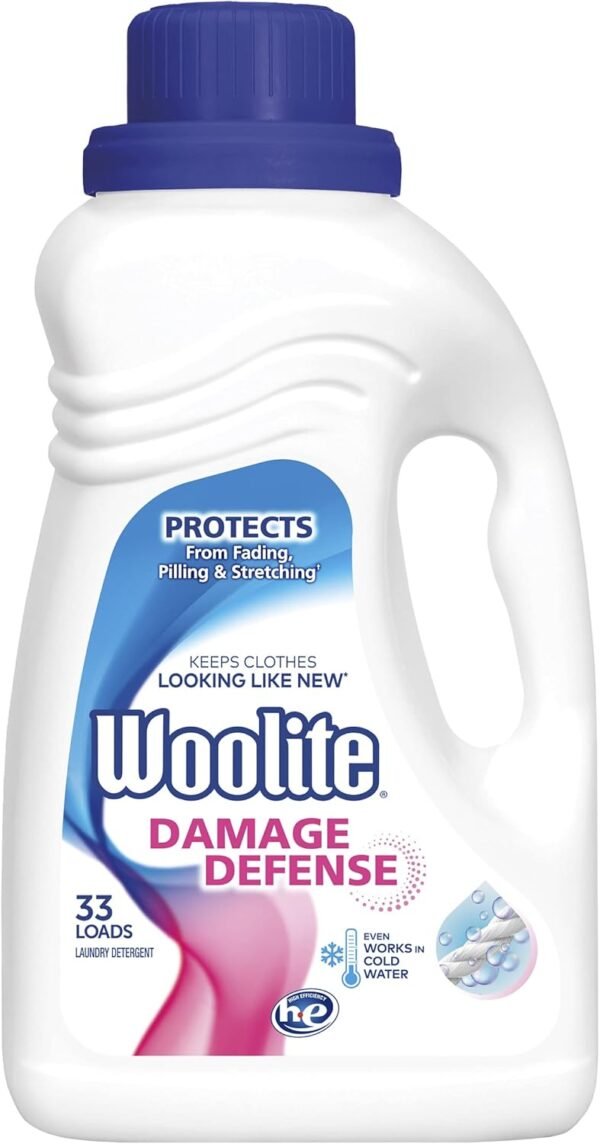
Woolite Damage Defense is a 50 fluid ounce liquid laundry detergent rated by the manufacturer at 33 loads, which works out at roughly an ounce and a half per wash. Its selling proposition is not that it cleans better than other detergents. It is that it does less damage while cleaning, and the listing is specific about what damage it means: fading, fuzzing, pilling and stretching.
That is a claim about the mechanical and chemical wear a washing machine puts on fabric over repeated cycles, and it is a real phenomenon. Agitation abrades fiber surfaces, which is what produces fuzzing and then pills. Repeated wetting and mechanical stress relaxes knit structures, which is what produces stretching in a cuff or a waistband. Detergent chemistry, particularly optical brighteners and strong surfactant systems, contributes to color loss. So the target is legitimate. The household this suits is one washing clothes it wants to keep: yoga pants, blouses, jeans and everyday synthetics and blends rather than towels and work clothes.
The footnotes are the important part
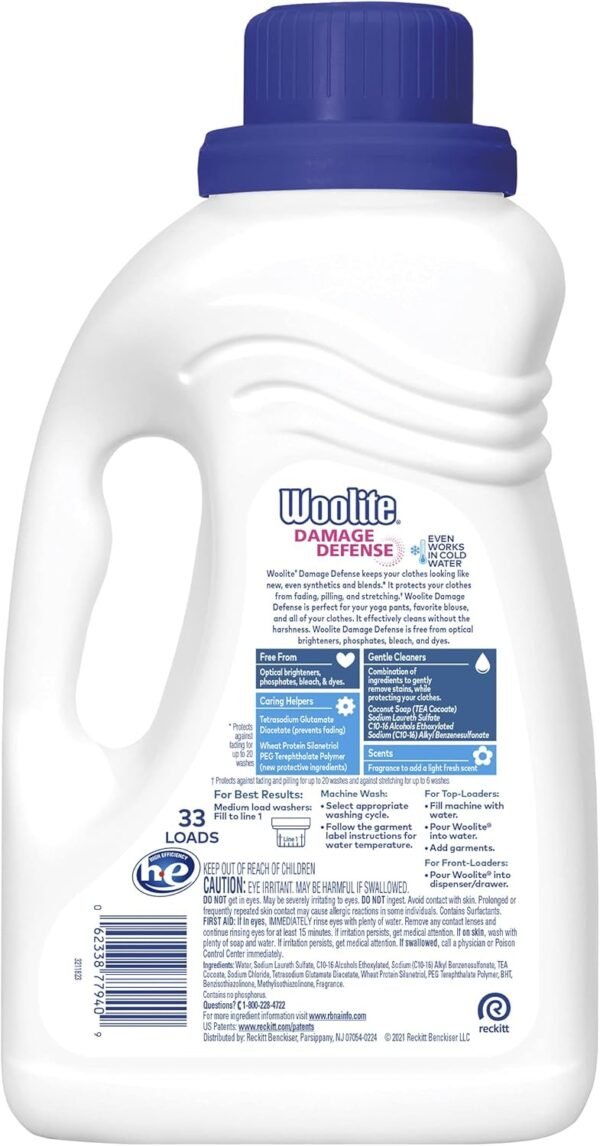
Woolite prints its qualifiers rather than hiding them, and they change what the headline means. The claim of keeping clothes looking like new is bounded at up to 20 washes. Protection from fading and pilling is stated as up to 20 washes. Protection from stretching is stated as up to 6 washes. Those are three different durations for three different effects, and six washes is a short window for a garment that gets worn weekly.
What the mechanism is, and where it is not stated
Woolite publishes what the formula is free from, and that list is concrete: no optical brighteners, no phosphates, no bleach and no dyes. Removing optical brighteners is directly relevant to the fading claim, since brighteners are fluorescent compounds that deposit on fabric to make whites look whiter and can shift the appearance of colored fabric over time. Removing bleach is relevant for the same reason.
What is not published is what the formula contains. No surfactant is named, no enzyme, no polymer, no pH. The anti pilling and anti stretching claims in particular imply some kind of fiber conditioning or lubricating component, and that component is not identified anywhere on the page. Read the bottle for the ingredient statement. The record gives the model number as YLY-019, first availability as September 2007, and ranks the product 42nd in Liquid Laundry Detergent and 2,540th across Health and Household. The Customer Reviews field contains a sales rank string rather than a star rating.
Fabrics, machines and a note about the brand name
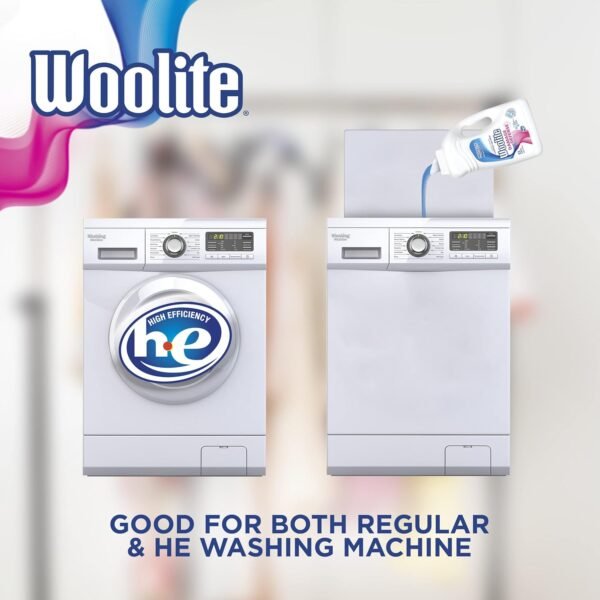
Woolite states that the detergent cleans and cares for all fabrics and all colors, that it is suitable for all machine washables, and that it works in cold water in both HE and regular machines. The cold water claim matters practically, because cold washing is where a detergent’s enzyme and surfactant system is most tested and where a poorly formulated liquid leaves soil behind.
The brand name deserves a note. Woolite began as a wool and delicates product, and many people still buy it on that association, but this listing is for a general purpose detergent aimed at everyday clothing including jeans. Nothing on this page addresses wool specifically, gives a wool wash instruction, or states whether the formula is free of the protease enzymes that damage protein fibers. If you are buying a detergent for wool, cashmere or silk, do not assume the name covers it. Check the bottle, or use a product that states wool suitability explicitly.
The claim to suit all fabrics is also broader than any detergent can really be held to. Follow the garment care label rather than the detergent label whenever the two disagree, and be aware that the damage this product addresses is machine damage: it cannot undo pilling that has already happened. For that you need a cutting tool such as the Vasson fabric shaver, and the wider lint removers category covers the rest of that job.
Dosing, machine care and storage
At 33 loads from 50 ounces, the intended dose is about an ounce and a half. Measure it with the cap rather than pouring by eye, and use the machine’s own guidance for load size and soil level. Overdosing a detergent whose whole proposition is gentleness is self defeating: excess surfactant is not rinsed out fully, and residue in fabric attracts soil and stiffens the hand of the cloth, which is exactly the outcome you were paying to avoid.
In an HE machine, the low water volume makes overdosing worse rather than better. If the drum shows heavy suds through the door, you are using too much.
Store the bottle capped and upright, out of reach of children, and away from the rest of the laundry cupboard’s chemistry. Never combine it with bleach, with an oxygen booster or with any other laundry product in the same pour. Adding bleach to a detergent explicitly formulated without bleach does not combine the advantages of both, and the formulation here is undisclosed so no interaction can be predicted. If you want a booster, add it to the drum separately according to its own instructions rather than mixing it into the detergent cap.
Cost per load and the alternatives
Thirty three loads from a 50 ounce bottle makes cost per load easy to work out, which is a point in this listing’s favor. The harder question is whether the damage protection is worth a premium over a plain detergent, and the honest answer depends on what you wash. On a wardrobe of knitwear, activewear and dark colors that you intend to keep for years, a formula without optical brighteners has a real argument. On towels, bedding and work clothes, the claim is not worth paying for and a mainstream detergent does the same job.
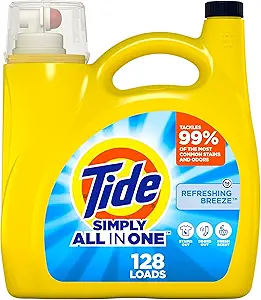
The comparisons worth making on this site are the Purex liquid detergent and the Tide liquid detergent as mainstream benchmarks, the All Free Clear for a dye and fragrance free formulation, and the Attitude baby laundry detergent for a gentler formulation aimed at a different audience. The full liquid detergent category puts them side by side, and the useful comparison is cost per load at the manufacturer’s own stated dose rather than price per bottle.
Who should buy it
Buy it if you wash clothes you want to keep looking new, you value a formula without optical brighteners and bleach, and you wash mostly in cold water. Skip it if your laundry is towels, bedding and work clothes where damage protection is irrelevant, if you are buying it for wool or silk on the strength of the brand name without checking the bottle, or if you need a published ingredient list. And read the durations as printed: 20 washes for fading and pilling, and only 6 for stretching.