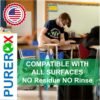

Description
A two pack of ready to use spray, and a listing that claims a great deal
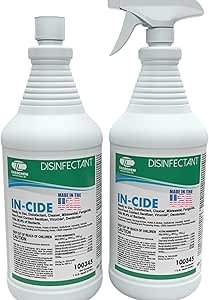
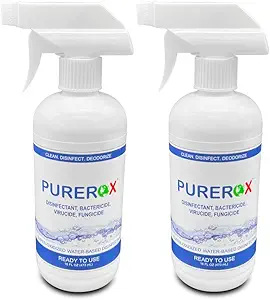
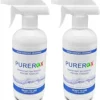
This entry covers a disinfectant spray sold as two 16 ounce bottles, described in the listing as unscented, pH neutral, residue free, and built on what it calls PUREROX hypochlorous technology. Hypochlorous acid based disinfectants have become common in the last few years because they carry a much milder odor than a chlorine bleach solution and leave little visible residue, which is why they turn up in childcare rooms, gyms and veterinary settings.
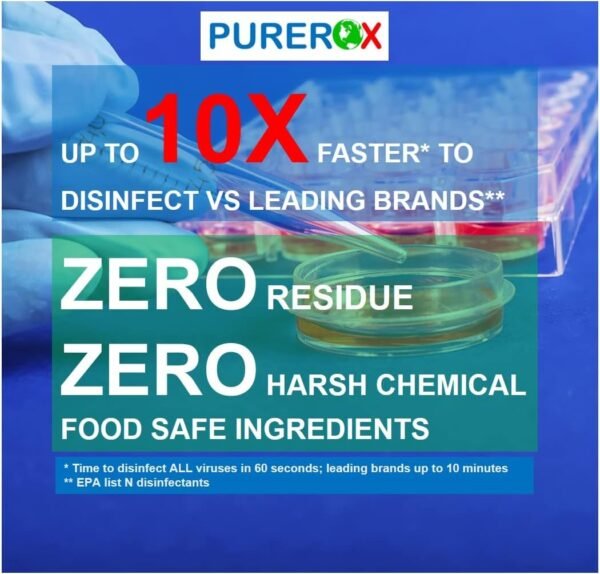
That is the product. The claims attached to it are the reason this page needs to be careful, and they are extensive: a stated 99.9999 percent kill figure, a list of named pathogens, hospital grade positioning, membership of two EPA lists, and safety language covering pets, children and every surface. Every one of those is a claim made in the listing. None of them is a statement by us. We do not test anything, we make no disinfection claim and we make no health claim, and readers should treat the printed label on the bottle as the only authority on what this product is registered to do.
What the listing claims, stated as claims
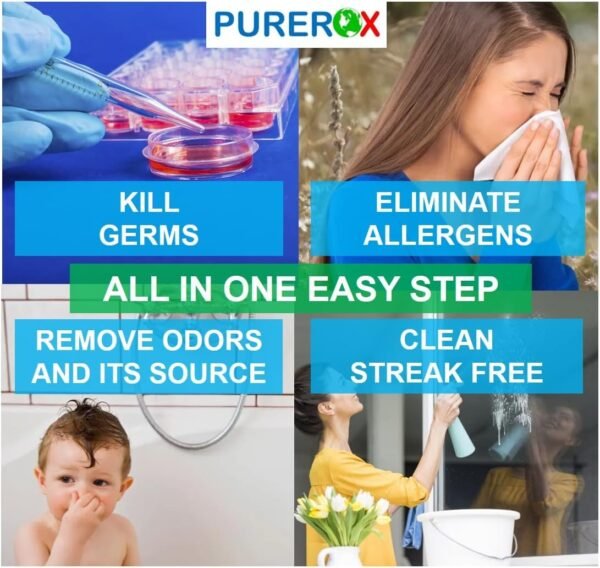
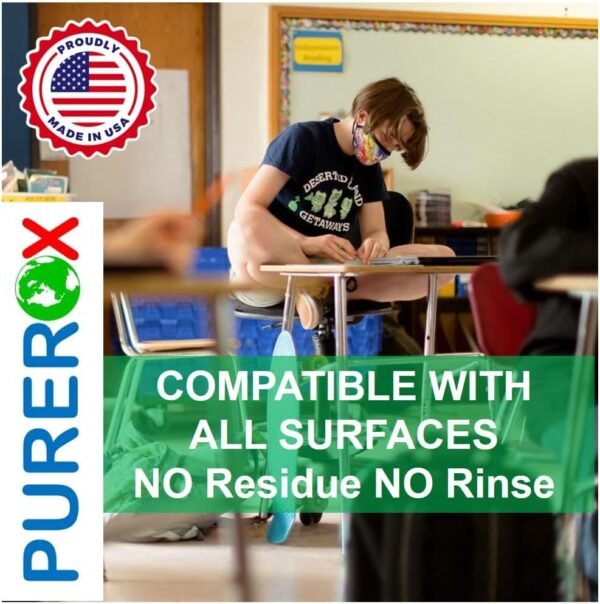
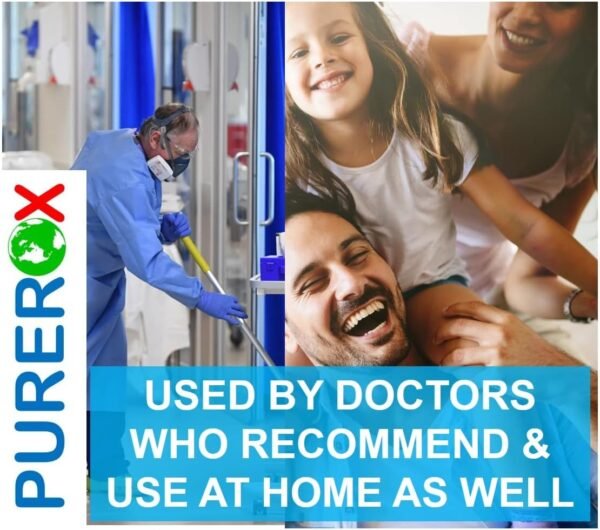
The listing says the product kills viruses in one step and names norovirus, hepatitis, influenza viruses, drug resistant germs, MRSA and VRE, along with bacteria and fungi. It states that the product is on the EPA’s List N and List Q. It says it prevents the growth of damaging mold, and that it eliminates odors and allergens. It describes the formula as pH neutral, with no harsh chemical residue and no added fragrance, and states it is compatible with all surfaces and with delicate equipment. It says the product is safe for pets and anyone, that it can be used everywhere at home or at work, that it is recommended by doctors, and that it is used and proven by hospitals, schools, childcare centers, nursing homes and medical offices for infection prevention.
The number that is missing from all of that
No EPA registration number appears anywhere in this listing. That is the omission that matters most. In the United States, any product making an antimicrobial claim for surfaces is regulated as a pesticide and must carry a registration number on its label. The EPA’s own lists, including List N and List Q, are indexed by that number: you look a product up by its registration number to see what it is authorized to claim. Without the number, a reader cannot check whether this product appears on either list, and the claim to be on them cannot be verified from the page.
The second missing number is the contact time. Every registered disinfectant label states how long the surface must remain visibly wet for the claim to hold, and that time varies from thirty seconds to ten minutes depending on the product and the organism. This listing gives none. Spraying a surface and wiping it dry immediately does not deliver a disinfection result no matter what percentage is on the bottle. If you use this product, read the label for the registration number and the dwell time, and follow the dwell time, reapplying if the surface dries early.
The claims that should not be on a disinfectant at all
Three statements in this listing sit outside what United States labeling rules allow for a registered antimicrobial, and they are worth naming rather than repeating. Describing a registered disinfectant as safe for pets and anyone, and as safe for use anywhere, is safety language that pesticide labeling rules do not permit; a registered antimicrobial is a pesticide, and no pesticide may be described as safe. Claiming to eliminate allergens is a health claim, and allergen reduction is a separate regulated claim area from disinfection. And “recommended by doctors” is a testimonial with no named practitioner, institution, survey or study behind it.
Compatible with all surfaces deserves the same treatment. No cleaning chemistry is compatible with every material. Chlorine based chemistries can dull some metals over repeated contact, and any liquid left standing on natural stone, unsealed wood or an untreated finish can mark it. Wipe rather than pool, test a hidden area on anything valuable, and do not assume the sweeping claim covers your particular surface.
Using it, and the rules that apply to every chlorine chemistry
Clean before you disinfect. Soil and grease shield microorganisms from any active ingredient, so a single pass over a dirty counter is a cleaning pass, not a disinfecting one. Wipe the surface clean, apply again, and leave it wet for the label’s stated time. On food contact surfaces, check whether the label calls for a potable water rinse afterward, as most registered products do.
Never combine this with anything else. Do not use it on a surface still wet with an ammonia based glass cleaner, with an acidic bathroom or descaling product, or with any other cleaner, and never mix it in a bottle. Chlorine chemistry plus ammonia produces chloramine vapor; chlorine plus acid produces chlorine gas. A mild odor is not evidence of a mild reaction. Ventilate the room, keep it out of eyes, keep it away from aquariums, store the bottles capped, upright, out of sunlight and out of reach of children. Hypochlorous solutions also lose activity as they age and as they are exposed to light and heat, and no shelf life, date code guidance or storage temperature appears in this listing, so check the bottle for a date.
Cost, and what to compare it against
Two 16 ounce bottles is 32 ounces of ready to use liquid, a household quantity rather than a bulk one, and ready to use is always the more expensive way to buy a disinfectant because you are paying to move water. The trade is convenience and no chance of a dilution error.
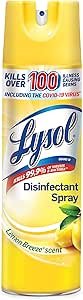
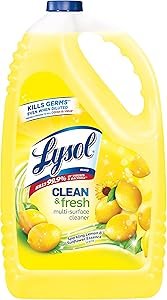
The comparisons worth making are on disclosure. A mainstream registered product such as Lysol disinfectant spray or Lysol multi surface cleaner prints a registration number and a contact time on the label, which is what lets a buyer check a claim. Within the same hypochlorous family, the Briotech hypochlorous acid spray publishes its concentration as a figure, and the Think Smarter hypochlorous cleaner offers a larger format. Another ready to use option with its own set of unverifiable label claims is the Theochem In-Cide spray. The rest of the shelf is under disinfectant sprays and liquids, with the wipe format in disinfectant wipes.
The record for this item is unusually thin and that should be flagged. There is no specification block at all: no ASIN, no manufacturer name, no model number, no package dimensions and no date of first listing. The description field is empty. A 99.9999 percent figure is a six log reduction, three orders of magnitude beyond the 99.9 percent that most consumer disinfectants claim, and it is presented without a test method, an organism list tied to a specific time, or a laboratory. The concentration of the active is never given as a number.
Who should buy it, and what to do first
If you want a low odor, fragrance free surface spray for everyday wiping, hypochlorous products do that well. Before treating this or any product as a disinfectant, find the EPA registration number on the bottle, look up what it is registered to claim, and follow the contact time printed there. Do not buy it on the strength of the safety and health wording in the listing, which goes beyond what a registered antimicrobial may claim, and do not use it in place of professional guidance on infection control.