Description
A one ounce travel spray, and what it is actually sold as
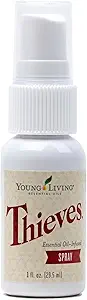
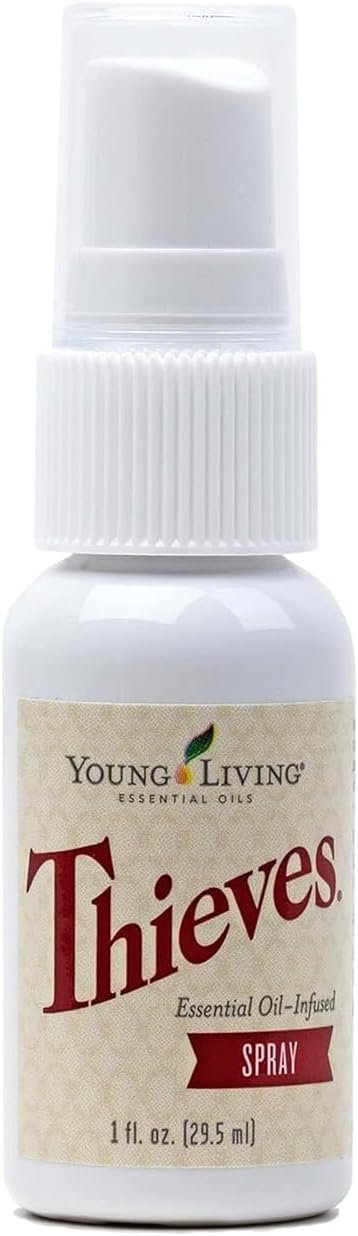
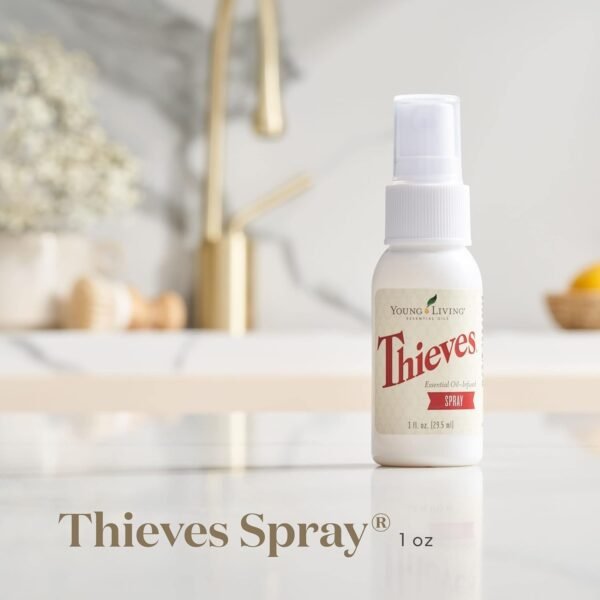
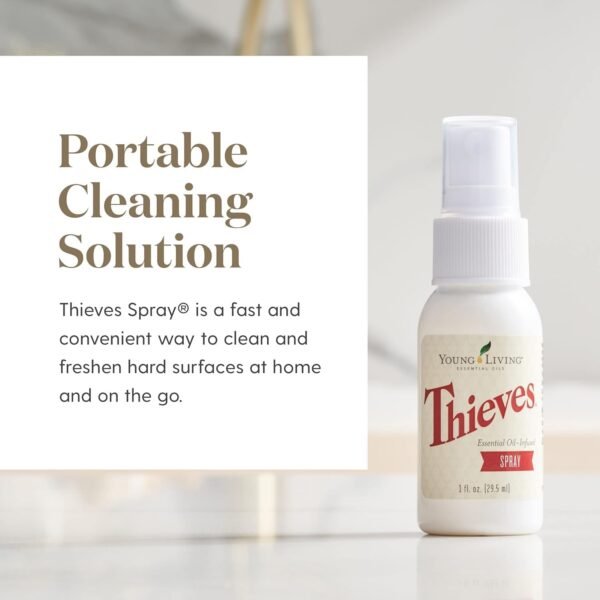
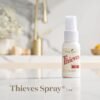
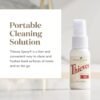
This is Young Living’s Thieves Spray in the one ounce size, model 3265. Thieves is the brand’s essential oil blend, and the listing describes the spray as infused with clove, lemon, cinnamon and rosemary essential oils. The bottle is tiny, listed at one by one by two and a half inches, and the entire pitch is portability: a spray that lives in a purse, a backpack or a pocket.
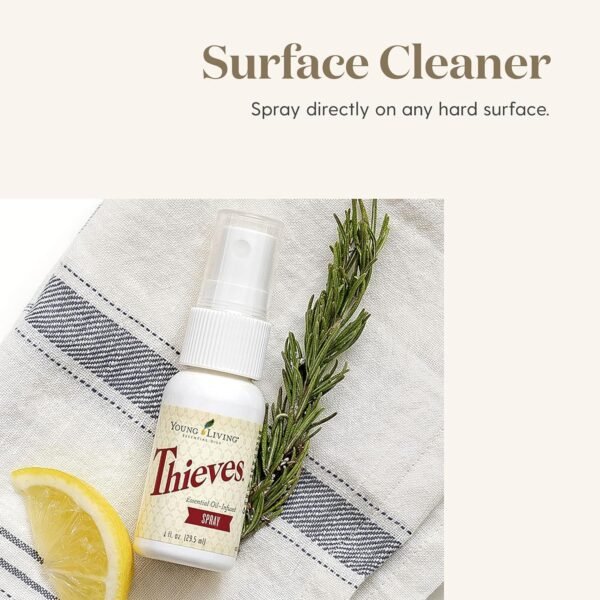
The most important thing to establish is what this listing does and does not claim, because this product sits in the Disinfectant Sprays and Liquids category on this site and the listing itself makes no disinfection claim at all. Young Living describes it as a cleaning spray and a room spray. The bullets say it cleans and freshens without rinsing, that it doubles as an air freshener, that it is a multipurpose cleaner for bathroom surfaces, walls and doors, and that it is made without harsh chemicals.
There is no kill claim on this page. No pathogen is named, no percentage is given, no contact time is stated and no EPA registration number appears. Surface disinfectants sold in the United States with kill claims are registered pesticides under federal law and carry a registration number on the label. Nothing of the kind is present here, so this product should be understood and used as a cleaner and a room spray, not as a disinfectant. If a surface genuinely needs disinfecting, use a registered product with a stated wet contact time, and the products in the disinfectant spray and liquid listings that carry such claims state them explicitly on their labels.
What is in it, and what the listing withholds
Four essential oils are named: clove, lemon, cinnamon and rosemary. No other ingredient is disclosed, no carrier is identified, no preservative is named and no concentration is given for anything. The listing describes the contents as plant based, naturally derived and made without harsh chemicals. Those are Young Living’s own descriptions and none of them has a fixed regulatory meaning in cleaning products.
The gap that matters most is concentration. Essential oils behave very differently at one percent and at twenty percent, and clove and cinnamon oils in particular are known skin irritants at higher concentrations. Without a figure, a reader cannot judge how to use the product around skin, food surfaces or animals. The printed bottle is the only source.
The claim about children and pets
One bullet describes the product as gentle for the whole family and ideal for homes with pets and children. That is a safety statement made by the seller with nothing published to support it. No toxicological information, no concentration and no ingredient list appears on the page. It is worth saying plainly that a product being plant derived tells you nothing about whether it is safe around a particular animal, and that households with cats or birds, both of which are sensitive to airborne compounds, should read the label and ventilate rather than relying on a marketing bullet. That is a reason to check, not a claim about this product.
Amazon ranked this bottle forty second in Disinfectant Sprays and Liquids when the data was captured, which is a category placement rather than an endorsement of any disinfection property.
Surfaces, and one specification oddity
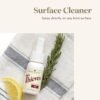
The listing names bathroom surfaces, walls and doors, and describes the spray as rinse free. Rinse free is a meaningful practical claim: it means the product is intended to be sprayed and wiped without a water rinse, which suits doorknobs, light switches, tabletops and other quick touch ups.
Because no pH or ingredient list is published, treat compatibility as untested. Essential oil bearing sprays can mark some finishes, so test on a hidden area of anything valuable. Keep it off natural stone, unsealed wood, screens and lens coatings. On painted walls, spray onto a cloth rather than onto the wall, since liquid running down paint leaves streaks.
The specification block gives the product dimensions as one by one by two and a half inches with a weight of two ounces, for a product sold as one ounce. The weight figure presumably includes the bottle and sprayer, but the page does not say so, and it is a reminder to read the volume rather than the weight when comparing.
Using it and storing it
Spray onto a cloth or directly onto a hard surface and wipe. As with any trigger spray at counter height, keep it away from your face and do not spray toward anyone. Ventilate a small room, particularly a bathroom, since a concentrated aromatic spray in an enclosed space is unpleasant even when it is harmless.
Store the bottle upright and capped, out of reach of children, away from heat and away from food. A one ounce spray bottle in a handbag is easy for a child to reach, and a small bottle of concentrated aromatic liquid is not something a toddler should find. Do not decant it into an unlabeled container, and never into anything that has held a drink.
Never combine it with another cleaning product, on a surface or in a bottle. Do not spray it onto a surface that has just been treated with bleach or with an acidic descaler, and never mix chlorine bleach with an ammonia based cleaner or an acid anywhere in the home, since those combinations produce toxic gases. Do not refill this bottle with a different product without rinsing it thoroughly.
Avoid skin and eye contact. If the spray reaches an eye, rinse thoroughly with water and seek medical advice.
Cost structure, and the honest comparison
One fluid ounce is a very small amount of cleaner. Judged on cost per ounce this is among the most expensive ways to buy a cleaning spray, and that is inherent to the format rather than a criticism: you are buying portability, in the same way a travel size toothpaste costs more per ounce than a full tube. If you like the product, the sensible approach is to buy the larger size for home use and keep this one in a bag.
For comparison, the same brand’s fruit and vegetable soak sits in the catalog too, and if what you actually want is a spray with a documented antimicrobial mechanism there are quite different options in the Briotech hypochlorous acid spray, the hypochlorous all purpose cleaner and the Vital Oxide cleaner. Read each of those labels for what they are actually registered to claim rather than assuming. The wider all purpose cleaner listings cover general cleaning at far lower cost per ounce.
Who should buy this and who should not
Buy it if you already use Thieves products, you want a pocket sized cleaning and freshening spray for tray tables, desks and door handles, and you value the scent. In that narrow role it does what the listing says it does.
Do not buy it as a disinfectant, because the listing makes no disinfection claim, names no organism, gives no contact time and carries no registration number. Do not buy it as your main household cleaner, where the cost per ounce is prohibitive. And do not read the gentle for pets and children wording as a safety assessment, since nothing on the page supports it.