Description
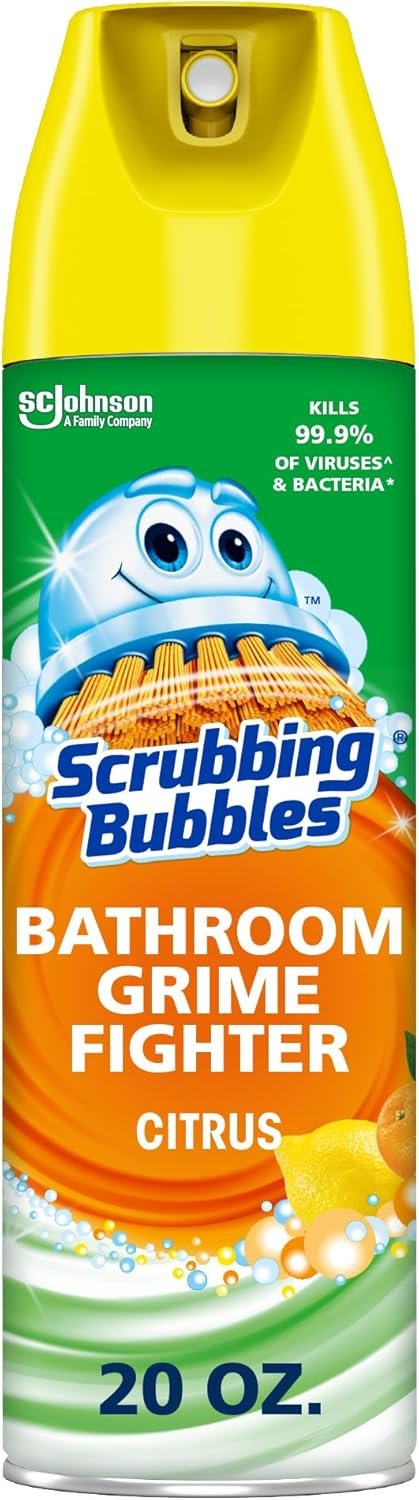
Scrubbing Bubbles Bathroom Grime Fighter is a 20 ounce aerosol from SC Johnson in a citrus scent, delivering a penetrating foam aimed at tubs, showers, tile and fixtures. It is sold as both a cleaner and a disinfectant, and the two halves of that description have different rules attached, which is what this review spends most of its space on.
The job the foam is designed for
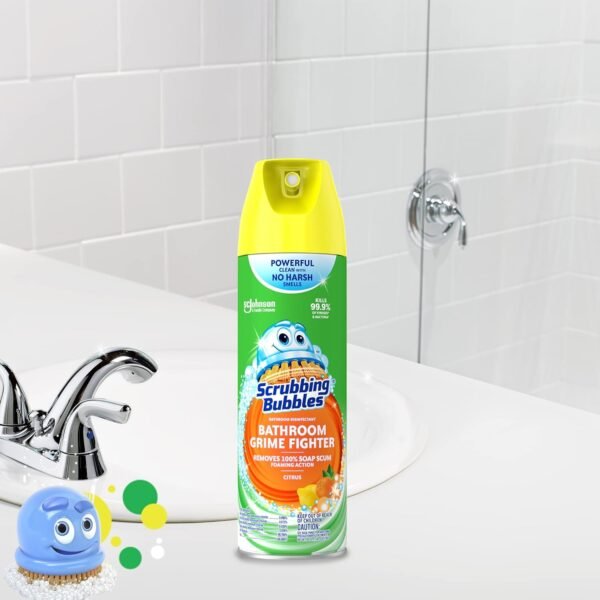
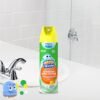
Bathroom soil sits mostly on vertical surfaces, and gravity works against any liquid sprayed onto tile or a shower wall. A foam clings, which gives the chemistry time to break down soap scum before you wipe. SC Johnson positions the aerosol specifically for large bathroom spaces such as a bathtub or shower, and for hard to reach places between tiles and around fixtures, where a foam expands into a gap that a cloth cannot easily reach.
The manufacturer also states that this is a 100 percent soap scum remover. That is SC Johnson’s claim about its own product and it is an absolute one, so treat it as marketing language rather than a measurement. What can be said fairly is that a clinging foam is the right format for the job, and the household this fits has a tiled shower or a tub surround that needs regular attention.
The disinfection claim, and the number that is missing
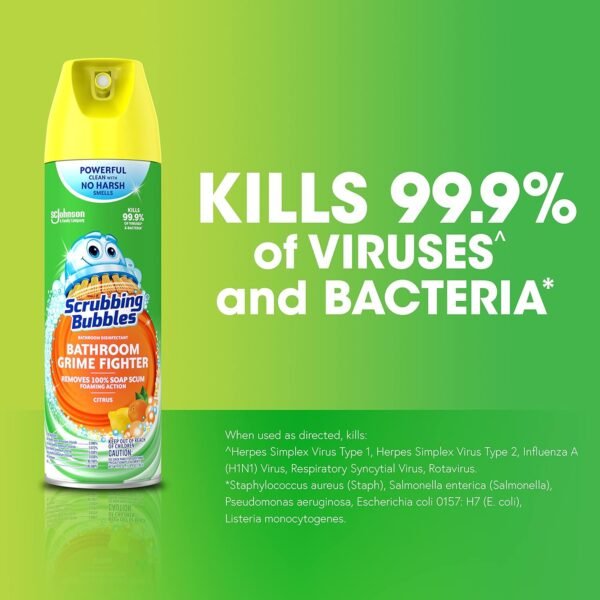
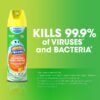
This listing is unusual in this catalog because it names the organisms. SC Johnson states the product kills 99.9 percent of viruses and bacteria when used as directed, and then lists them: Herpes Simplex Virus Type 1, Herpes Simplex Virus Type 2, Influenza A H1N1, Respiratory Syncytial Virus and Rotavirus among the viruses, and Staphylococcus aureus, Salmonella enterica, Pseudomonas aeruginosa, Escherichia coli O157:H7 and Listeria monocytogenes among the bacteria. Naming organisms rather than making a vague germ claim is what a properly registered disinfectant label does, and it is to the manufacturer’s credit that the list is published.
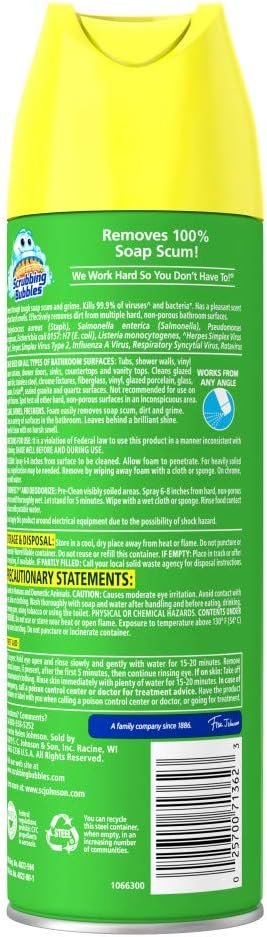
Two things still need saying. First, no registration number appears anywhere on this listing, and second, no contact time is given. The phrase when used as directed carries the entire weight of the claim, and the direction that matters most on any disinfectant is how long the surface must stay visibly wet. Sprayed and wiped immediately, a disinfectant does not disinfect. The back label on the can carries that time, and the claim only holds if you follow it. This review names no organism beyond the manufacturer’s own list and makes no disinfection claim of its own.
Kills or removes, and why the wording differs
The description says the product kills 99.9 percent of viruses and bacteria. One of the feature bullets on the same page says it removes 99.9 percent of bacteria. Kills and removes are not interchangeable in this context: one is a disinfection claim tied to a label and a contact time, the other describes physical removal by cleaning. The listing uses both without explaining the difference, and where a page contradicts itself on a regulated claim, the printed label on the can is the version that counts.
Surfaces, which the listing covers unusually well
SC Johnson gives a long and specific list: bathroom tile, tubs, shower walls, vinyl, shower curtains, shower doors, sinks, countertops, glazed ceramic tile, stainless steel, chrome fixtures, fiberglass, glazed porcelain, glass, laminate, Corian, sealed granite and quartz. That is more compatibility detail than almost any other listing in this catalog offers, and the inclusion of sealed granite and quartz is worth noting because most bathroom cleaners avoid committing on stone.
Read the word sealed carefully. It is doing real work in that sentence: unsealed or honed stone behaves differently and is not covered by the list. Marble and limestone are not named at all, and neither is grout beyond the reference to cleaning between tiles. Wood, painted surfaces and anything with a delicate plated finish are also absent. Test a hidden area first on anything you would be sorry to damage, and rinse afterward, particularly on a tub or a shower floor where residue is a slip risk.
Aerosol handling and bathroom ventilation
Two things make this a product to use deliberately. It is an aerosol, and it is used in the smallest, least ventilated room in the house. Open a window or run the extractor before you start, avoid spraying toward your face, and leave the room while the product does its work rather than standing in a cloud of it. Anyone with asthma or a respiratory condition should not be in the bathroom while a disinfectant aerosol is being used.
Standard aerosol precautions apply. Do not spray near an open flame or any ignition source, do not store the can in a hot place or a car, never puncture or incinerate a can even when it feels empty, and dispose of it according to local rules for pressurized containers. Store it upright, out of reach of children.
The mixing rule is not optional. Never use this product alongside a bleach based bathroom or toilet cleaner, an acidic descaler or ammonia, on the same surface, the same cloth or in the same session without rinsing in between. Combining bathroom chemicals is the most common cause of household chemical injury, and a shower enclosure is a small enclosed space where a reaction has nowhere to go. Rinse the surface, ventilate, then use the second product if you need to.
Cost, and the alternatives
An aerosol is a convenience format and you are paying for the propellant and the can as well as the cleaner. Twenty ounces goes a reasonable distance on a bathroom used weekly, and the same manufacturer sells this formula in an adjustable trigger spray, which is worth considering if you would rather avoid a pressurized can. The genuine saving in any bathroom is behavioral: a shower wiped down after use accumulates far less of what this product exists to remove.
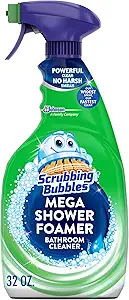
For a trigger bottle version of the same brand’s approach, our review of the Scrubbing Bubbles bathroom cleaner covers that format. For a foam from a different maker, the Zep foaming shower, tub and tile cleaner is the direct comparison, and the ATTITUDE shower and tiles cleaner spray is an ingredient led alternative that makes no germ claim at all. The multipurpose bathroom cleaners category lists them together.
If disinfection rather than bathroom grime is the actual requirement, a product whose label leads with that claim is the better fit, and our write up of the Lysol disinfectant spray covers that, with more in the disinfectant sprays and liquids category. Every product in that group has its own contact time on its own label.
Who should buy it, who should not
Buy it if you want a clinging foam for a tub and shower and you will read the can for the contact time the listing omits. Skip it if you would rather not use an aerosol in a small bathroom, if anyone in the household has a respiratory condition, or if your surfaces include unsealed stone, which the compatibility list does not cover. The organism list is a genuine strength of this page; the missing dwell time is the reason the label still has to be read.