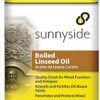
Description
What boiled linseed oil is for
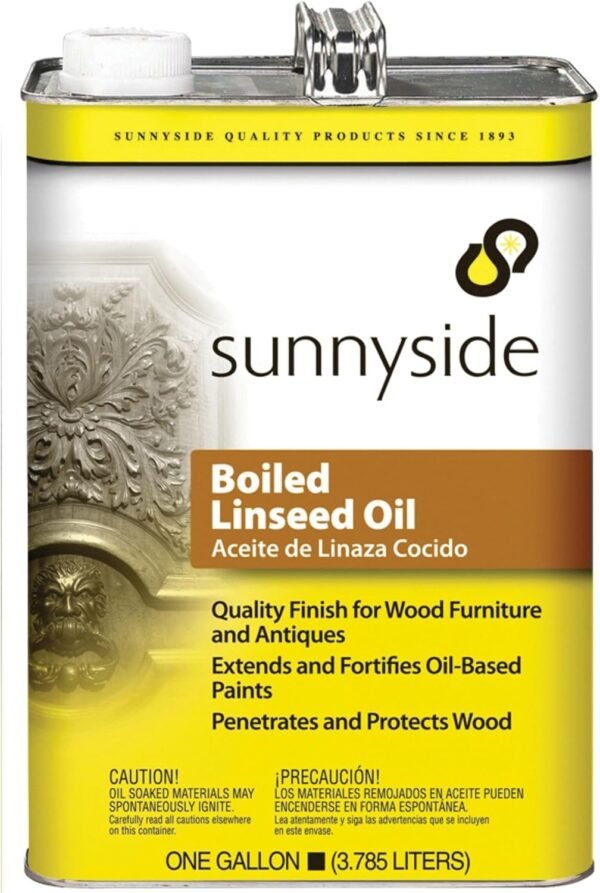
Sunnyside sells this as a one gallon can of boiled linseed oil, part number 872G1S, listed since February 2007 and weighing 8.25 pounds. It carries 719 ratings at 4.8 stars and sits 79,545th in Health and Household and 121st among wood conditioners, waxes and oils. The specification block names the manufacturer as a generic home improvement entry rather than Sunnyside, which is a data error rather than a product one.
Linseed oil is a penetrating finish. Unlike a varnish or a polyurethane, which cure into a film sitting on top of the wood, an oil soaks into the fibers and hardens inside them. The result is a finish that darkens the wood, deepens the grain and feels like wood rather than plastic, and that can be repaired in place by wiping on more oil rather than by stripping and recoating. That is why it remains standard for tool handles, gun stocks, furniture restoration and antique work.
Sunnyside’s own bullet is unusually direct about scope: apply to unfinished wood only. That is correct. Oil cannot penetrate through an existing varnish, lacquer or polyurethane film, and wiping it over a finished surface leaves a sticky layer that never properly cures.
The safety issue that belongs at the top of any review
Rags soaked in boiled linseed oil can catch fire on their own. This is not a caution about flames or heat sources. It is a property of the oil.
Linseed oil cures by reacting with oxygen, and that reaction gives off heat. Spread thin on wood, the heat dissipates harmlessly. Balled up in a rag, in a bin, or in a heap on a bench, the cloth insulates the reaction, the temperature climbs, and the pile can reach ignition on its own with nothing else involved. Oily rag fires destroy workshops and houses every year and they are entirely preventable.
The disposal rule is simple and it is not optional. Lay used rags out flat and singly, outdoors, weighted down, on a non combustible surface, until they are completely stiff and dry. Or submerge them fully in water in a sealed metal container and dispose of that container according to local hazardous waste rules. Never leave oily rags balled up, never put them in a trash bag or a plastic bin, and never leave them in a pile overnight because you will deal with them tomorrow.
Nothing about this hazard appears on the product listing. That is the most serious omission in this batch of reviews.
Boiled does not mean boiled
The name is misleading and it is worth knowing why. Boiled linseed oil is not heated. Raw linseed oil takes weeks to cure, so metallic drying agents are added to accelerate the oxidation, and the resulting product is sold as boiled. Those additives are the whole difference between this and raw oil, and this listing does not name them, publish a percentage, or provide a safety data reference.
Two consequences follow. First, boiled linseed oil should not be treated as a food safe finish, whatever raw flaxseed oil may be. Keep it off cutting boards, butcher block worktops, salad bowls and anything else that touches food. Second, the driers are the reason for the 12 to 18 hour drying claim in the bullets, and that figure is touch dry rather than fully cured. A full cure takes considerably longer, and a piece that feels dry can still transfer oil and can still smell for days.
Where it belongs and where it does not
Suited to it: bare interior hardwood, furniture, antiques being refreshed, tool handles, and the traditional job of extending and improving the flow of an oil based paint, which Sunnyside also lists.
Not suited: anything already finished, as the manufacturer says. Softwood outdoors, where linseed oil holds moisture and actually feeds mildew rather than resisting it, so an exterior specific product is the better choice. Anything that will get hot or hold food. Floors under heavy traffic, where an oil finish needs a maintenance regime most households will not keep up.
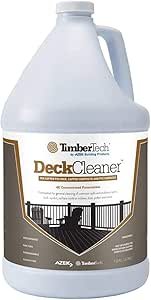
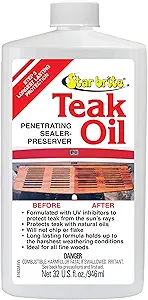
On outdoor timber and decking, the products designed for exposure will serve better, and something like the Star brite teak oil is formulated for that environment, while a composite deck cleaner is the right product for materials that should not be oiled at all.
Applying it
Thin coats are the entire technique. Wipe on a small amount with a lint free cloth, let it soak in for a few minutes, then wipe off every trace of surplus while it is still wet. Oil left standing on the surface does not cure properly and turns into a sticky film that has to be cut back. Leave it overnight, or longer in cold or humid conditions, then repeat. Several thin coats build a far better finish than one heavy one.
Work in a ventilated space. Wear gloves, since the oil is difficult to remove from skin and the driers are not something to absorb repeatedly. Keep it off glass and hardware, and mask anything you do not want darkened, because linseed oil deepens color permanently.
Store the can tightly sealed and upright, out of reach of children, away from heat and away from ignition sources. It is a combustible liquid and the listing gives no flash point. Once opened, a partly full can will skin over as the surface oxidizes.
Cost, coverage and the alternatives
A gallon is a lot of oil, because oil is applied by the tablespoon rather than by the cup. The listing gives no coverage figure, which is a gap, but a penetrating oil applied in thin wiped coats goes much further than a film finish. For a single chair or a set of tool handles, a gallon is a lifetime supply and a smaller can makes more sense.
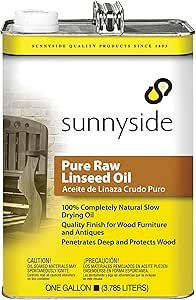
The obvious comparison is Sunnyside’s own pure raw linseed oil, which has no driers, takes much longer to cure, and is the version usually chosen where the additives are unwanted. For maintaining a finish that already exists rather than building a new one, a wax or polish such as the Howard wood polish or the Mohawk finishing polish is the correct product, and neither requires stripping anything. The category sits under wood conditioners, waxes and oils and the lighter maintenance products under wood polish.
Who should buy it and who should not
Buy it if you work with bare wood, you understand oil finishing, and you have a use for a gallon. It is a traditional finish with a deserved reputation, the price per treated surface is very low, and Sunnyside’s instruction to use it on unfinished wood only is the right advice.
Do not buy it for finished furniture, for anything that touches food, or for exterior softwood. Do not buy a gallon for one small project. And do not buy it at all unless you are willing to handle used rags properly every single time, because that is where the real hazard in this product lives.