



Description
What 50 large black bags are actually for
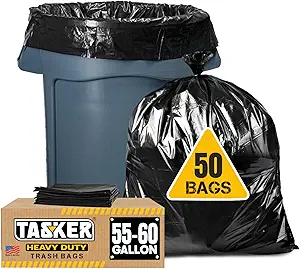
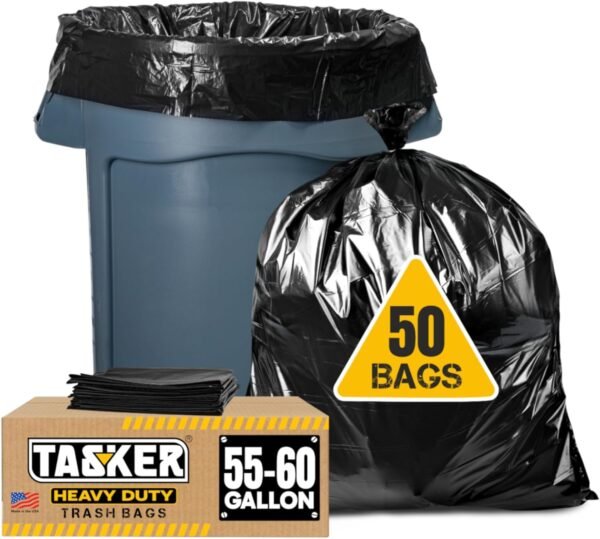
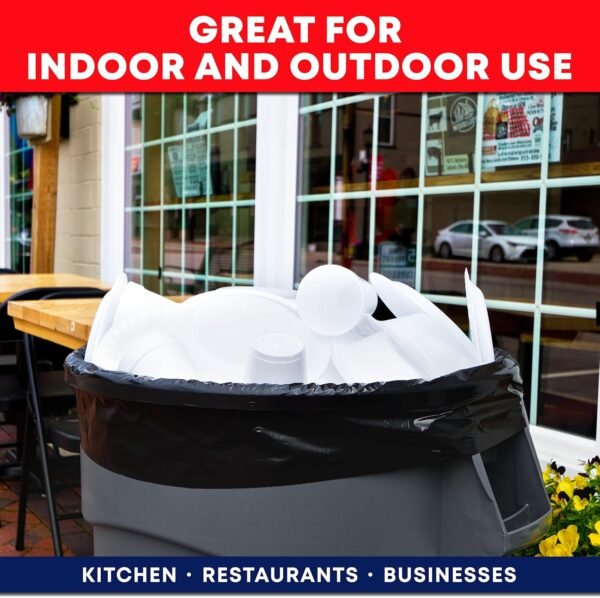
Tasker sells this as a 50 count box of 55 to 60 gallon black trash bags with ties, measuring 37 inches wide by 55 inches high, at a stated thickness of 1.5 mil. The size puts them in the drum liner and outdoor can class rather than the kitchen class: 55 gallons is a standard commercial barrel, a construction site can, or the big wheeled bin in a garage. Tasker positions them for job sites, workshops, yard waste and general clean up.
Size is the first thing to get right and the most common mistake. A 55 gallon bag in a 30 gallon can leaves a great deal of loose material bunched at the top, and a bag that is too small tears at the rim. Measure the can’s height and circumference before ordering, because bag capacity ratings are notoriously loose across brands and the flat dimensions, 37 by 55 inches here, are the numbers that actually determine fit.
The thickness figure, and what it does and does not buy
The single most useful specification on this listing is the 1.5 mil thickness, and it deserves a plain reading. Mil is thousandths of an inch, and in trash bags it maps directly onto tear resistance and cost. Kitchen bags typically run around 0.9 mil. General purpose outdoor bags sit around 1.1 to 1.5 mil. True contractor bags, the ones sold for demolition debris, brick, timber offcuts and roofing waste, are usually 3 mil and often 4 to 6 mil.
Where the marketing and the specification disagree
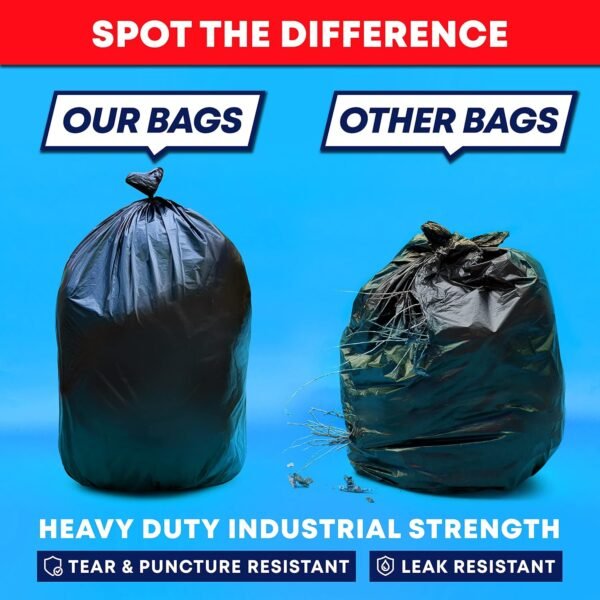
This listing calls the bags industrial, describes them as contractor bags, offers them for construction sites and rough debris, and says they are ready to haul the heaviest loads. At 1.5 mil they are not in the same class as a true contractor bag, and a buyer expecting to load broken drywall, nails and offcuts should know that before ordering. One bullet also calls them puncture proof, which no plastic bag is, while another bullet on the same page calls them puncture resistant. Puncture resistant is the honest term and the one to believe.
Read the specification, not the adjectives. For yard waste, leaves, cardboard, packaging, general office and household clean out and light workshop sweepings, 1.5 mil across a 37 by 55 inch bag is a sensible and economical choice. For anything with sharp edges, double bag or use a heavier product; the Aluf Plastics can liners and the Plasticplace liners are the neighbors to compare gauge against.
What to put in them, and what to keep out
These are unscented black polyethylene bags with no drawstring; Tasker supplies separate ties, which is standard for the barrel size and means you tie a gooseneck rather than pulling a cord. Black is the right color for a bin people should not see into, and it is also the reason these are not suitable where a facility requires clear liners for waste inspection.
Several things should never go into a plastic bag of any gauge. Hot ashes and barbecue coals are the most serious: embers stay live for far longer than people expect, they melt straight through polyethylene, and bagged ashes are a documented cause of house and garage fires. Let ashes sit in a metal container for days, not hours. Broken glass, blades and needles should be contained separately before bagging. Wet paint, solvents, oil and pool chemicals do not belong in household trash at all and should go to a hazardous waste route, as should the leftovers from any corrosive drain or oven product. And do not use a trash bag to store food or to line anything that will hold water for long, since these are not food contact rated.
Keep unused bags away from infants and small children. A large flat sheet of thin plastic is a suffocation hazard, which is why the box should live on a high shelf rather than under the sink.
Loading, tying and moving a bag this size
A 55 gallon bag filled with anything dense becomes too heavy to lift long before it is full. The practical limit is what you can carry, not what the bag can hold, and the usual injury is a back strain from a bag of wet leaves. Fill to two thirds for heavy material, and slide rather than lift where you can.
Two habits reduce tears. Do not overstretch the bag over a can rim that is wider than the bag, since a bag under tension fails at the rim rather than in the middle. And expel most of the air before tying, because a sealed bag full of air splits when it is dropped or compressed in a truck.
On disposal, plastic film is not accepted in most curbside recycling programs and it fouls sorting equipment, so full bags go in the trash stream as intended and any spare film should follow local guidance. If your household composts, a compostable liner is a different product with a different lifespan; the compost specific options in this catalog are a separate purchase and should not be substituted for a general purpose bag, since they are designed to break down.
Cost per bag, and the alternatives
Fifty bags at 7 pounds total works out to roughly 2.2 ounces of plastic per bag, which is a useful sanity check on a gauge claim and consistent with a 1.5 mil bag of this size. Cost per bag is the only number worth comparing in this category, and a big box of a mid gauge bag will usually beat a small box of a heavy one for the work most households actually do.
Where a lighter bag makes more sense, a 13 gallon kitchen product such as the Reli SuperValue 13 gallon bags or Hefty trash bags is the right size and costs far less per bag. For garden waste specifically, paper lawn and leaf bags are what many municipal collections require, and plastic will be rejected at the curb in those areas. The rest of the range is under trash bags with the garden specific products in lawn and leaf bags.
Contradictions in the record are worth listing. The title gives the capacity three different ways in one line: 55 to 60 gallon, 55 gallon, and 50 to 60 gallon, while the capacity field says 55 gallons. The fifth bullet is duplicated word for word inside itself, so the same sentence appears twice. One bullet contains the phrase “durable martial”, a typographical error for material. And the specification block includes batteries included and batteries required fields on a box of trash bags. The item currently ranks 78th in the retailer’s trash bags chart on 4,993 ratings averaging 4.3 stars, and has been listed since 2017.
Who should buy this box
Buy it if you need large black liners for outdoor cans, drums, yard waste, garage clear outs and light workshop use, and 50 at a time suits your storage. Skip it if you are bagging construction debris with sharp edges, where a 3 mil or heavier contractor bag is the correct product, or if your kitchen bin is the actual need, where a much smaller and cheaper bag does the job.