



Description
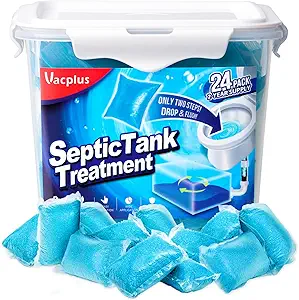
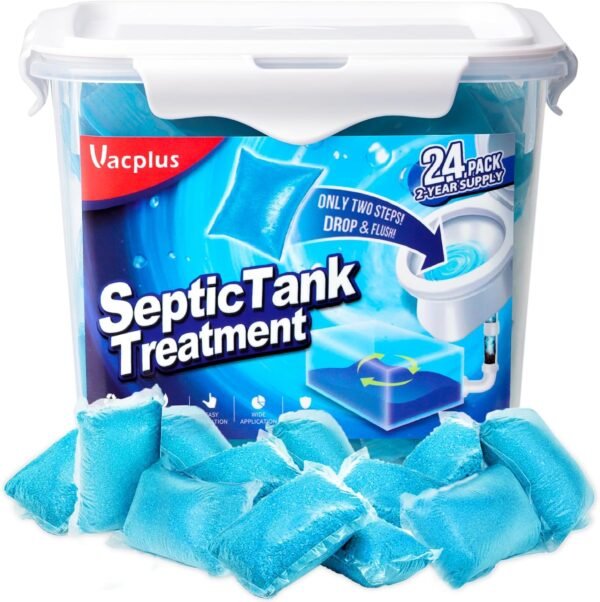
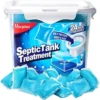
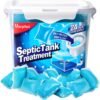
The Vacplus septic tank treatment is sold as a bucket of twenty four dissolvable packets, described by the manufacturer as a two year supply for a household septic system. One packet a month is the implied schedule, and the packets are meant to be flushed rather than measured or mixed. It is a maintenance product, which means understanding what it can and cannot influence matters far more than any feature listed on the page.
What a septic additive is for, and the household it fits
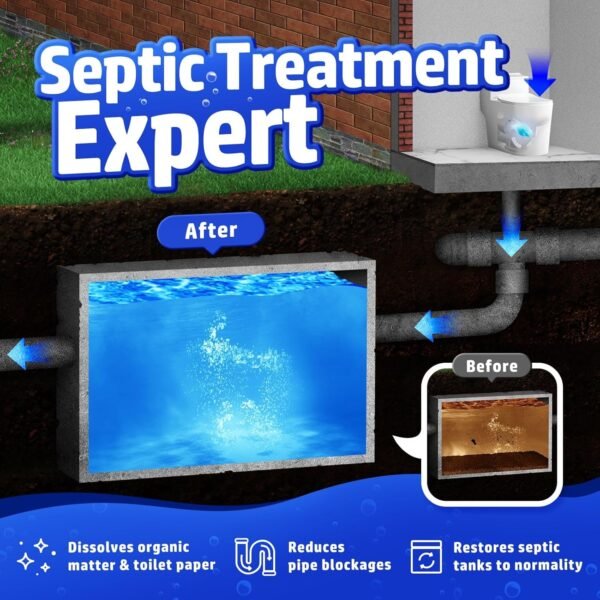
The household this suits is one with a working system and a routine maintenance habit: a monthly packet that costs almost no effort, running alongside the pumping schedule the system genuinely depends on. What it does not suit is a household with a problem happening right now. A backing up drain, standing water over the drain field, or sewage odor inside the house are signs that need a septic professional, not a packet. No additive resolves a full tank, a broken baffle or a saturated leach field, and treating one as a substitute for pumping is how a small problem becomes an expensive one.
What the listing states about the formulation, and what is missing
The product name describes the contents as septic tank treatment enzymes, and the marketing text says the enzymes work to break down waste. Beyond that single word, the listing publishes nothing. No enzyme is named, no bacterial strain is identified, no colony count is given, and there is no ingredient panel or concentration anywhere in the specification block. That block contains package dimensions, a total weight of a little over one and a quarter pounds for the bucket, a first availability date of May 2023, the manufacturer name, and ranking data placing it 27th among septic tank treatments.
That gap deserves to be stated plainly, because enzymes and bacteria are not the same thing and they do different work. Enzymes are proteins that break specific chemical bonds and are consumed by the process. Bacteria are living organisms that reproduce and keep working as long as conditions allow. A product described only as enzymes tells you nothing about which mechanism is in the packet, or in what proportion. This review will not fill in a formulation the manufacturer has chosen not to publish. If the composition matters to you, the printed label on the bucket is the only source.
The biodegradable field, and why it needs attention
The specification block carries a material feature entry reading biodegradable warning, which is a placeholder string rather than a sentence, and the listing never explains it. Biodegradable is a term regulated in advertising, and a claim made in a specification field with no supporting definition, standard or test method behind it is not something a reader can rely on. Vacplus makes the statement, and the appropriate response is to treat it as a manufacturer statement rather than as a verified property. Nothing on the page describes what portion of the product is claimed to biodegrade, under what conditions, or over what period.
Compatibility with your system and your drains
The packets are described as dissolvable and flushable, so the intended route is a toilet rather than a sink or a cleanout. That is the right choice on most systems because it delivers the packet to the tank with a full flush of water behind it. The listing does not state a tank size range, which is a meaningful omission: dosing that suits a thousand gallon tank is not automatically right for a small system or a large shared one, and a packet count alone gives no way to scale.
The bigger compatibility question is what else goes down the same drains. Septic systems depend on biological activity, and the products that suppress that activity are ordinary household ones. Chlorine bleach in quantity, drain openers, strong disinfectants and antibacterial cleaners all reach the tank when they are poured away. Adding a biological treatment while regularly dosing the same tank with a caustic drain opener is working against yourself. If you run a septic system, the useful habit is to reserve harsh chemistry for the smallest number of jobs that truly need it.
Using it correctly, and the safety points that apply
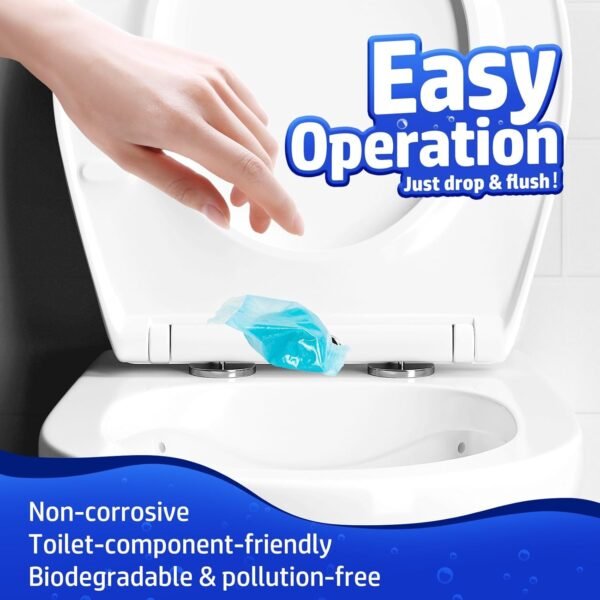
Use is deliberately simple: one packet, flushed, on a schedule. The listing does not publish a dwell time, a recommended time of day, or any instruction about water usage after dosing, and this review will not invent them. The general logic of a biological additive is that it needs time in the tank without a flood of fresh water pushing it straight through, which is why products of this type are conventionally dosed at the end of the day, but Vacplus has not stated that here. Read the instructions printed on the bucket.
On safety, the packet format is the point to watch. A dissolvable packet is easy to handle when dry and starts breaking down the moment it is wet, so handle packets with dry hands and close the bucket afterward. Keep it stored out of reach of children and away from pets, and treat it the way you would treat any other packaged cleaning chemical rather than as something harmless because it is described as biological. Store the bucket somewhere dry, since humidity is the enemy of a dissolvable film.
Never combine this or any other septic additive with a drain opener in the same session. Caustic and acidic drain products generate heat and can react with other chemicals, and pouring a biological treatment into a drain that still holds an opener is both wasteful and unsafe. If a clog has just been cleared chemically, flush the system through with plenty of water before resuming any treatment schedule.
Running cost, and the alternatives worth comparing
The cost structure of a monthly packet is easy to model because consumption is fixed: twenty four doses, twenty four months, no measuring and no waste from an over generous pour. That predictability is the format’s real advantage over a liquid. The comparison that matters is not against other additives, though. It is against the cost of pumping the tank on schedule, which is the maintenance the system actually depends on, and against the cost of a drain field failure, which dwarfs both.
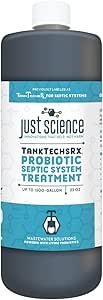
Among additives, the choice comes down to format and to what the manufacturer is willing to publish. Our review of the JustScience probiotic septic treatment looks at a product that leads with its biological content, while the RootX septic treatment targets root intrusion, which is a structural problem rather than a digestion one. The full septic treatments category lists the formats side by side.
If the reason you are looking at septic products is a slow drain rather than tank maintenance, the honest answer is that a different aisle solves it. A caustic gel such as the Drano Max gel clog remover is designed for the blockage itself and should be used sparingly on a septic system, and a granular product like the Thrift drain opener takes a different chemical route to the same job. Both are corrosive products that demand eye protection and ventilation, and the drain openers category covers them in more detail.
Who should buy it, who should not
Buy it if you own a functioning septic system, you want a low effort monthly routine, and you accept that the manufacturer has not published what is in the packet. Skip it if you are trying to fix an active backup, if you need to know the enzyme or bacterial content before dosing your system, or if you were expecting a treatment that replaces pumping. Nothing on this listing supports that last idea, and to its credit the manufacturer does not claim it.