

Description
This is an egg wash, and it is filed as laundry detergent
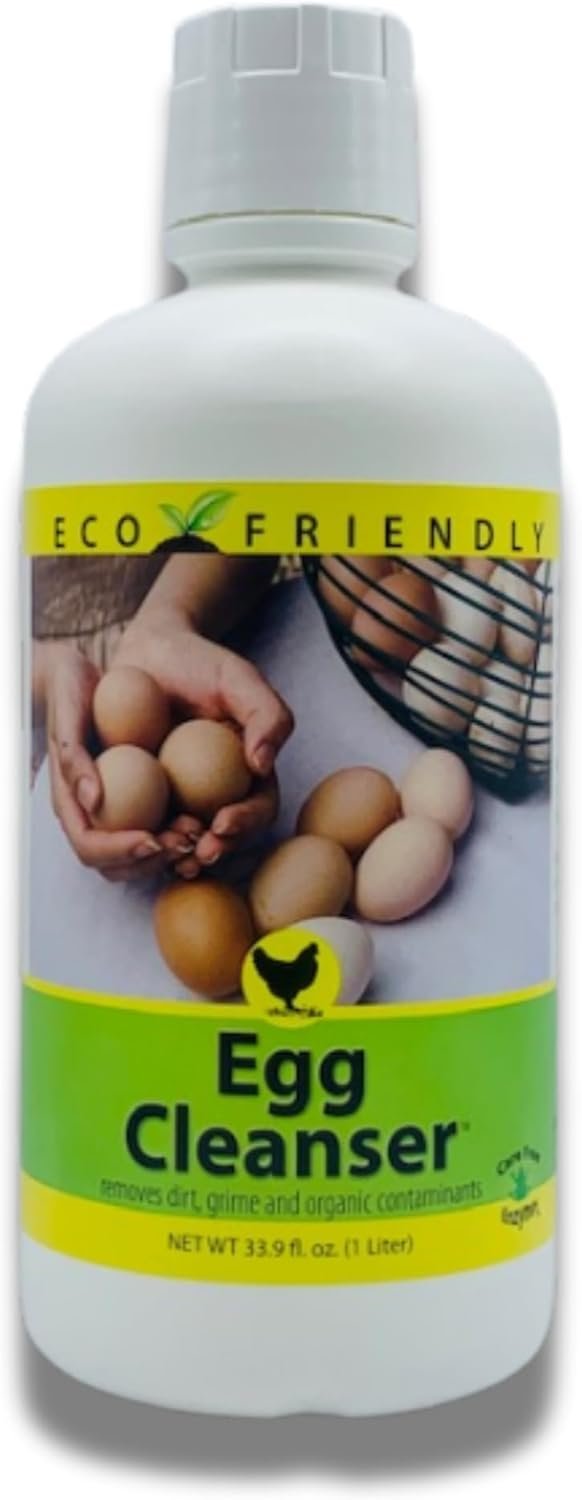
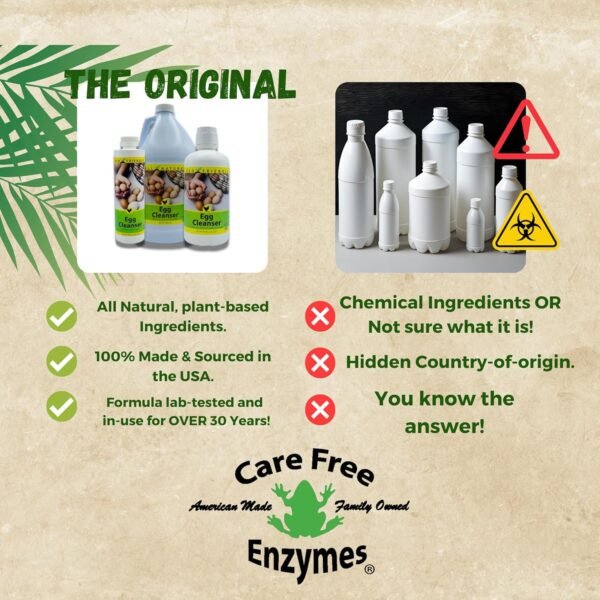
CareFree Enzymes 94177 is a one liter, 33.9 fluid ounce cleanser for washing fresh eggs. The manufacturer is CareFree Enzymes, the bottle measures 3.5 by 3.5 by 9 inches and weighs 2.29 pounds, and the listing carries 780 ratings at 4.8 stars. Amazon ranks it 33,514th in Health and Household and, remarkably, 239th in liquid laundry detergent. This site currently files it under liquid detergent as well.
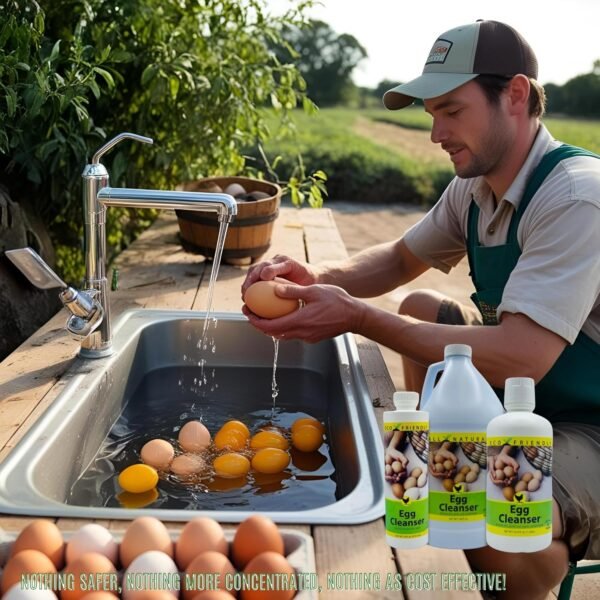
It is not a laundry detergent. It is not a laundry product of any kind. Do not put it in a washing machine, and do not use it on clothing. The product is aimed at people who keep backyard chickens or ducks and collect eggs that come out of the nest box with dirt or droppings on them.
The right neighbors for it are the food washing products on this site, which sit under dish soap and include the Fit Organic fruit and vegetable wash and the Young Living fruit and veggie soak. The laundry aisle is the wrong shelf entirely.
The bloom, and why washing an egg is not a simple decision
A freshly laid egg carries a natural coating called the bloom or cuticle. It seals the pores in the shell, slows moisture loss and forms a barrier against bacteria moving inward. It is why an unwashed egg keeps at room temperature in much of the world, and it is why the decision to wash is not trivial for anyone keeping birds.
CareFree Enzymes’ central claim is that this cleanser removes dirt, debris and contaminants using natural food grade enzymes without removing that bloom, without changing egg flavor and without reducing shelf life. That is the manufacturer’s claim and it is the reason the product exists. It is worth reading with care, because any wet washing of an egg puts water and mechanical action against the cuticle, and the cuticle is a delicate layer. The listing offers no test, no measurement of cuticle retention and no data behind the claim.
There is a related practical point that follows regardless. United States guidance is that once eggs have been washed, they should be refrigerated and kept refrigerated, because a washed egg no longer has an intact protective coating to rely on. Anyone who washes eggs should plan on cold storage rather than a countertop basket.
The sanitizing claim, and what is missing behind it
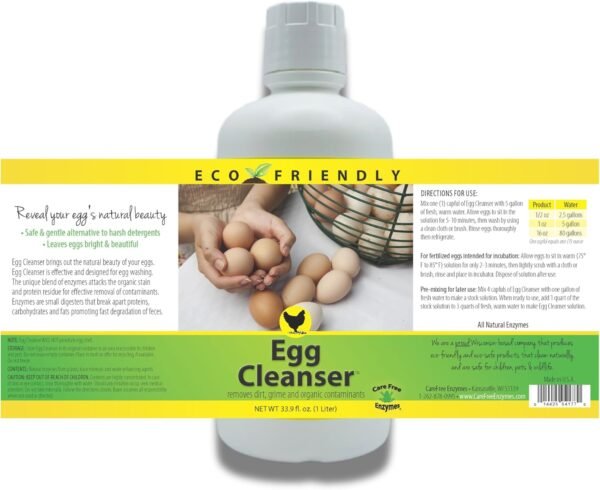
One feature bullet says the product safely sanitizes fresh eggs. That is a regulated claim in the United States, and there is nothing on this page to support it: no registration number, no active ingredient named, no concentration, no contact time, no water temperature and no dilution ratio. The word enzymes is the only chemical description offered, and enzymes are a broad class that includes many that do not act on microbes at all.
The gaps in the directions matter more here than on almost any other product in this catalog, because this is food. Published guidance on egg washing consistently emphasizes water temperature: the wash water must be warmer than the egg. A cool bath makes the contents of the egg contract, which can draw surface contamination inward through the pores, exactly the opposite of what washing is meant to achieve. This listing gives no temperature, no dilution, no soak time and no rinsing instruction. All of that has to come from the bottle label, and anyone selling eggs should be working from their state’s egg handling rules rather than from a product page.
Handling, storage and what not to do with it
Follow the label for dilution and temperature. Do not improvise a ratio, and do not assume a stronger mix is better, because enzyme products are dose sensitive rather than dose insensitive.
Do not scrub eggs with an abrasive pad. Abrasion removes the cuticle mechanically whatever is in the water, and it also opens the pores. A soft cloth and a short contact time is the approach the product design implies.
Do not combine this with chlorine bleach, with a sanitizer, or with any other cleaning product. Chlorine bleach destroys enzymes outright, so mixing the two wastes both, and mixing household chemicals blind is never a good idea. Wash and dry the eggs before storing them, and clean and dry the wash basin between batches.
Store the bottle capped, upright, out of reach of children, and away from heat. Enzyme solutions lose activity when stored hot or frozen, so a shed in July or a garage in January are both poor choices. Never decant it into an unlabeled or a food container.
Two more limits worth stating: this is a wash, not a fix for a cracked or leaking egg, which should be discarded rather than cleaned; and it does nothing about the conditions that made the eggs dirty in the first place. Clean, dry bedding and frequent collection reduce the need to wash at all, which is the outcome most keepers should be aiming at.
Cost, quantity and the alternatives
One liter is a meaningful quantity for a small flock, particularly if the product is diluted rather than used neat, though with no dilution ratio published the cost per dozen eggs cannot be calculated from this page. That is a recurring theme with this listing: the claims are specific and the numbers are absent.
There is no direct alternative in this catalog, because an egg wash is a narrow product. The nearest comparisons by function are the produce washes named above, which address a similar question about cleaning food without leaving residue. For enzyme chemistry in a completely different application, the Terminator enzyme spot and stain remover shows how the same class of ingredient is described in a cleaning product. If plain washing up is what you actually wanted, a straightforward dish liquid such as the Seventh Generation dish soap is under all purpose cleaners and its neighboring aisles.
Who should buy it and who should not
Buy it if you keep laying birds, you collect eggs that need cleaning, and you want a product formulated for that job rather than dish soap and a scrubber. The rating is high and the product is aimed at a real problem that general cleaners handle badly.
Do not buy it as a laundry detergent, whatever the category and the Amazon rank say. Do not rely on the sanitizing claim, which carries no registration, no active and no contact time. And do not use it without reading the bottle for water temperature and dilution, because with food the details that this listing omits are the ones that matter.