




Description
The job this box does, and the machine it belongs in
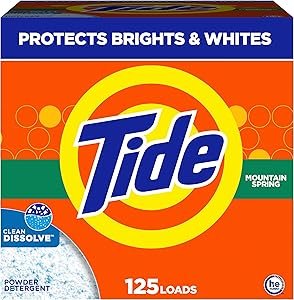
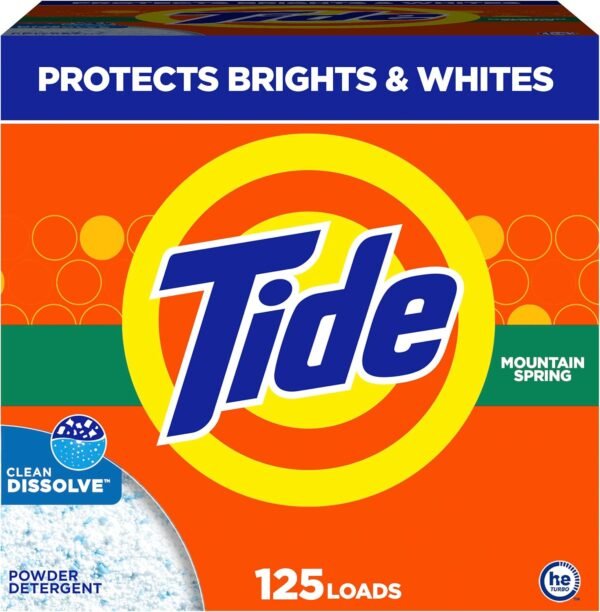
This is a 143 ounce box of Tide powder laundry detergent in the Mountain Spring scent, listed under model number 037000850052 and first sold in September 2011. Procter and Gamble describes it as formulated with HE Turbo technology for both regular and high efficiency machines, and as carrying what Tide calls Acti-Lift crystals. Amazon ranks it 10,650th in Health and Household and 21st among powder laundry detergents.
Powder is a deliberate choice rather than a fallback. It handles clay and ground in mud better than most liquids because the builders and any oxygen bleach in a powder attack particulate and stain differently from a purely surfactant heavy liquid. It stores for a long time in a dry place without separating. It is also the format that struggles most in cold water and in very short cycles, where undissolved granules end up in the fabric rather than in the wash liquor. A household with a lot of work clothes, sports kit and outdoor soil will get more out of a powder than a household washing office shirts on a quick cycle.
What is in it, and what Tide has chosen not to publish
The listing does not give an ingredient statement. There is no surfactant named, no enzyme named, no builder named, no percentage for anything. Acti-Lift and HE Turbo are Procter and Gamble’s own trade names, not chemical descriptions, and the page does not explain what either one contains. Anyone who needs to know what they are washing with, because of a skin reaction, a septic system, or a fabric worry, has to read the box or Tide’s own ingredient disclosure. This review will not invent a formula that the manufacturer has not published.
What HE Turbo actually refers to
High efficiency machines use much less water than older top loaders, so an HE labeled detergent has to be low sudsing. Excess foam in a low water machine cushions the load, keeps clothes from rubbing against each other, and can leave residue that the shorter rinse cannot clear. That is the practical meaning of HE Turbo on this box: a suds profile suited to low water washing. Tide’s own claim is that it delivers more cleaning power on a quick cycle than the next leading detergent on a normal cycle, which is a comparison against a competitor on a different cycle rather than a like for like test.
One further claim needs reading carefully. The listing says Tide is the detergent that washing machine manufacturers recommend above all others, and the asterisk on the page explains that this ranking is based on co-marketing agreements. That is a commercial arrangement between companies, not an independent performance test, and the listing is at least honest enough to say so in the footnote. The seven day old stain claim carries no test conditions at all.
Fabrics and machines this suits, and what to keep it away from
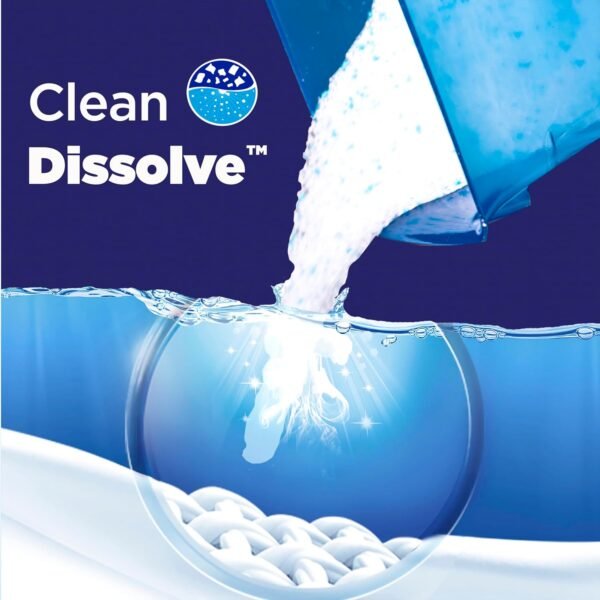
Powder detergent is a general purpose product for cottons, synthetics and household linens in both machine types. The places it goes wrong are predictable. Cold water below roughly the temperature of a cool tap will leave some powders partly undissolved, and the visible result is white streaking on dark fabrics that looks like lint but is detergent. Very short cycles have the same effect for the same reason.
Wool and silk should not go anywhere near a general purpose detergent of this kind, because alkaline builders and protease enzymes attack protein fibers. Use a wool specific product. Anything labeled dry clean only stays out of the machine. For delicates, the gentler liquids are the right aisle, and something like the Woolite liquid detergent is the format built for that job.
The other compatibility question is the dispenser. Many high efficiency front loaders have a dispenser drawer sized and shaped for liquid, and powder can cake in the corners and pass into the drum in clumps. Where the machine manual allows it, putting powder directly into the drum before the load solves that. Check the manual rather than assuming.
Correct use, dosing and safety
Dose to the scoop line for the load size and soil level, and resist the instinct to add more. Overdosing powder is the single most common cause of residue on clothing and buildup inside the machine, and in a high efficiency machine the rinse volume is not there to clear it. Under normal soil, a lightly loaded machine needs less than a full scoop.
Store the box sealed and dry. Powder detergent absorbs moisture from humid air and cakes into a solid mass, which is the main way a 143 ounce box gets wasted. A laundry room above a damp basement is the worst place for it.
On safety, laundry detergent is alkaline and an irritant. Keep it out of reach of children and pets and do not leave a scoop in the box within reach. Do not mix it in a bucket with any other cleaning product. In particular, never combine a detergent with a chlorine bleach product in the same container, and never combine chlorine bleach with any ammonia containing cleaner anywhere in the house, because that combination releases chloramine gas. If detergent buildup is already visible in the machine, run a dedicated machine cleaner such as the Lemi Shine washing machine cleaner on an empty cycle rather than adding more detergent.
Cost per load and the alternatives
The cost structure of powder is its main argument. A 143 ounce box is water free, so nothing in the price is being paid for liquid volume or the plastic jug that holds it, and the shipping weight per wash is lower. Against that, powder is easier to overdose because a scoop is a looser measure than a cap line, and any wasted scoop is money out.
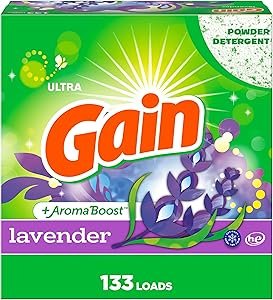
The comparison worth making is against the two other formats. A liquid like the Tide liquid detergent dissolves reliably in cold water and pre treats a stain straight from the cap, which powder cannot do. A unit dose product such as Tide Pods removes the dosing decision entirely, at a higher cost per load and with a child safety burden powder does not carry. Within powders, the Gain lavender powder is the obvious scent alternative. The wider aisle sits under powder detergent.
Who should buy it and who should not
Buy it if you wash warm, wash often, and wash things that get genuinely dirty. Powder suits that pattern, the box format is efficient, and a 143 ounce box is a sensible bulk unit for a family.
Do not buy it if nearly all your washing is cold and quick, where dissolution is the limiting factor. Do not buy it if you need to read an ingredient list before you buy, because this listing does not carry one. And do not buy it if your laundry is mostly wool, silk or labeled delicates, which need a different chemistry altogether.