
Description
Four tools, four different fabrics
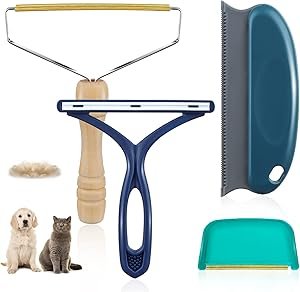
Axlunar sells this as a four piece pet hair removal set in blue, ASIN B0CDGJ2HJS, listed since September 2023 and weighing 5.3 ounces. It carries 643 ratings at 4.4 stars and sits 38,981st in Health and Household and 116th among lint removers.
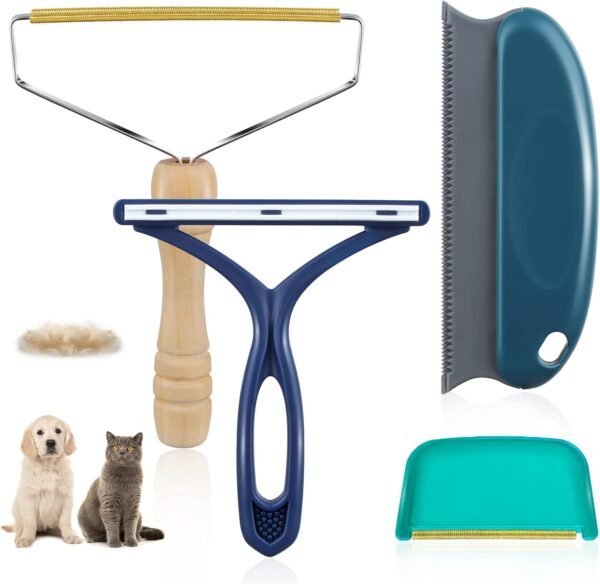
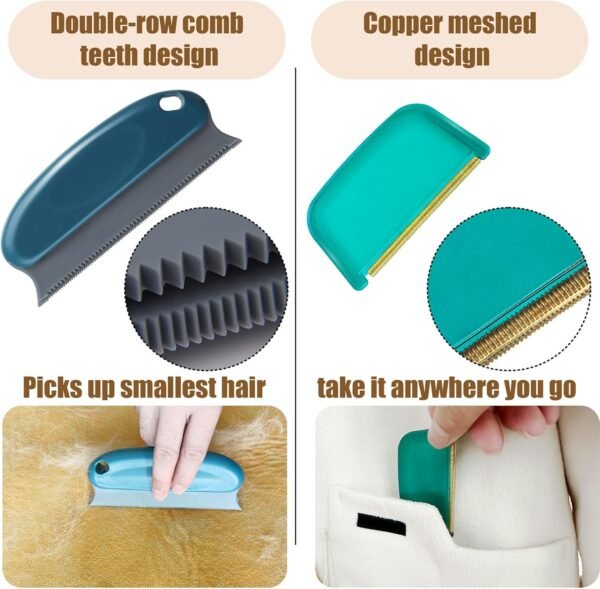
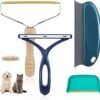
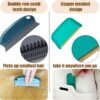
The set contains a wooden handled tool with what the listing calls a pure copper blade, a double sided silicone tool, a double row gear type remover, and a smaller pocket sized version for detail work. None of them uses a battery and none uses an adhesive sheet, which is the entire economic argument for the format: a lint roller is a consumable and these are not.
Pet hair is a different problem from lint. Cat and dog hair works its way between fibers and anchors itself, particularly in woven upholstery and car seats, and a sticky roller lifts what is sitting on top while leaving what is woven in. A blade or a stiff edge drags the embedded hair back out. That is why a scraper works where a roller does not.
The per tool guidance, which is the best thing on this page
The fourth bullet does something almost no listing in this catalog attempts: it says which tool goes on which fabric, and which fabrics to keep each one away from.
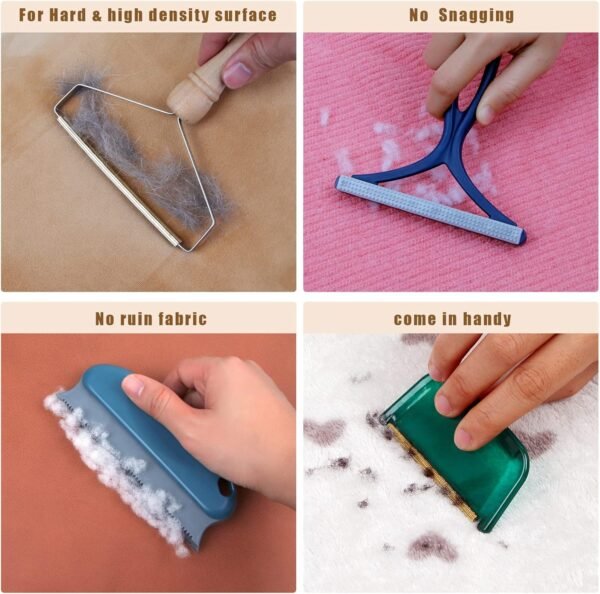
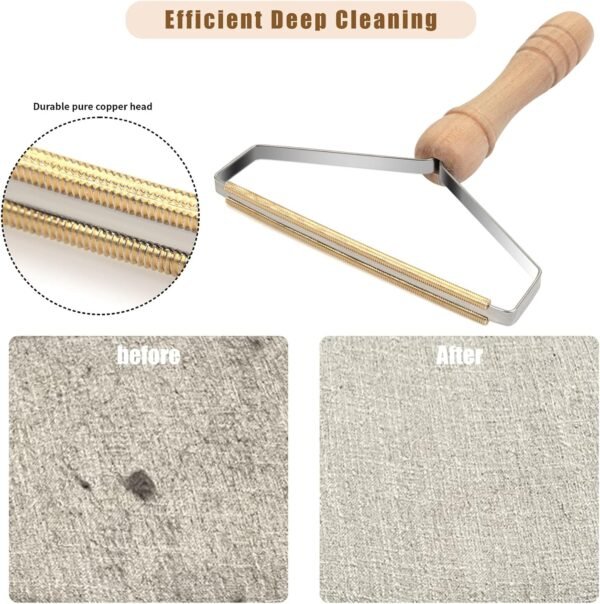
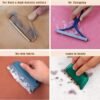
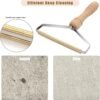
The wooden handled blade is for carpet, couch, rugs, car upholstery, furniture, car seats and clothes, and the listing states in capitals not to use it on meshed, knitted or delicate fabrics. That is the right warning. A hard edge dragged across a knit catches loops and pulls them, and the damage is not recoverable.
The smallest tool is described as suiting a tweed coat and specifically not a sweater. The remaining two are for delicate surfaces, low density knits and wool, to lift pilling.
The listing then adds the sensible instruction to try a tool on an unfamiliar material before committing and to pick whichever suits. Taken together that is more usable guidance than most products in the category provide, and it should be followed rather than skimmed.
What these tools do not do
They scrape and lift. They do not cut. That distinction decides whether this set solves your problem.
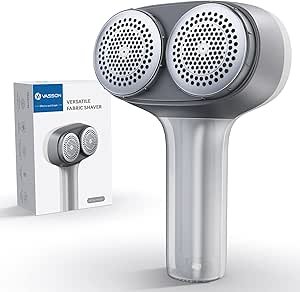
Pilling on a knit is caused by short fibers working loose and balling up, and the only thing that removes a pill permanently is cutting it off at the fabric surface. A gear or silicone tool will drag some pills loose and will lift surface fuzz, and on a heavily pilled sweater it will not do what a rotary fabric shaver does. If pilling on knitwear is the actual complaint, a shaver such as the Vasson fabric shaver or the Comfy Clothiers fabric shaver is the right tool, and this set is the wrong one.
They also do not replace a vacuum on a large area. A blade tool is excellent on a couch cushion or a car seat and slow on a whole carpeted room, and the hair it lifts still has to be picked up rather than being drawn away.
Materials, and what the listing does not settle
The blade is described as pure copper on a natural wooden handle. Copper is soft, which is a deliberate choice on a tool dragged across fabric, since a soft edge scrapes without cutting the way a steel blade would. It also means the edge dulls with use and the tool is not indestructible.
The specification block is thin. The dimensions given, 6.2 by 1 by 4.9 inches, describe one item rather than the set of four, and no individual measurements or materials are published for the other three tools. The first bullet mentions reinforced connections between the wooden handle and the head, and an upgraded multi fabric edge, without saying what either is made of. The fifth bullet contains no product information at all: it is an appeal for customer feedback.
Using them and keeping them
Work in one direction rather than scrubbing back and forth. Hair lifts when it is dragged against the lie of the weave, and short strokes in a consistent direction gather it into a ridge you can pick up. Use light pressure: pressing harder on a blade tool does not lift more hair and does increase the chance of pulling a thread.
Clean the tools by hand as you go. The listing is right that hair does not tangle in them and lifts off with your fingers, which is the practical advantage over a brush that has to be picked clean.
Keep the blade tool away from children. It is not sharp in the way a knife is, and it is still an edge on a handle. Store the set where the edges are not knocking against each other, and keep the wooden handle out of standing water so the joint does not loosen.
Do not use any of them on a garment with loose weave, on lace, on anything with a printed or flocked surface, or on upholstery that is already worn thin at the seams. Leather and vinyl are outside the scope entirely, since there is no hair woven into either and a hard edge will only mark them.
Cost and the alternatives
The economics are the strongest argument. A lint roller is a permanent recurring purchase, a sheet at a time, and a reusable tool is bought once. For a household with a shedding animal, that difference adds up quickly, and having four tools means the right one is usually to hand rather than the only one you own.
The set complements rather than replaces the everyday items. A lint roller is still faster on a jacket before leaving the house, and the Scotch Brite lint brush is the classic reusable for clothing. For a pocket sized version to keep in a bag, the Scotch Brite mini lint remover covers that. The category sits under lint removers. One related point: much of the hair that ends up on clothing arrives in the dryer, so keeping the lint screen clean matters, and products from the dryer sheets aisle leave a residue on that screen that needs washing off occasionally.
Who should buy it and who should not
Buy it if you live with a shedding animal and you are tired of buying roller refills. The per tool fabric guidance is unusually specific, the tools are reusable, and having four means you are less likely to use the aggressive one on the wrong thing.
Do not buy it for pilled knitwear, where a shaver that cuts is the correct tool. Do not use the bladed tool on knits or delicate weaves, which the manufacturer states clearly. And do not expect a full specification, because the listing measures one item and describes the materials of only one of the four.