


Description
What a fabric shaver does that a lint roller cannot
Pilling is not lint. Lint sits on the surface of a garment and can be lifted off with adhesive or a brush. Pills are small balls of tangled fiber that have worked loose from the fabric and are still anchored to it, and the only way to remove them is to cut them off level with the surface. That is what a fabric shaver does: a motor spins a blade behind a perforated guard, the pills poke through the holes, and the blade shears them.
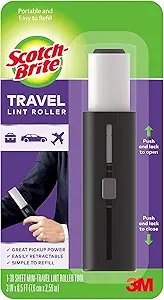
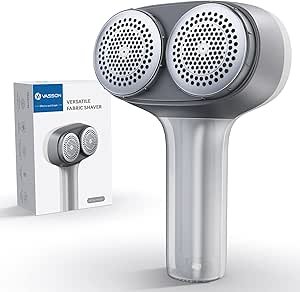
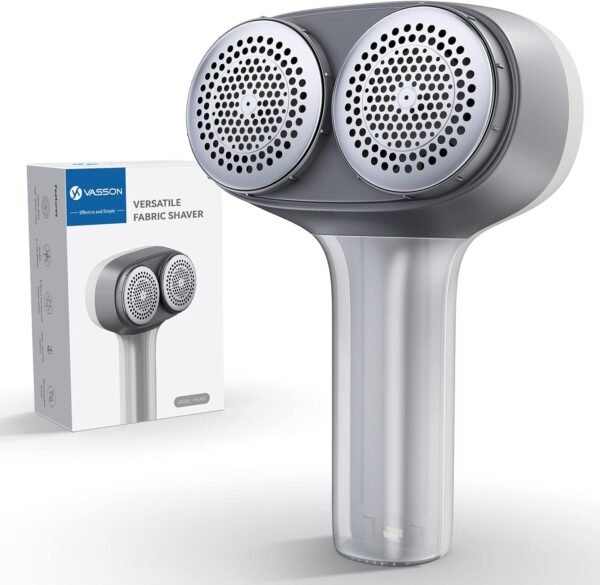
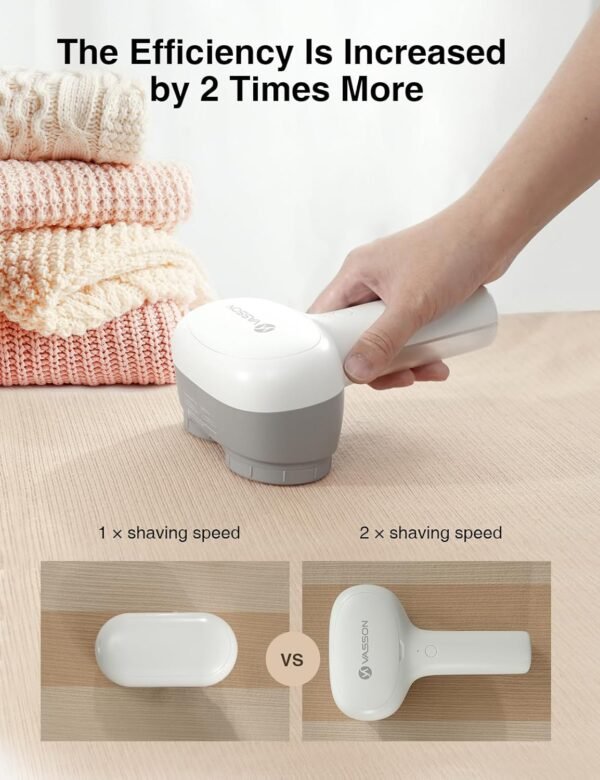
The Vasson HHLR01 is a rechargeable handheld version of that tool, with what the manufacturer describes as a dual head design driven by two high speed motors and two large six leaf blades. The household it fits is one with knitwear, fleece, jersey and upholstery that has gone fuzzy rather than dirty. If your problem is pet hair or lint sitting on the surface, this is the wrong tool and a brush such as the Scotch-Brite lint brush or an adhesive roller like the Layers LRR02 lint roller does the job faster and with no risk of cutting anything.
The specification, and the numbers that hold up
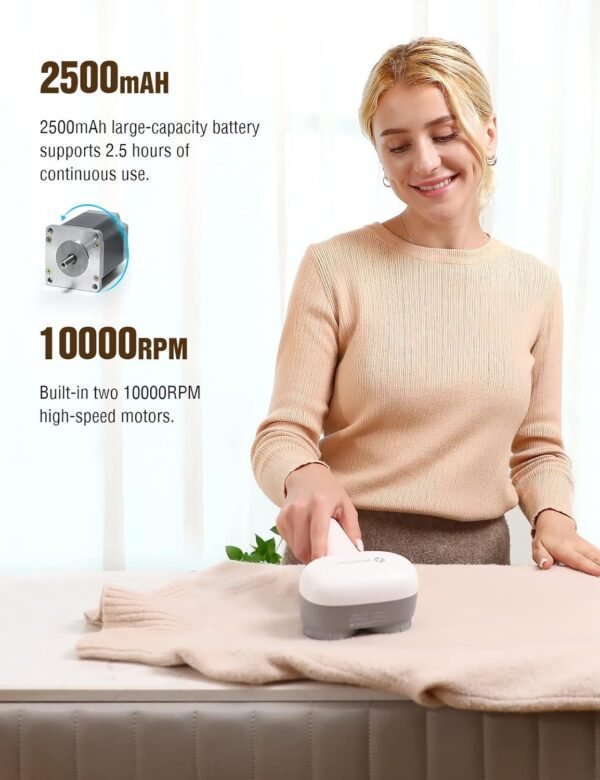
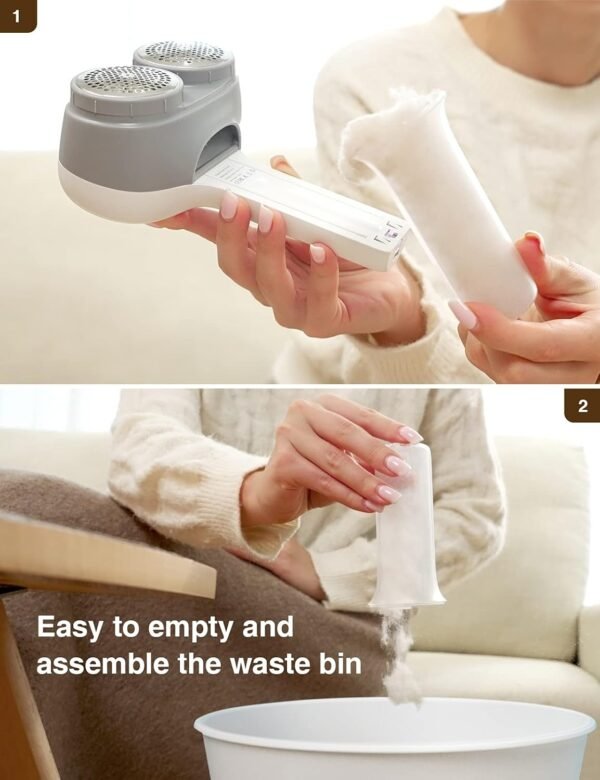
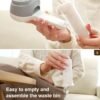
Vasson gives a 2500 milliamp hour rechargeable lithium ion battery, states two hours of charging, and claims nearly two and a half hours of continuous use on a charge, with a USB cable included. It gives overall dimensions of 7 by 4.7 by 2.9 inches, a model number of HHLR01, and lists a pop out lint container released by a button, two brushes in the box, one for cleaning the machine and one described as anti static, and a 12 month warranty. The listing records 3,948 ratings at 4.6 stars and a position of 29th in Lint Removers, with a first availability date of August 2021.
Two claims to read carefully
The listed item weight is 1.06 ounces, which is about 30 grams. A device containing a 2500 milliamp hour lithium cell, two motors and a metal blade assembly does not weigh 30 grams, and that figure is not consistent with the rest of the specification. Treat it as a data error rather than as a lightness feature.
The second is the fabric claim, which contradicts itself inside a single bullet. Vasson writes that the shaver is suitable for all types of fabric, then in the next sentence that it is very gentle on most fabrics. Those are not the same statement, and the second one is the accurate one for this class of tool. No blade based shaver is safe on every fabric, and treating it as though it were is how garments get holes.
Fabrics it suits, and where a blade becomes a risk
Vasson names sweaters, couches, leggings, bedding, upholstery, fine and chunky yarns and jersey fabrics. Those are the right targets: dense knits, fleece, wool blends, cotton jersey and woven upholstery all pill and all have enough body to sit flat under a guard.
The fabrics to avoid are the ones where the surface is not flat and continuous. Loose or open knits, lace, boucle, anything with a long loop pile, and any fabric with a snag already in it can be pulled into the guard holes and cut, and a cut in a knit runs. Thin, worn areas are the same problem, since a fabric already close to failing does not need a blade near it. Loose threads, embroidery, sequins, buttons and seams should be worked around rather than over. Angora, mohair and other deliberately hairy fabrics will be shaved into something else entirely, because the tool cannot tell an intended fiber from a pill.
The method that avoids most of this is to work on a flat, firm surface rather than on the body, and never on a garment while someone is wearing it. Lay the item on a table, smooth it flat with your free hand, and let the shaver rest on the fabric under its own weight instead of pressing. Pressing pulls the fabric up into the guard, which is exactly the condition that causes a hole. Work in small overlapping circles and check your progress often.
Charging, cleaning and safety
This is a lithium ion device, and lithium ion devices have their own handling rules that a lint roller does not. Charge it with the cable supplied, on a hard surface rather than on a bed or a sofa, and do not leave it charging unattended overnight. Stop using it if the battery swells, if the housing gets hot in normal use, or if the cable or port is damaged. Store it partly charged rather than flat if it will sit unused for months, and keep it out of direct sun and away from heat.
Before emptying the lint container or touching the blade area, switch the device off. The blades sit behind a guard for a reason, and a spinning blade with an open container is the one genuinely sharp thing in this product. Empty the container often, because a full chamber stops the blades clearing and the shaver starts dragging instead of cutting. Use the supplied brush on the blade housing rather than a finger. Keep the whole device away from children, and do not run it near loose hair, a scarf or a cord.
There is no chemistry here at all, which is a genuine advantage of this route over anti pilling washes and fabric treatments. Nothing to ventilate, nothing to mix, nothing to store away from bleach. The only ongoing consumable is electricity and, eventually, a replacement blade.
What it costs to run, and the alternatives
The cost structure favors a rechargeable over a battery powered shaver if you use it regularly, and Vasson makes that argument directly, noting that other lint removers need their batteries replaced frequently. The counterpoint is that a rechargeable device has a fixed lifespan set by its battery, which cannot be swapped when it degrades, whereas a shaver taking AA cells keeps working as long as you feed it. A 12 month warranty tells you what the manufacturer is prepared to stand behind.
The comparisons on this site are close ones. The Comfy Clothiers fabric shaver, the Popchose Y-208 and the Mr Siga SJ21882 occupy the same shelf and differ mainly on head size, power source and blade access. Head size is the specification to weigh: a larger head covers a blanket faster, a smaller one gets closer to seams and cuffs. The full lint removers category puts shavers, brushes and rollers side by side, and the dryer sheets category is relevant to the underlying cause, since friction and static in the wash and dryer are what create pills in the first place.
Who should buy it
Buy it if you own knitwear, fleece or upholstery that pills, you want a cordless tool with a large battery rather than one that eats disposables, and you will use it on a flat surface with a light hand. The rating history is substantial at nearly four thousand reviews. Do not buy it for pet hair or surface lint, do not use it on open knits, lace, boucle or anything already snagged, and do not read the suitable for all fabrics claim literally, because the same bullet walks it back to most fabrics one sentence later.