
Description
What a thirty sheet mini roller is for
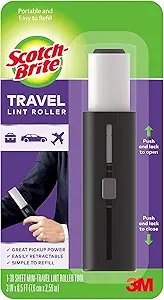
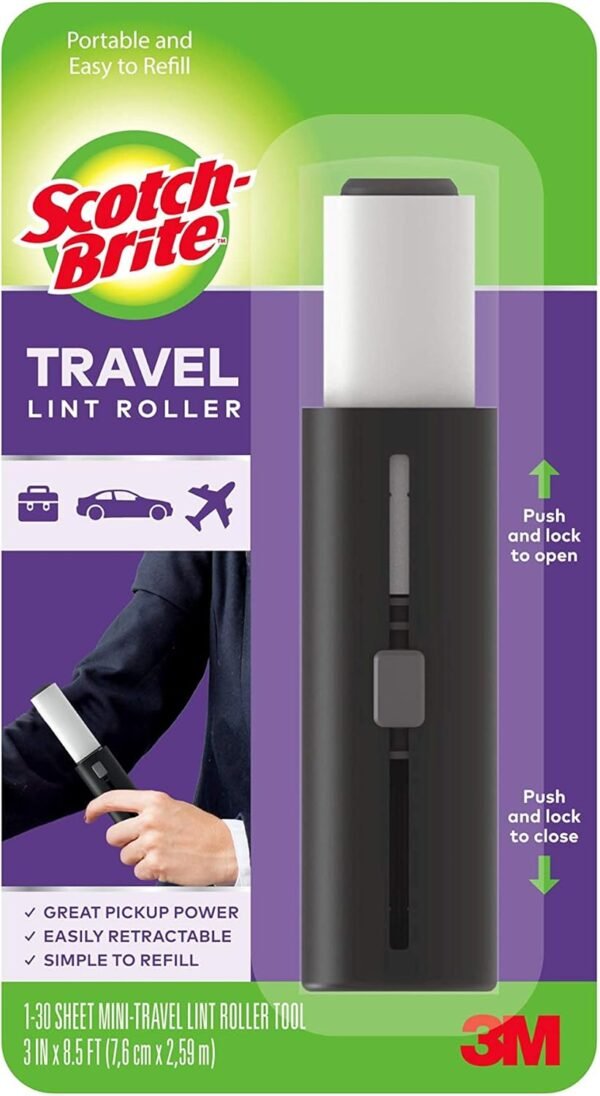
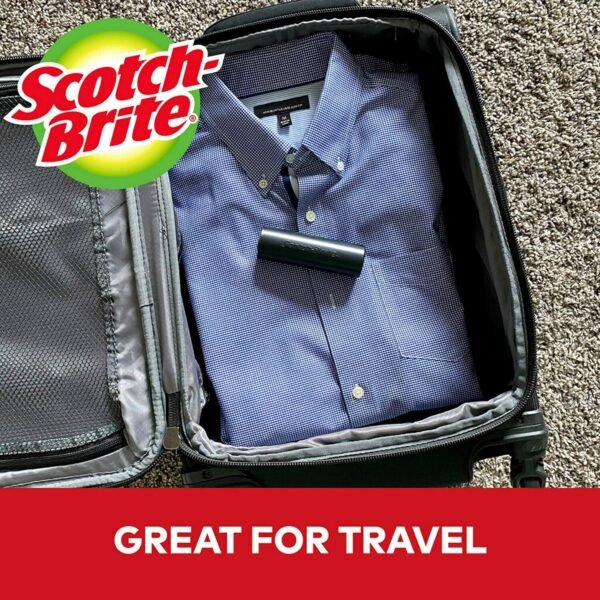
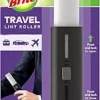
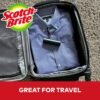
This is the small format Scotch-Brite lint roller from 3M, model 836MRS-30MT-NT, sold as one roller with thirty adhesive sheets. It is not the full size roller that lives in a hall closet. It is the one that goes in a bag, a glovebox, a desk drawer or a suitcase, and its whole reason to exist is being close at hand when you notice cat hair on a dark sleeve five minutes before a meeting.
3M is explicit about the intended surfaces in its own copy: coats, sweaters, dresses, suits, formal wear, upholstery, and car interiors. The listing also mentions plants, which sounds odd until you picture dust on broad leaved houseplants, a use 3M has promoted for years. The household this suits is any home with a pet that sheds, anyone who wears dark wool, and anyone who travels with clothing that arrives creased and covered in whatever the seat back was made of.
The size is the whole proposition. Thirty sheets is roughly enough for one garment refresh a day for a month, or for a few thorough sessions on a coat. It is a consumable bought for portability, and judging it against a full size roller misses the point.
How the adhesive works, and what 3M actually claims
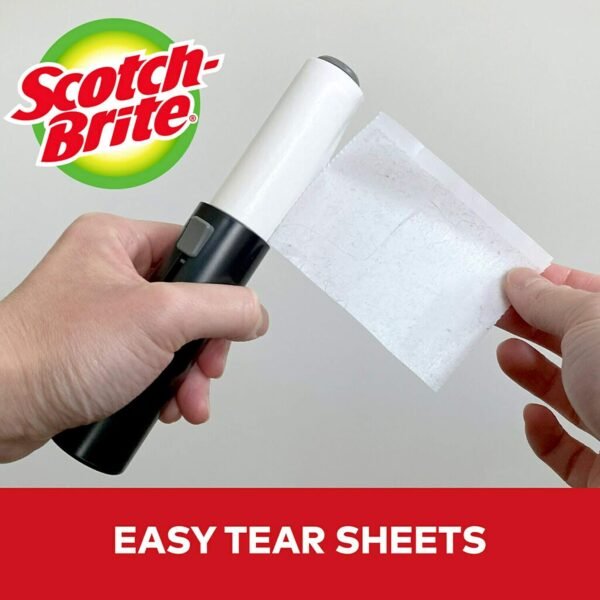
A lint roller is a cylinder wound with sheets of paper coated on the outer face with a pressure sensitive adhesive. Rolling it across fabric transfers loose fiber, hair and dust onto the tacky face. When a sheet is loaded, you peel it off and the next sheet underneath is already exposed. The engineering question is the balance of tack: strong enough to lift pet hair out of a knit, weak enough to release cleanly from the fabric and to tear along the perforation without leaving adhesive behind.
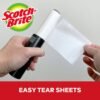
3M leans on that balance in its claims. The listing states this is the only lint roller made with Scotch brand adhesive, that the adhesive removes lint and hair without damaging fabric, and that the sheets are guaranteed to tear cleanly every time. The word guaranteed is 3M’s, not ours, and it is a manufacturer warranty statement rather than an independently verified result. No adhesive strength figure, no peel force rating and no test method appears on the listing, so there is no number here to compare against another brand.
Why cleanly tearing sheets matter more than tackiness
The failure people actually experience with cheap rollers is not weak adhesive, it is a sheet that tears diagonally across the roll or lifts in a ribbon so that a whole spiral comes away at once. That wastes several sheets in one go, which on a thirty sheet roller is a meaningful proportion of what you bought. A perforation that releases predictably is the difference between a roller that lasts a month and one that is half gone in a week.
Fabrics it suits, and where to be careful
Roller adhesive is well matched to smooth, tightly woven and knitted fabrics: wool suiting, cotton, jersey, polyester blends, and most upholstery. It is also useful on car seats and on the inside of a bag, where hair collects invisibly.
Three cases deserve care because the listing does not mention them. Loosely woven or brushed fabrics such as mohair, boucle and some loop knits can have their surface fibers pulled by an aggressive adhesive, so test on a hem first. Suede, nubuck and napped leather should not be rolled at all, since the adhesive lifts nap and can leave shiny patches. And anything with loose sequins, beading or a printed transfer can be damaged by pressure and tack together, so work around embellishment rather than over it.
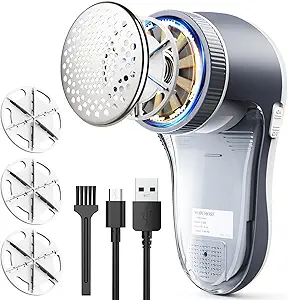
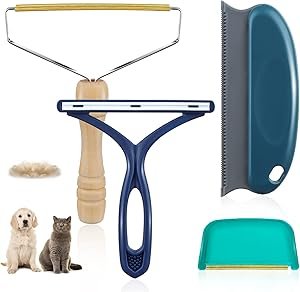
For heavy, matted pet hair worked deep into upholstery, a roller is the wrong tool no matter how good the adhesive. Embedded hair needs mechanical action, which is what a reusable tool like the Scotch-Brite lint brush or a dedicated pet hair remover is built for. Pilling is a different problem again, caused by fiber tangling rather than surface debris, and no roller will help. That needs a shaver such as the Mr Siga fabric shaver.
Using it well, and disposing of it sensibly
Technique is simple but people get it wrong in one specific way. Roll in short overlapping passes in one direction rather than scrubbing back and forth, because reversing direction pushes hair back into the weave and loads the sheet unevenly. Keep the pressure light. When a sheet stops picking up, peel it immediately rather than pressing harder, since a saturated sheet just moves debris around.
Store the roller with a sheet intact and, where the packaging allows, keep the cover on. An uncovered roller left in a bag collects dust and lint on its own and arrives at its next use already spent. Heat is the other enemy. A roller left on a car dashboard in summer can soften enough for the layers to bond, so a glovebox is a better home than a windshield shelf.
There are no chemical hazards here. There is no solvent, no propellant and no fragrance declared on the listing, and nothing needs ventilation. The only practical cautions are to keep spent sticky sheets away from pets and small children, who will happily chew them, and to bin used sheets rather than dropping them, since an adhesive sheet on a floor collects grit and then transfers it to the next thing it touches. Sheets are paper with an adhesive coating and are not recyclable in most curbside programs, so they go in household waste.
What it costs to run, and what lasts longer
The cost structure of a lint roller is simple and unforgiving: every sheet is thrown away. Thirty sheets is the entire product, and once they are gone the plastic handle is waste unless a compatible refill is available. The listing notes this mini format is sold in fifteen and thirty sheet versions, so the thirty is already the better value of the two, but neither is an economical way to remove lint over years.
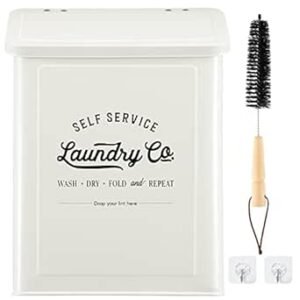
If the same job comes up daily at home rather than on the road, a reusable option changes the arithmetic completely. A brush based tool has no consumable at all, and a magnetic lint bin catches dryer lint before it reaches clothing in the first place. Reducing lint at the source is cheaper than removing it afterward, and a dryer sheet such as the Snuggle dryer sheet reduces the static that makes fibers cling in the first place. The wider lint remover listings cover rollers, brushes and shavers together so the formats can be compared directly.
Amazon ranked this mini roller twenty first in Lint Removers when the listing data was captured, which reflects steady sales in a crowded category.
Who should buy it and who should not
Buy it if you want a small, disposable roller that lives in a bag, a car or a desk, and you value having one within reach more than you value cost per sheet. For travel, for a work drawer, or as a backup to a full size roller at home, thirty sheets in a compact body is a sensible unit.
Do not buy it as your only lint tool if you have a heavy shedding pet, because thirty sheets will not last and a reusable brush covers that ground more cheaply. Do not expect it to help with pilling, which is a different problem entirely. And keep it off suede, nubuck and anything with a raised nap.