Description
Two units, solar charged, for an outdoor spot with no socket
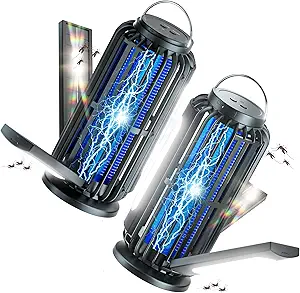
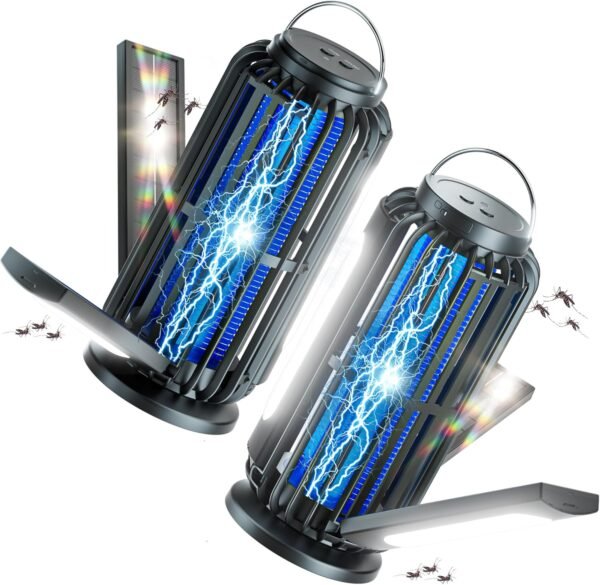
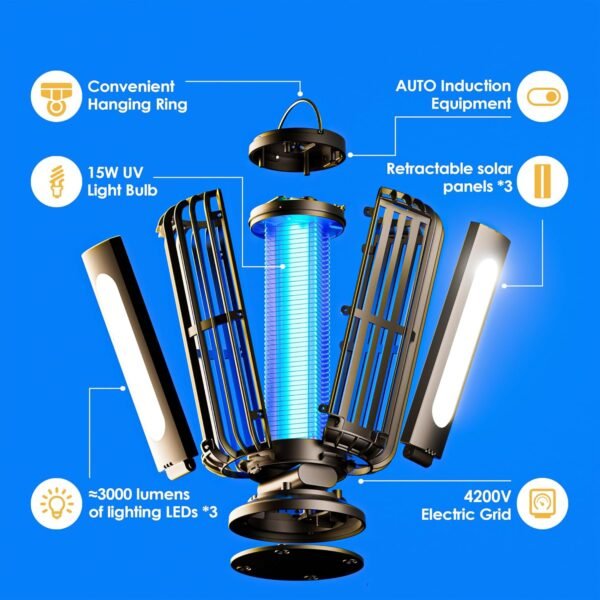
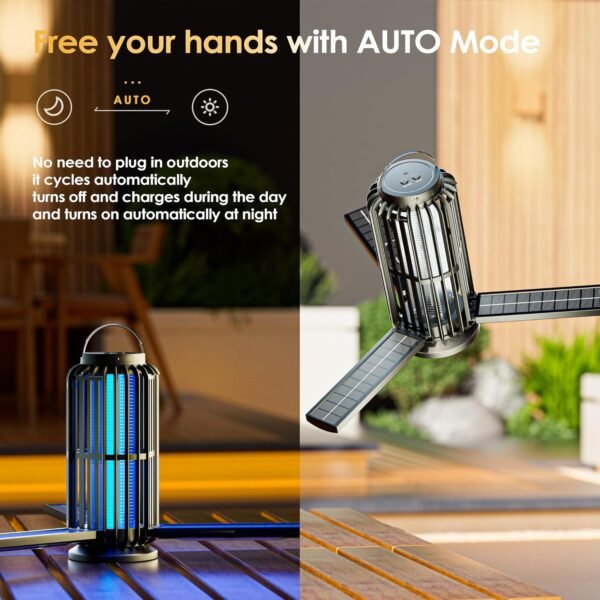
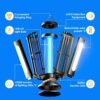
Huajiapeng Technology sells this as a two pack of solar charged insect zappers, model XT-01, with three solar panels per unit, an IP65 rating, a USB-C charging option and automatic dusk to dawn operation. The listing dates from a 510 rating history at 4.3 stars and places the product 3,085th in Patio, Lawn and Garden and 51st among bug zappers.
The proposition is the one thing mains powered units cannot offer: put it anywhere. No cord, no extension lead across a lawn, no socket dictating placement. For a garden, a compost corner, a gate area or a campsite, that is the whole argument, and a two pack lets you cover two spots.
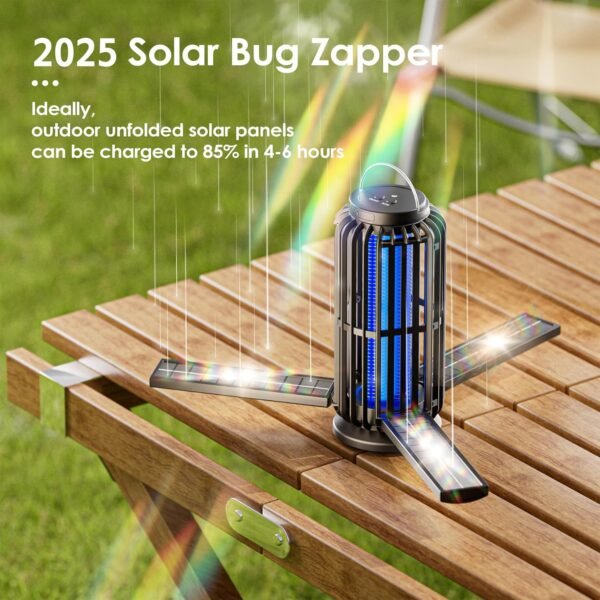
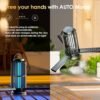
Solar brings its own constraint, and the listing is honest about it in the second bullet: position the unit in direct sunlight with the panels fully extended. A zapper needs to be away from the people it is protecting and away from competing light at night, while a solar panel needs open sky during the day. Those two requirements usually agree, but not always, and it is worth walking the yard before ordering.
The listing describes two different machines
This is the problem with the page and it is a significant one. The product title says 4200V mosquito zapper. The fourth bullet refers to a vertical grid shell that stops residue building up. Both describe an electrocuting grid.
The fifth bullet then says something else entirely: a 360 degree ultraviolet attraction system and a turbo fan that capture mosquitoes physically, with no pesticides, odors or harmful emissions.
A fan trap and a high voltage grid are different technologies with different behaviors. A fan trap draws insects down into a collection basket where they dry out, is nearly silent, produces no snap and no scattered fragments, and has to be emptied. A grid electrocutes on contact, makes an audible snap and disperses the remains. A unit can in principle include both, and this listing never says whether it does. Anyone choosing on the strength of the quiet, capture based description in the fifth bullet may receive something that snaps all night.
Comparative claims with no comparator
The first bullet claims three times the charging power of single panel zappers, a full charge in four to five hours against twelve or more for standard models. No competitor is named, no test conditions are given beyond the phrase ideal conditions, and no methodology is described. Three panels will collect more energy than one, which is arithmetic rather than a claim, but the specific multiples and hours on this page are unsupported.
The IP65 rating is overstated twice. IP65 means dust tight and protected against low pressure water jets from any direction. The third bullet stretches it to downpours, dust storms and extreme temperatures, and a rating that covers water and dust says nothing about temperature at all. The fourth bullet stretches it further, suggesting the unit can be power washed. It cannot: a pressure washer is far beyond a low pressure jet, and the same bullet then sensibly says to avoid full submersion and to power off before rinsing. Rinse gently with a hose or a faucet, not with anything pressurized.
Mosquitoes, and what a light trap actually catches
The same caveat applies here as to every ultraviolet device in this category, and it should be stated rather than skipped. Published research on light based traps and mosquito control is mixed. Mosquitoes locate people primarily by exhaled carbon dioxide, body heat and skin odor rather than by ultraviolet light, which is why traps aimed specifically at them usually add a lure. This listing offers no independent data of any kind.
What an ultraviolet unit reliably attracts is moths, midges, beetles and other night flying insects, many of them harmless. If not being bitten is the actual goal, a light trap is at best one part of an approach, and a repellent such as the mosquito repellent ball works on a different principle, with the wider chemical free options under repellents.
Placement, safety and maintenance
A zapper draws insects toward itself. Hanging one over the table means routing a flight path across the people at it. Place it fifteen to thirty feet away, at the edge of the area, and away from doors so it does not pull insects toward an entrance.
On safety, the fifth bullet describes the product as ideal for homes with kids and pets because there are no chemicals involved. The absence of a pesticide is real and worth having. It is not the same as the unit being harmless: a 4200 volt grid is not a toy, and the listing gives no guard specification, no warning text and no minimum age. Keep it out of reach of children, never poke anything into the grid, and switch the unit off and let it stand before cleaning.
Do not use it near flammable vapors, near a grill or in a garage where fuel is stored, since an electrical arc is an ignition source. Do not site it over a food surface or a dining table, because an electrocuted insect breaks up. Rinse it gently with the power off and let it air dry completely before switching it back on.
On the battery: each unit carries a lithium polymer pack. Do not charge a wet unit, stop using one whose housing is damaged or whose pack has swollen, and bring the units indoors for winter storage rather than leaving them out discharged.
Where the specification is loose, and the alternatives
Product dimensions are given as 2.3 by 5.1 by 4.7 inches with an item weight of 3.57 pounds, which is heavy for an object that size and is more likely the weight of the two pack and its carton. No battery capacity, no runtime, no coverage area and no wattage appear anywhere on the page.
The running cost is close to nothing: no consumable, no chemical, and solar charging. That is the strongest part of the case for this format.
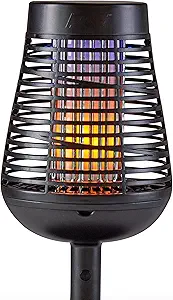
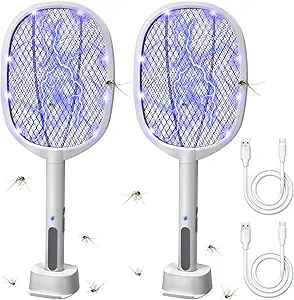
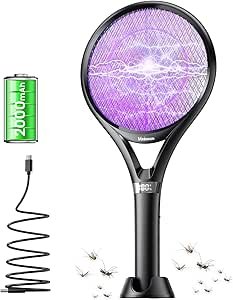
Compare it against the other approaches. The PIC solar bug zapper is the direct solar competitor. The cordless rechargeable zapper is battery powered without the solar panels. The Raindot mains zapper trades placement freedom for continuous power, and a handheld such as the Lulu Home racket puts you in control of what gets killed. Browse the category under bug zappers.
Who should buy it and who should not
Buy it if you want zappers somewhere with no power, you have a genuinely sunny spot for the panels, and your target is night flying insects generally. Two units and no running cost is a reasonable proposition for a yard.
Do not buy it on the strength of the quiet fan capture description, because the same page also calls it a 4200 volt grid and never resolves which you get. Do not pressure wash it, whatever the fourth bullet says. And do not treat the chemical free framing as meaning the device itself is harmless around children.