

Description
Two devices in one handle, and they work differently
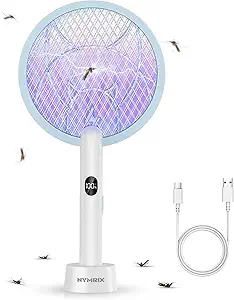
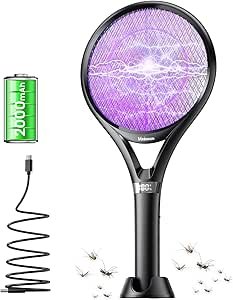
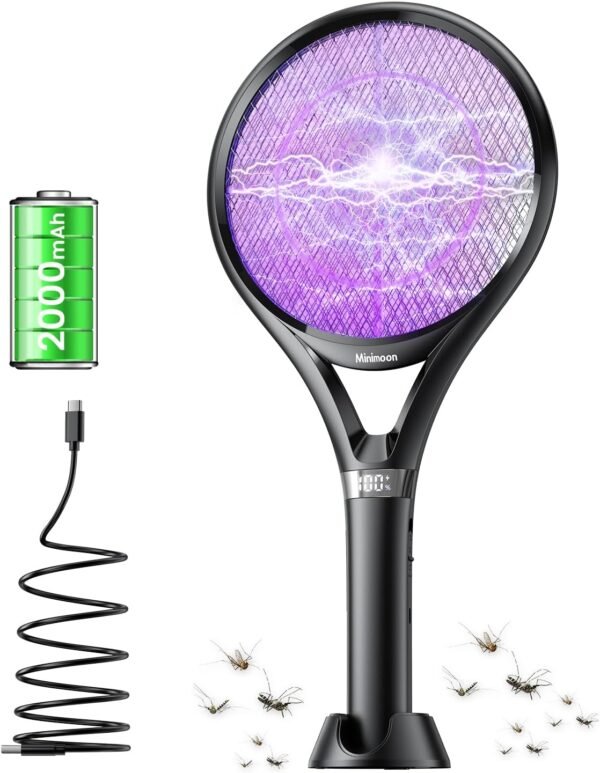
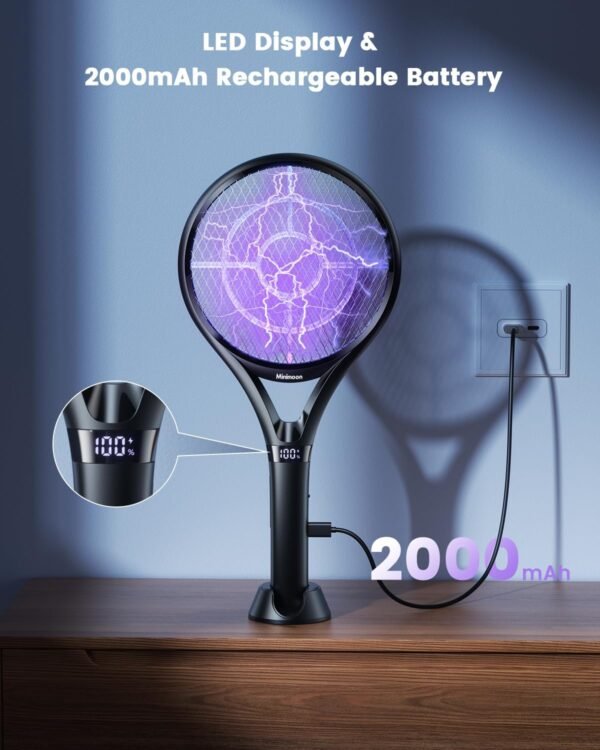
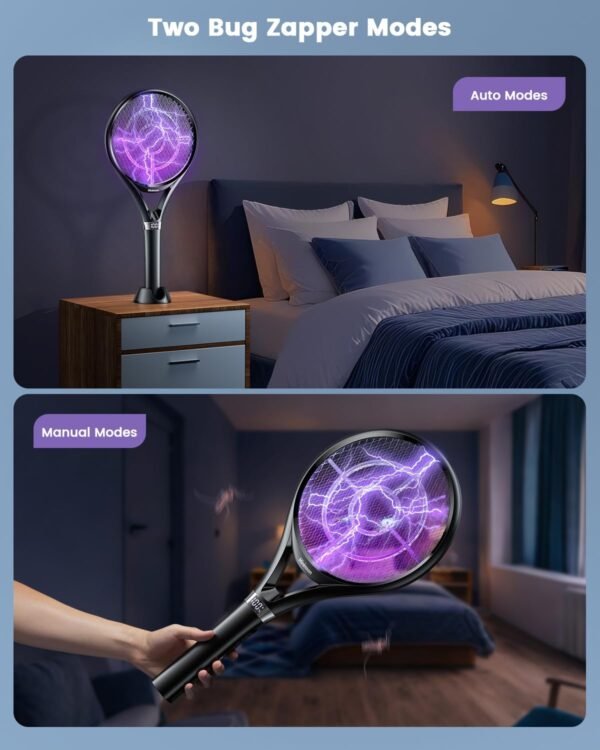
The Minimoon JA402-A is a racket style electric fly swatter with a second mode built in. In manual mode you swing it and the charged grid kills whatever it contacts. In automatic mode you stand it on the supplied base or hang it on the supplied wall hook, a 395 nanometer ultraviolet lamp comes on, and the device waits for insects to fly into the grid on their own. Minimoon rates the grid at a continuous 2500 volt output and powers the unit from a 2000 milliamp hour rechargeable battery charged over a USB type C cable. An LED display shows remaining battery and operating status. The unit measures 8.2 by 1.1 by 17.3 inches and weighs 1.01 pounds, and the box includes the racket, a non slip base, a wall hook, the cable and a manual.
Those two modes deserve separate expectations. Swinging at a fly you can see is the mode that works reliably, because you supply the targeting. The passive lamp mode depends entirely on whether the insects in your house are attracted to ultraviolet light, and that varies enormously by species.
What the light mode will and will not attract
The listing describes the ultraviolet lamp as attracting and eliminating mosquitoes, and calls the product a mosquito killer lamp. It is worth being straight about this, because it is the claim buyers most often act on.
Mosquitoes are not primarily drawn to ultraviolet light
Mosquitoes locate people mainly by exhaled carbon dioxide, body heat and skin odor, not by light. Independent research on the effectiveness of light based zappers against mosquitoes has produced mixed results over many years, and studies of catch composition have repeatedly found that the great majority of insects killed by ultraviolet traps are not biting mosquitoes at all but moths, midges, beetles and other non target flying insects. This listing publishes no independent data, names no test, and cites no study. It is a manufacturer’s claim.
What ultraviolet light does attract well is moths, fungus gnats, some flies and a range of other night flying insects, so the lamp mode has genuine uses. If mosquitoes specifically are the problem, screens, removing standing water and personal repellents remain the approaches with the strongest support, and this catalog’s ultrasonic repellers, such as the Lickoon ultrasonic repeller, come with their own evidence questions that a buyer should weigh separately.
Where to put it, indoors and out
Placement is the detail that decides whether a passive zapper helps or hurts. A device that attracts insects is drawing them toward wherever you put it, so the last place it belongs is beside a dining table, a patio seating area or a bed. Position it away from where people sit, ideally between the seating area and the direction insects arrive from, and give it a clear line of sight rather than tucking it behind furniture.
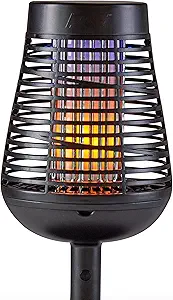
On weather, the title offers the product for indoor, outdoor and camping use, and the listing gives no ingress protection rating and makes no statement about water resistance. Treat it as a dry use device: use it outdoors in fair weather and bring it in, do not leave it out overnight in dew or rain, and never use it in wet conditions or with wet hands. A rechargeable, mains charged, high voltage device left in the weather is a risk this listing does nothing to quantify. For a genuinely outdoor rated unit, a solar powered fixture such as the PIC solar bug zapper is designed for that environment.
Safety, which matters more on this one than on most swatters
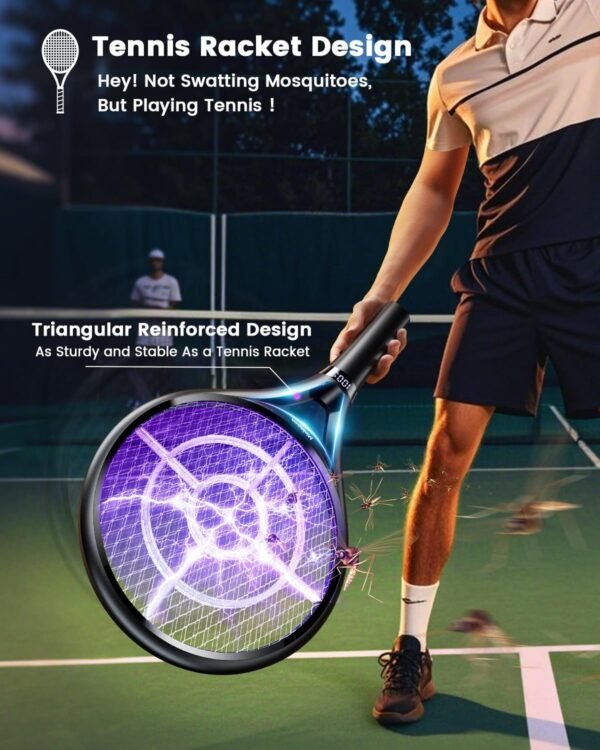
Minimoon describes a three layer grid, with insulated ABS outer layers isolating the charged inner mesh, so a finger cannot reach the live surface through the racket face. That is the standard and correct design for this product class and it is the feature to insist on.
The claim that changes the handling rules is the continuous 2500 volt output. Most racket swatters energize the grid only while a button is held down. A device that maintains output, and that is intended to sit powered on a table or hook in automatic mode, is live for as long as it is switched on. Treat it accordingly. Switch it off and unplug the charging cable before cleaning it, and use a dry brush rather than a cloth or water; the grid should never be washed. Note that a capacitor can hold a charge after the power is off, so do not touch the mesh even on a device you have just switched off, and never poke anything metal through the guard.
Two more rules. Keep it away from children and pets entirely; a racket left on a chair in automatic mode is an object a child will pick up. And never use it near flammable vapor: aerosol propellant, insect spray, solvent, gasoline, barbecue lighter fluid or a gas leak can be ignited by a spark. Do not swat an insect that has landed on a curtain, on paper, on a gas hob or on any flammable surface, and do not use it in a confined space where an aerosol has just been sprayed. Do not charge the unit unattended overnight or on a soft surface, and stop using it if the battery swells or the case is damaged.
Cost, and the alternatives in the same shelf
A rechargeable swatter with a lamp mode costs more than a plain battery powered racket, and the running cost is close to zero after purchase, which is where it beats aerosol insecticide comprehensively. There is no chemical, no residue on surfaces and nothing to keep away from food preparation areas, which is a real advantage in a kitchen.
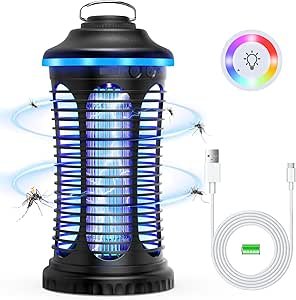
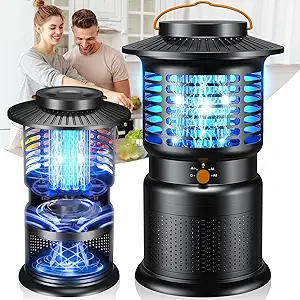
Within this catalog the direct comparisons are the Mosiller electric fly swatter and the Nymrix electric fly swatter, both simpler manual rackets, while the Devogue electric bug zapper is a fixed lamp unit rather than a handheld. Everything in the format sits under bug zappers. Judge them on grid guarding, on whether the output is momentary or continuous, and on how the battery is charged, rather than on the voltage number, which is a headline figure across the whole category.
Oddities in the record: the specification block states “1 A batteries required (included)” on a device whose selling point is a built in 2000 milliamp hour rechargeable cell, so those two statements cannot both be right. No ingress protection rating is given despite the outdoor and camping positioning. No grid gap or mesh spacing is published, which is the specification that actually determines what size insect the racket catches. And the product is classified under Patio, Lawn and Garden by the retailer rather than under Health and Household, currently ranking 174th in the bug zappers chart on 88 ratings averaging 4.3 stars.
Who should buy it
Buy it if you want a rechargeable swatter for flies and moths with the option of leaving a lamp running in a garage, porch or camper, and you will keep it away from children and away from anything flammable. Do not buy it expecting a solution to mosquitoes, because the listing offers no independent data and the wider evidence for light based traps against biting mosquitoes is mixed, and do not leave it outdoors in the weather, since no water resistance rating is published.