Description
What this is, and why the word bleach changes everything
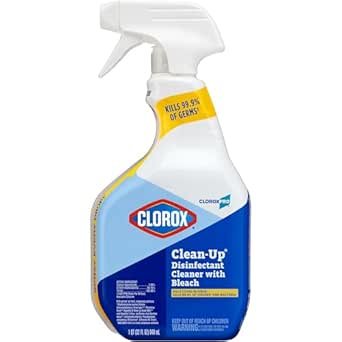
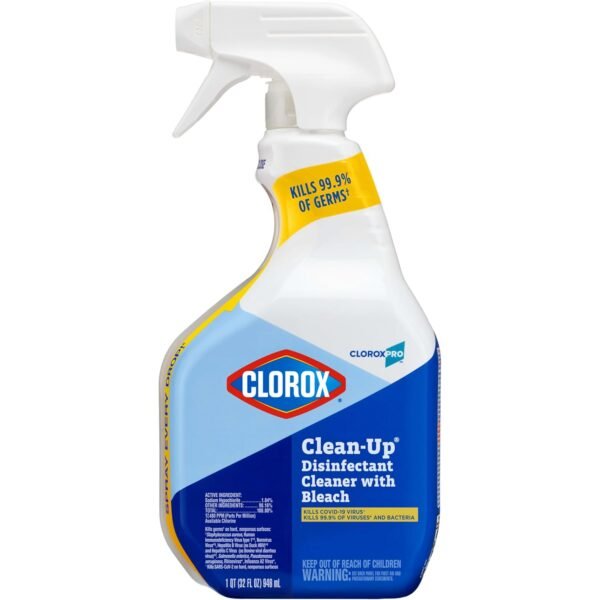
CloroxPro Clorox Clean-Up Disinfectant Cleaner with Bleach is a 32 ounce trigger spray from the Clorox professional range, described by the manufacturer as a one step cleaner, disinfectant and stain remover. It is filed here under all purpose cleaners, and that placement understates it: a bleach containing disinfectant is not the same category of product as a general surface spray, and it should not be stored or used as though it were.
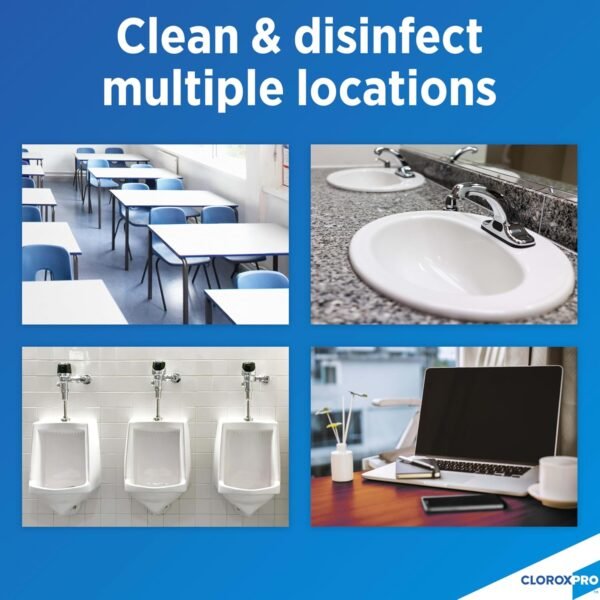
The listing does not publish an ingredient list, but the product name, the description and the whole proposition rest on sodium hypochlorite, which is what household bleach is. That single fact drives everything below: what it can do, what it will destroy, and what it must never be mixed with. Clorox positions it for commercial settings, naming offices, day care centers, restaurants, schools and other commercial facilities, and the Smart Tube dip tube is a professional detail that lets the trigger draw from the very bottom of the bottle.
The claims, and how they should be read
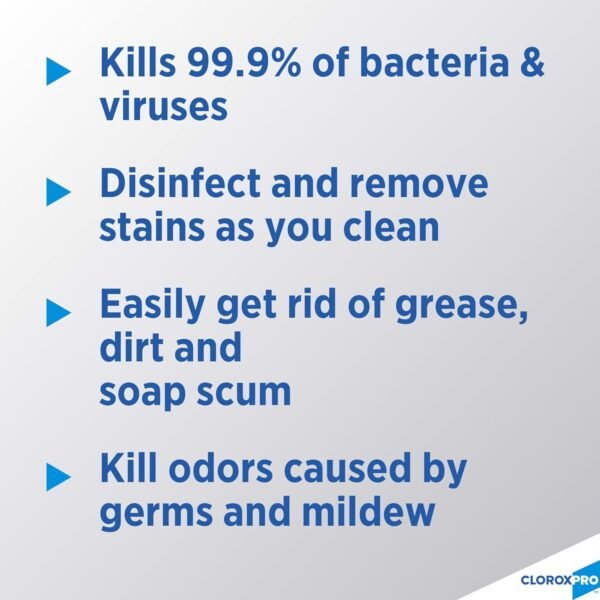
Clorox states that the product kills 99 percent of bacteria and viruses including cold and flu, and that it meets EPA criteria for use against SARS-CoV-2, the virus that causes COVID-19. It also states that it eliminates odors caused by bacteria, mold and mildew, and removes tough stains, grease and grime.
Those are the manufacturer’s claims and we are not restating them as findings. Two details are worth pointing out. The kill figure given here is 99 percent rather than the 99.9 percent that appears on most disinfectant labels, which is a lower number and is presumably deliberate on the manufacturer’s part. And the SARS-CoV-2 wording, “meets EPA criteria for use against”, is the specific phrasing the Environmental Protection Agency permits under its emerging viral pathogen policy. It refers to a product qualifying against a harder to kill surrogate virus rather than to direct testing against that virus. That is a real regulatory pathway and the wording is precise, which is to Clorox’s credit.
The contact time is not on this page
What is missing is the number that decides whether any of it happens. Disinfection requires the surface to remain visibly wet for the contact time the registered label specifies, and that time is not published on this listing. Nor is the EPA registration number, which is what you would use to look the label up. Read the bottle before the first use, note the contact time, and set a timer if you need to. Spraying a counter and wiping it dry immediately is cleaning, not disinfecting, and it is the single most common way this class of product is wasted.
Surfaces, and the long list of things bleach ruins
Bleach based cleaners belong on hard, non porous, bleach tolerant surfaces: sealed tile, vitreous china, glazed ceramic, most plastics, glass and stainless steel with prompt rinsing. In a commercial kitchen or a restroom, that covers most of what needs doing.
The exclusions are extensive and the listing does not give them. Keep it off natural stone, including marble, granite, limestone and travertine, where it damages both the surface and the sealer. Keep it off aluminum and off carbon steel, which it corrodes. Keep it off unsealed grout, unsealed wood and waxed surfaces. Keep it off colored fabric, carpet and upholstery, where the result is a permanent bleached patch rather than a stain removed. Be careful around metal fixtures, painted surfaces and anything with a delicate finish, and rinse promptly wherever you do use it.
Food contact surfaces need particular attention given the settings this product is sold for. A bleach disinfectant used on a food preparation surface, a table where children eat, or a toy in a day care center generally requires a potable water rinse after the contact time has elapsed. The registered label states what is required. Follow it, because a restaurant or a nursery is exactly where that step gets skipped under time pressure.
Ventilation, protection and the mixing rule
This is the product on this whole site where the mixing rule is least negotiable. Never combine a bleach product with an ammonia containing cleaner, which includes many glass and multi surface sprays: the reaction produces chloramine gas. Never combine it with an acid, which includes vinegar, lemon based cleaners, descalers, rust removers and most toilet bowl cleaners: the reaction releases chlorine gas. Both happen in ordinary domestic and commercial settings, in small rooms, with the door closed, because somebody used two products in the same ten minutes.
The practical rule is one product at a time. Use it, let it dwell, rinse the surface thoroughly with water, ventilate the room, and only then consider a different product. Do not spray it onto a surface still wet with something else, do not pour it into a bucket that already contains another cleaner, and do not use it in a toilet bowl that has just had a bowl cleaner in it.
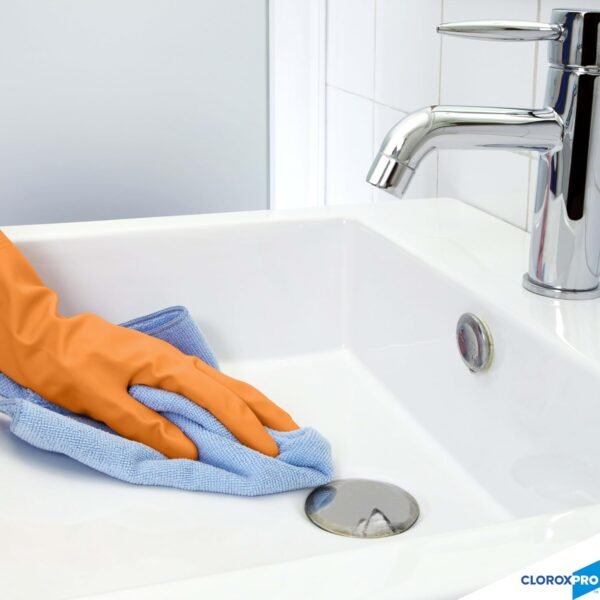
Ventilate while working: open a window, run an extractor. Wear gloves, since sodium hypochlorite is an irritant to skin and will bleach clothing on contact. Protect your eyes, particularly when spraying above shoulder height. Keep the bottle upright, capped, out of reach of children, and away from acids and ammonia in storage as well as in use. Do not decant it into an unlabeled bottle. Bleach solutions also degrade with time, heat and light, so an old bottle from the back of a cupboard is weaker than a fresh one.
Cost, format and the alternatives
A 32 ounce trigger spray is the standard professional format and it prices well against aerosols and wipes per treated surface, particularly with a dip tube that empties the bottle properly. The honest comparison in this category is not price but format: a trigger spray suits large hard surfaces, a wipe suits scattered touch points and produces less overspray, and an aerosol reaches soft furnishings that neither of the others handles well.
On this site, the domestic equivalent is the Clorox disinfecting all purpose cleaner. For a bleach free route to a similar job, the Lysol disinfecting cleaning spray and the aerosol Lysol disinfectant spray use different chemistry and carry different restrictions. For mold and mildew on bathroom surfaces specifically, the Lysol mold and mildew remover is formulated for that surface, and for targeted fabric work a bleach pen puts a small amount exactly where you want it. Browse the disinfectant sprays and liquids category and the bleach category for the rest.
Who should buy it, and who should not
Buy it if you need a bleach based cleaner and disinfectant for hard, bleach tolerant surfaces in a kitchen, a restroom or a commercial space, and you will read the label for the contact time and follow it. Skip it if your surfaces are stone, aluminum, unsealed wood or anything colored and porous, if the room cannot be ventilated, if there is any chance of another cleaner being used alongside it by someone who has not read this, or if you want a product whose EPA registration number and contact time are visible before you buy. And note where it sits on this site: it is a bleach disinfectant filed among all purpose cleaners, which is worth knowing before it ends up under the sink next to a descaler.