Description
What borax is, and the jobs it is bought for
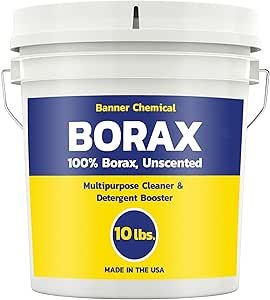
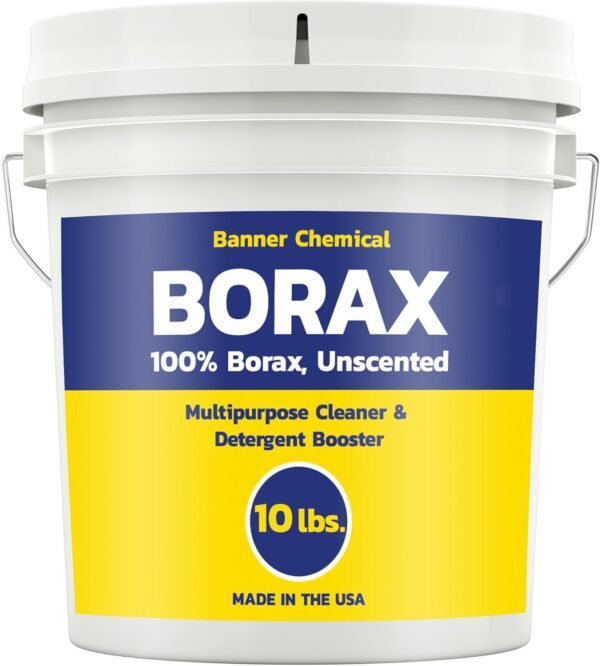
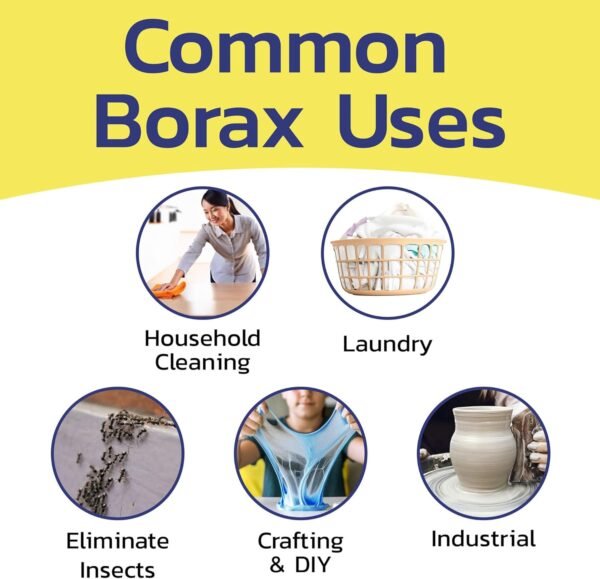
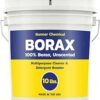
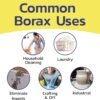
Borax is sodium borate, a mined boron mineral supplied as a white crystalline powder. Banner Chemical sells it here in a 10 pound bulk container, described as 100 percent pure with no additives or fillers, unscented, and made in the United States. The listing positions it as a multipurpose household cleaner, a laundry detergent booster and a stain and odor remover.
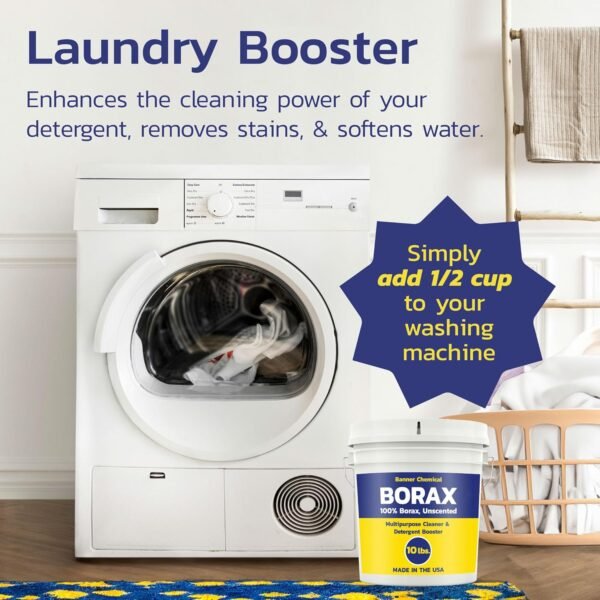
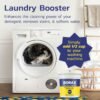
The chemistry explains both what borax does well and where it does nothing. Dissolved in water it is alkaline, which lifts greasy and acidic soils. It softens water by binding calcium and magnesium, which is the laundry booster function. Dry, it is a mild abrasive. What it is not is a disinfectant, a degreaser for baked on carbon, or a substitute for a detergent.
The household this suits is one with hard water, a lot of laundry and a preference for buying a single ingredient in bulk rather than a formulated product. Anyone wanting one bottle that does everything is better served by a formulated cleaner from the all-purpose cleaners category.
The problem with this listing is what it leaves out
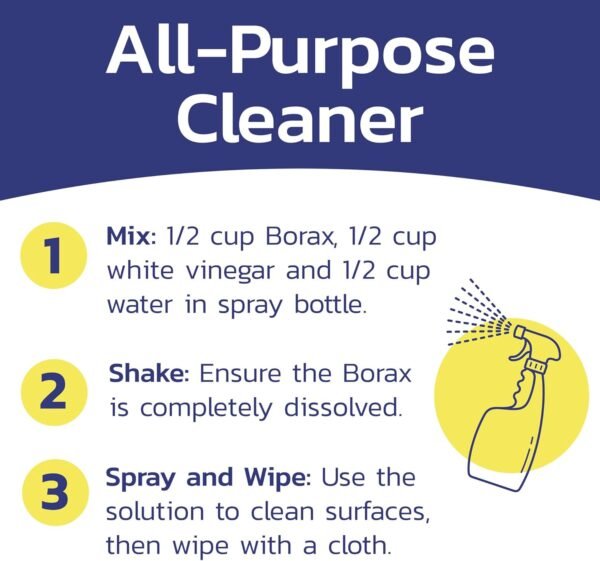
This is a 10 pound container of a bulk chemical, and the listing carries no hazard information of any kind. There is no safety data sheet reference, no CAS number, no hazard statement, no first aid guidance and no personal protective equipment recommendation. There is also no dose or dilution guidance for any of the three uses it names, so a buyer has no basis for how much to add to a wash or how much to dissolve in a bucket.
Borate compounds carry real regulatory attention
Borax is not an inert mineral in a regulatory sense. Borates including borax and boric acid are classified in the European Union as toxic for reproduction, which places them on the candidate list of substances of very high concern under the REACH regulation, and consumer availability of borax in Europe has been restricted as a result. That classification is a matter of public regulatory record rather than an opinion, and the position in the United States differs, which is why the product is freely sold here. A buyer should know that the classification exists.
The listing meanwhile describes the product as a natural and eco friendly solution when used as directed, without saying what as directed means. Natural is accurate in the sense that borax is mined rather than synthesized. It is not a statement about hazard, and a naturally occurring mineral with a reproductive toxicity classification is exactly the case where the word natural does the least useful work. We are repeating the manufacturer’s wording rather than endorsing it.
The recorded specification is thin: package dimensions of 8.43 by 8.27 by 7.4 inches with a recorded weight of 9.77 pounds, which is less than the 10 pounds the title advertises and cannot be right for a packed container. First availability was July 2024, and the product is ranked 442nd in All-Purpose Household Cleaners. The Customer Reviews field contains a sales rank string rather than a star rating.
Surfaces, and what to keep it away from
As an alkaline powder, borax suits sinks, tubs, tiled surfaces, toilets, grout and the inside of a washing machine drum. Dissolved in warm water it works as a general purpose solution for hard floors and worktops that tolerate alkalinity.
Keep it off natural stone, particularly marble, limestone and travertine, where alkaline and mildly abrasive cleaners dull the polish. Keep it off unsealed wood, waxed floors and anodized aluminum. Do not use the dry powder as a scouring agent on glass cooktops, acrylic baths or any polished finish, because even a mild abrasive leaves fine scratching on those. Rinse thoroughly wherever you use it, since dried borax leaves a visible white residue.
Two food related cautions matter. Borax is not a food additive in the United States and should not be used in anything that will be eaten or drunk. If you use it on a food preparation surface as a cleaner, rinse the surface thoroughly with clean water afterward. And keep it out of the kitchen cupboard where somebody might mistake a white powder in an unlabeled jar for something else.
Handling, storage and the uses to think hard about
Handle the dry powder with care. It is a fine powder and inhaling dust from a bulk container is an unnecessary irritation to the airways, so scoop rather than pour, work in a ventilated space, and do not shake the container into a bucket. Wear gloves, since prolonged skin contact with a strongly alkaline powder is drying and irritating, and keep it out of eyes. Wash your hands afterward.
Store it sealed, dry and out of reach of children and pets, and keep it in its original labeled container rather than decanting it into a food tub. Borax used as an ant or insect treatment is a common household practice and it is also a common route to accidental ingestion by a child or a pet, because a powder or a bait left on a floor is at exactly their level. If you use it that way, do not leave it accessible.
The other use worth naming is homemade slime, which is why many households buy borax at all. Those recipes have children handling a borax solution repeatedly, and there are documented reports of skin irritation from the practice, particularly where the solution is made too strong. Given that this listing publishes no concentration guidance and no hazard information, we would not recommend it for that use.
And the rule that applies everywhere on this site: never combine it with another cleaner. Do not mix borax with bleach, with an acid such as vinegar or a descaler, or with ammonia. Mixing an alkaline powder with an acid neutralizes both and wastes them, and mixing any of these chemistries with bleach is how people end up with fumes in a small room.
Cost structure and the alternatives
Buying a single ingredient in a 10 pound container is the lowest cost per use in this whole category, and that is the entire argument for it. The counterweight is that you are also buying a decade of storage for something you may use twice a year, and an unlabeled bulk chemical in a garage is a liability rather than an economy. Buy the quantity you will use.
The alternatives depend on which of the three claimed jobs you actually need. For laundry stain work on colorfast fabric, an oxygen bleach such as the sodium percarbonate stain remover attacks organic stains directly rather than softening water. For a formulated laundry booster, the Biz powder detergent is designed for the job and the wider powder detergent category covers the rest. For scouring, the Bar Keepers Friend powder cleanser is a formulated abrasive with published guidance. For an acidic rather than alkaline general cleaner, cleaning vinegar works on scale and mineral deposits where borax does not, and for a mechanical rather than chemical route to insects, diatomaceous earth is a different approach again.
Who should buy it, and who should not
Buy it if you know what borax does, you have hard water and a genuine bulk use, and you will store and handle it as the chemical it is. Skip it if you want a ready to use cleaner, if you were expecting a disinfectant, if you need dose guidance and hazard information before buying 10 pounds of anything, or if the intended use involves children handling it. The complete absence of hazard information, dose guidance and any reference to a safety data sheet is the significant failing of this listing, and it is a serious one for a bulk chemical sold to households.