

Description
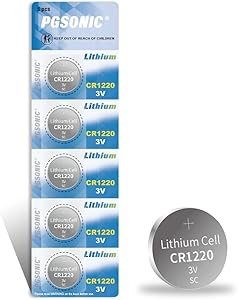
This is a five pack of PGSONIC CR1220 lithium coin cells, each rated at three volts, packaged in individual blisters. The CR1220 is one of the smaller coin cells in common use, twelve millimeters across and two millimeters thick, and it appears in the sort of devices people forget contain a battery at all until one stops working.
Where a CR1220 lives
Lithium coin cells in this family power low drain electronics that need a stable voltage for a long time. A CR1220 typically turns up in car key fobs, small remote controls, thermometers, fitness devices, calculators, medical and test equipment, LED novelty items, and as the memory backup cell on circuit boards inside larger equipment. The common thread is a device that draws a tiny current continuously rather than a large current occasionally.
That is also why the format matters. Lithium coin cells hold a nearly flat three volt output through most of their life and then drop off quickly at the end, which is what a digital device needs. They also tolerate a wide temperature range, which is why they are used in cars. A five pack suits a household with several such devices, or one where a key fob is going to need a battery again in a couple of years.
What PGSONIC states, and what needs care
The manufacturer describes the cells as three volt, leak proof, containing zero percent mercury, and passing UN38.3 safety testing, which is the transport safety test standard applied to lithium cells. It states that under good storage conditions the batteries hold full power for five years, and that a best if used by date five years after manufacture is printed on the back of the package. It also lists equivalents including 1220, DL1220, 1220H and ECR1220, which is accurate as a cross reference for this size and chemistry.
One bullet is simply wrong. It describes the product as grade AA batteries at three volts. AA is a cylindrical size designation for a 1.5 volt cell and has nothing to do with a CR1220 coin cell. The most likely explanation is that grade AA was intended as a quality description rather than a size, but as published it puts two incompatible battery descriptions in the same sentence. Ignore it, and buy on the CR1220 designation printed on your device.
The claims to read as claims
Leak proof, top performers, premium quality and long storage time guaranteed are PGSONIC’s descriptions of its own product, not measurements, and no capacity figure in milliamp hours appears anywhere on the listing. That last omission is the one worth noticing, because capacity is the specification that determines how long a cell runs in a given device, and it is the number a buyer would use to compare one CR1220 against another. The specification block gives package dimensions, a total weight of 0.317 ounces for the pack, a model number, a first availability date of September 2021 and ranking data placing the pack 158th among three volt batteries. There is no manufacture date on the page, only the statement that a date is printed on the packaging.
Getting the fit and the chemistry right
Coin cell designations encode both size and chemistry, and getting either wrong causes problems. The CR prefix indicates lithium manganese dioxide at three volts. The number encodes the dimensions, so a CR1220 is not interchangeable with a CR2016, a CR2025 or a CR2032 even though they look similar in a drawer, and a thicker cell forced into a shallow holder can damage the contacts. Check the number printed on the old cell rather than judging by eye.
Do not substitute a 1.5 volt alkaline button cell for a three volt lithium coin cell or the reverse. They are different chemistries at different voltages, and while some devices tolerate a range, many do not, and a device designed for three volts will behave unpredictably on 1.5. Where a device specifies a silver oxide or alkaline button cell, buy that type instead.
The safety points that matter most
Lithium coin cells are a severe ingestion hazard for young children and for pets. A swallowed coin cell lodged in the throat or gut can cause serious internal injury very quickly, and a three volt lithium cell is more dangerous in this respect than a smaller alkaline button cell. This is the most important thing on this page and it outranks every specification above it.
Handle a five pack accordingly. Keep the cells in their individual blisters until the moment they are needed, store the pack high and out of sight rather than loose in a drawer or a bag, and never leave a removed cell on a table while you fit the new one. Check that battery compartments on remotes, key fobs and novelty items close securely, and stop using any device whose compartment no longer stays shut. If a cell is swallowed, treat it as a medical emergency immediately rather than waiting for symptoms to appear.
Two more rules. Never attempt to recharge a CR lithium cell, since these are primary cells and charging can cause venting, leakage or rupture, and never heat, crush, puncture or short one. Keep cells away from coins and keys, which can bridge the terminals in a pocket or a bag. Do not mix old and new cells in a device, and take used cells to a battery collection point rather than putting them in household trash.
Cost per cell, and the alternatives
The cost structure of a multipack is straightforward: price per cell falls with quantity, and the waste is any cell that ages out before it is used. With a five year best if used by date, five cells is a reasonable horizon for a household with two or three devices in this size. For a single key fob, a smaller pack is the better purchase, and buying more coin cells than you need also means storing more of a genuine child hazard.
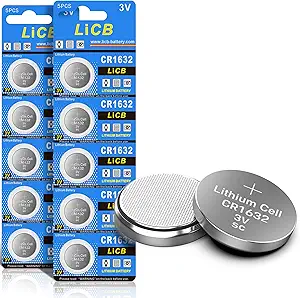
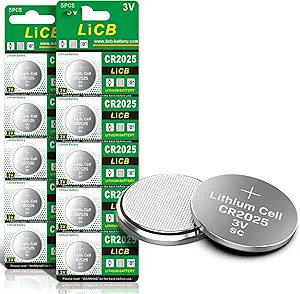
For the other common lithium sizes, our reviews of the LICB CR2025 cells, the Panasonic CR2016 cells and the LICB CR1632 cells cover the sizes most often confused with this one. The three volt battery category lists them together, and the coin and button cell category covers the format more broadly.
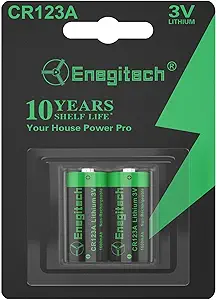
For higher drain devices such as flashlights and some sensors, a cylindrical lithium cell is the right format instead, and our write up of the Enegitech CR123A lithium cells covers that case.
Who should buy it, who should not
Buy the five pack if you have confirmed your device takes a CR1220 and you have somewhere safe to store spare coin cells away from children and pets. Skip it if your device specifies a different number or a different chemistry, or if you need a published capacity figure to compare against another brand, because this listing does not give one. The headline facts are correct, but the page also describes a coin cell as an AA, and that is a reminder to check the number on the cell you are replacing.