Description
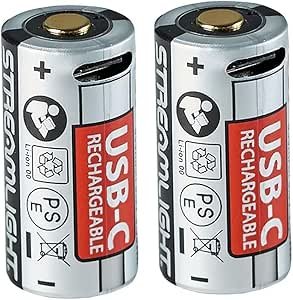
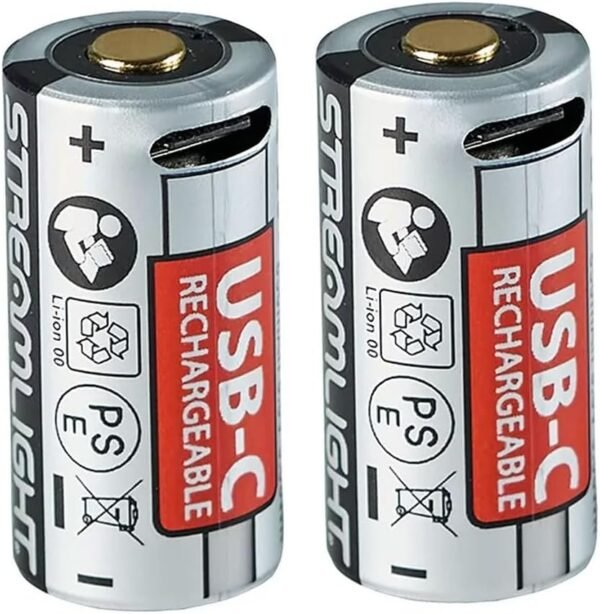
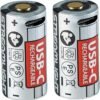
This is a two pack of Streamlight SL-B9 rechargeable battery packs, rated at 850 milliamp hours, part number 20237, carrying a two year manufacturer warranty. It is an accessory for Streamlight flashlights rather than a general household battery, and that distinction is the first thing to establish, because the listing itself does almost nothing to explain the product.
A listing with essentially no content
It is worth being direct about the state of this page. The description field contains two words: great product. The single feature bullet repeats the same two words. There is no chemistry stated, no voltage, no charging method, no compatibility list, no dimensions for the cell itself and no explanation of what the SL-B9 designation means. Everything a buyer needs is missing.
The specification block is little better and contradicts itself. It gives a number of items of one while the title says two pack, lists the material as plastic, gives a suggested users field reading mens, an included components field reading product, and a size field reading one size. The weight is given as 22.68 grams, which is plausible for a single small cell, and the package dimensions describe a retail card. None of the fields that would matter on a battery are populated. Buy from the Streamlight documentation for your specific flashlight rather than from this page.
What a proprietary battery pack means for you
A branded battery pack is not a standard cell. Where an AA or a CR123A is an industry format available from many manufacturers, a designation like SL-B9 belongs to one company and fits the products that company designed around it. The practical consequence is that compatibility is binary: it either fits your flashlight or it is useless, and there is no near equivalent to fall back on.
Before ordering, check the manual or the manufacturer’s page for your light and confirm the exact battery designation it takes. Streamlight uses several pack numbers across its range, they differ in physical size and capacity, and a pack that is close but not correct will not seat properly. The 850 milliamp hour figure here is the only performance number on the page, and by itself it does not tell you run time, because that depends entirely on which light it is in and which brightness mode you use.
The two year warranty is the most useful line on the page
Amid the missing information, the warranty description field is genuinely informative: two years from the manufacturer. Rechargeable cells degrade with use, and a stated warranty period is a reasonable proxy for the working life the manufacturer expects, which is more than most battery listings offer. Keep the receipt and the packaging, because a warranty claim on a small accessory is usually decided by whether you can prove when you bought it.
Living with a rechargeable pack
Rechargeable cells are a different ownership model from disposables. The advantage is obvious: one pack replaces many disposable batteries over its life, and for a light that gets used often the saving is real and the waste reduction is genuine. The disadvantage is that a rechargeable pack self discharges while sitting idle, so a flashlight kept for emergencies on a rechargeable cell needs charging on a schedule, while the same light on a lithium primary cell would sit ready for years.
That matters for how you use a two pack. The sensible pattern with two is to keep one in the light and one charged as a spare, rotating them so neither sits flat for months. For a torch that lives in a car or a storm kit, think carefully about whether a rechargeable is the right chemistry at all, since heat in a car and long idle periods are the two conditions rechargeable cells tolerate least well.
Charging, safety and disposal
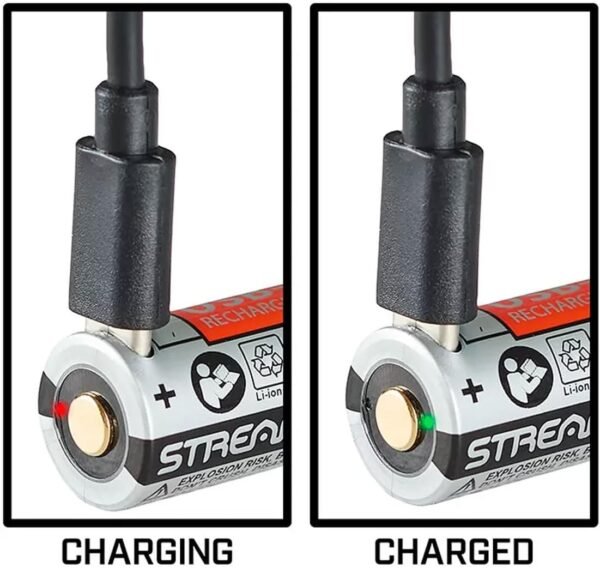
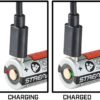
Use only the charging method the flashlight manufacturer specifies. Rechargeable packs are matched to particular charging circuits, and a generic charger or a higher current supply than intended is the usual cause of a cell overheating. Do not leave a pack charging unattended overnight, and do not charge it on a bed, a sofa or anything else that would burn.
Handle the pack itself carefully. Do not puncture, crush, drop hard, or open the casing. Keep the contacts away from coins, keys and other loose metal, which can short a cell in a bag and generate serious heat. Do not expose it to high temperatures, which means not leaving it on a dashboard in summer. If a pack becomes hot, swells, or smells at any point, stop using it immediately, move it somewhere non flammable and do not attempt to charge it again.
Storage and disposal follow the same logic. Store spare packs at a partial charge rather than flat or completely full, at room temperature, out of reach of children. At end of life a rechargeable pack goes to a battery recycling point or a retailer collection box, never into household trash, because the cell chemistry is exactly what those collection schemes exist to capture.
Cost over time, and the alternatives
The cost argument for rechargeables is straightforward: the purchase price is higher than a pack of disposables and the cost per use falls to almost nothing over a few hundred cycles. Two packs at once is a sensible way to buy them, because a spare removes the main complaint people have about rechargeable lights, which is being caught with a flat cell. The counter argument is the shelf life problem above, and that is a matter of what the light is for rather than a fault in the battery.
For rechargeable cells in a standard format that fits many devices rather than one, our reviews of the Bevigor rechargeable AA cells and the EBL AA cells cover that ground, with more in the AA battery category. Standard formats are worth preferring wherever a device allows them, precisely because they are not tied to one manufacturer.
For a lithium primary cell in a flashlight that needs to sit ready for years, our write up of the Enegitech CR123A lithium cells covers the format many tactical lights use. For sealed standby power in alarms and emergency lighting, the ExpertPower EXP1245 sealed lead acid battery is a different class again, and the household batteries category lists the formats side by side.
Who should buy it, who should not
Buy the two pack if you own a Streamlight that takes an SL-B9 and you want a spare so the light is never out of service. Skip it if you have not confirmed the exact designation your light requires, because a proprietary pack has no substitutes, and skip it if you were shopping for general household batteries, which this is not. The product may well be fine; the listing tells you almost nothing, so the manufacturer’s own documentation is where to look before ordering.